How Can I Tell If a Coin Is Silver? (5 Tests That Work at Home)
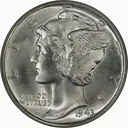
For US coins, the date tells you almost everything: dimes, quarters and half dollars dated 1964 or earlier are 90% silver, 1965–1970 Kennedy halves are 40% silver, and 1942–1945 'war nickels' are 35% silver. Confirm with the edge: solid silver-gray means silver, a copper stripe means clad.
Have one in hand? Scan it with CoinLens to identify it and see an estimate in seconds.
| Coin | Silver years | Silver content | Weight (silver vs clad) | Actual silver weight |
|---|---|---|---|---|
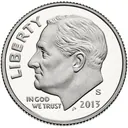
| Dime (Mercury, Roosevelt) | 1964 and earlier | 90% | 2.50 g vs 2.27 g | 0.07234 troy oz |
| Quarter (Washington and earlier) | 1964 and earlier | 90% | 6.25 g vs 5.67 g | 0.18084 troy oz |
| Half dollar (Franklin, 1964 Kennedy) | 1964 and earlier | 90% | 12.50 g vs 11.34 g | 0.36169 troy oz |
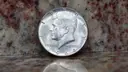
| Kennedy half dollar | 1965–1970 | 40% | 11.50 g | 0.1479 troy oz |
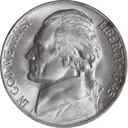
| Jefferson ‘war nickel’ (large mint mark above Monticello) | 1942 (part)–1945 | 35% | 5.00 g | 0.05626 troy oz |
| Morgan and Peace dollars | 1878–1935 | 90% | 26.73 g | 0.77344 troy oz |
| Eisenhower dollar, collector ‘S’ issues only | 1971–1976 | 40% | 24.59 g | 0.3162 troy oz |
Which one is yours? Check it with CoinLens →
Silver weights from the coins' legal specifications (US Mint, Red Book data via the Wikipedia articles cited below). Circulating Eisenhower dollars and all post-1964 dimes and quarters contain no silver. Silver Proof sets (1992 and later) are a separate collector category.
DEMO
Check your How Can I Tell If a Coin Is Silver? (5 Tests That Work at Home)
Add a photo of each side
Add a photo of at least one side first.
Demo — photos stay on your device. Nothing is uploaded.
DEMO
Your photos are ready. The identification happens in the CoinLens app.
On the web this is a demo — it can't recognize coins. In the app, the same two photos give you the coin's name, details and a value estimate.
Scan these in the free appEXAMPLE — what CoinLens shows
Value estimate:
Sample from our guide's data, not a result for your photo.
That was a sample. Scan your coin →·
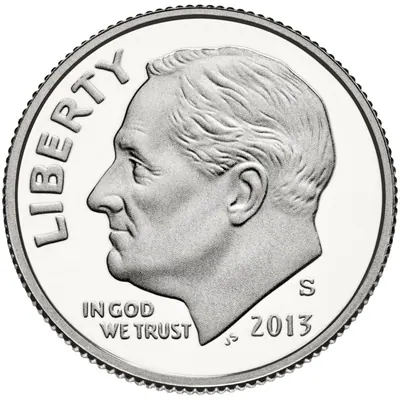
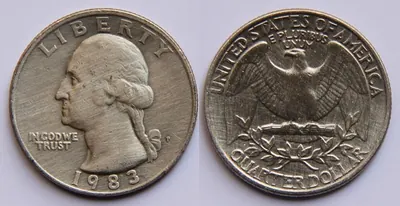
Start with the date. For US coins it settles the question in seconds:
- Dimes, quarters and half dollars dated 1964 or earlier are 90% silver, 10% copper.
- Kennedy half dollars dated 1965–1970 are 40% silver.
- Jefferson nickels from mid-1942 to 1945 (“war nickels”) are 35% silver.
- Morgan (1878–1921) and Peace (1921–1935) dollars are 90% silver.
- Everything else in circulation today — post-1964 dimes and quarters, post-1970 halves, regular Eisenhower and modern dollars — has no silver.
The table above gives the exact silver weight of each type, which is what sets the melt value.
Test 1: Check the date (and mint mark)
The Coinage Act of 1965 replaced silver in the dime and quarter with a copper-nickel “clad” sandwich and cut the half dollar to 40% silver; a 1970 law removed silver from the half entirely. So a 1964 dime is silver and a 1965 dime is not.
War nickels are the one case where you need the back of the coin: silver nickels carry a large P, D or S mint mark above the dome of Monticello. War nickels were the first US coins to carry a “P” for Philadelphia; the P did not return until 1979–1980 (the 1979-P Susan B. Anthony dollar, then other coins), so a P alone doesn’t mean silver. See our guide to war nickels from 1942–1945 for values.
Test 2: Look at the edge
This is the fastest way to sort a jar of change. Stack coins and look at the side:
- Clad coins (1965 and later dimes and quarters) show a copper-colored stripe through the middle of the edge — the copper core of the sandwich.
- 90% silver coins have a solid silver-white edge with no stripe. Old silver often looks slightly gray or toned.
- 40% Kennedy halves are clad too, but their outer layers are silver-rich, so the stripe is fainter than on a clad half.
Test 3: Weigh it
A kitchen scale that reads to 0.01 g is enough. Silver coins are heavier than their clad replacements because the alloy is denser and the specifications differ:
| Coin | 90% silver | Clad |
|---|---|---|
| Dime | 2.50 g | 2.27 g |
| Quarter | 6.25 g | 5.67 g |
| Half dollar | 12.50 g | 11.34 g |
Worn coins lose a little weight, so a heavily circulated silver quarter may read 6.1–6.2 g. It will still be clearly heavier than a clad quarter. Weighing is also how you’d catch a rare 1965 quarter or dime struck by mistake on a leftover silver blank.
Test 4: Sound and magnet
- Ring test: balance the coin on a fingertip and tap it with another coin. Silver gives a longer, higher ring; clad sounds duller. It takes practice and a known silver coin to compare against.
- Magnet test: silver isn’t magnetic. If the coin sticks, it isn’t silver. Passing the test proves little, because copper and nickel don’t stick either.
Test 5: Specific gravity (for bullion and suspected fakes)
If you’re buying silver dollars or world coins without a clear date-based answer, a specific-gravity test is the most reliable home method. Weigh the coin dry, then weigh it suspended in water; divide the dry weight by the weight loss. A 90% silver / 10% copper alloy comes out around 10.34, but expect results to vary by about ±0.1 on a small coin with a home scale (APMEX, cited below). Never scratch, file or acid-test a coin that might have collector value.
Melt value
Silver content sets the floor price for common-date silver coins. The melt calculator on this page uses live spot price; multiply by the silver weights in the table above for other coin types.
How to check your coin with CoinLens
If you don’t know what a foreign or older coin is, photograph both sides with Coin Identifier – CoinLens (iOS). The app identifies the coin from its database of almost 500,000 coins and shows its composition, minting years and an estimated value, so you can see at once whether it’s a silver issue. Free use is limited; Premium unlocks unlimited scans. Treat the value as an estimate and confirm silver with the date, edge and weight tests above. Download CoinLens on the App Store.
Where to sell silver coins
Common-date 90% silver (“junk silver”) is usually sold by face value or by weight to a local coin shop or bullion dealer, at a price tied to spot silver. Better dates and high-grade coins are worth more than melt — get those identified or graded before selling them as bulk silver.
Frequently asked questions
What year did US coins stop being silver?
Dimes and quarters stopped being silver after 1964 (the Coinage Act of 1965 switched them to copper-nickel clad). Half dollars dropped to 40% silver from 1965 to 1970 and became clad in 1971.
Are 1965 quarters silver?
Normal 1965 quarters are clad copper-nickel and contain no silver. A tiny number of 1965 coins were struck by mistake on leftover 90% silver blanks; these are rare errors that weigh close to 6.25 g instead of 5.67 g (one NGC AU55 example offered by Heritage weighed 6.13 g). Weigh it before assuming anything.
Does a magnet test prove a coin is silver?
No. Silver is not magnetic, so a coin that sticks to a magnet is not silver. But copper, nickel and clad coins don’t stick either, so passing the magnet test only rules out steel or iron fakes.
Are nickels made of silver?
Only ‘war nickels’ from mid-1942 to 1945, which are 35% silver. Look for a large P, D or S mint mark above the dome of Monticello on the back. All other Jefferson nickels are copper-nickel.
What is the easiest way to check a pile of change for silver?
Look at the edges of a stack. Clad coins show a copper-colored stripe; 90% silver coins have a solid silver-white edge. Then check the date on any coin with a solid edge.
Sources
- Coinage Act of 1965 (Wikipedia)
- Mercury dime specifications — 0.07234 troy oz silver (Wikipedia)
- Roosevelt dime specifications (Wikipedia)
- Washington quarter specifications (Wikipedia)
- Franklin half dollar — 0.36169 troy oz silver (Wikipedia)
- Kennedy half dollar composition by year (Wikipedia)
- 40% silver Kennedy half dollars, 0.1479 oz ASW (Money Metals Exchange)
- Jefferson nickel — wartime 56% copper, 35% silver, 9% manganese (Wikipedia)
- Peace dollar — 0.77344 troy oz silver (Wikipedia)
- Eisenhower dollar — silver-clad pieces 0.3162 troy oz (Wikipedia)
- 1965 quarter struck on a 90% silver planchet, NGC AU55, 6.13 g (Heritage lot 1279-3057)
- 1965 quarter: 5.67 g clad vs 6.25 g silver (CoinWeek)
- US Mint coin specifications
- How to use specific gravity to test silver purity (APMEX)
Values are estimates, not offers. Condition decides the price; for a valuable coin, get a professional grade.