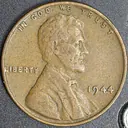
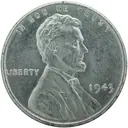
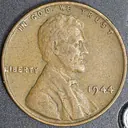
How Much Is a 1942 Penny Worth? (1942, 1942-D & 1942-S Values)
Most 1942 wheat pennies sell for about $1 to $10 each on eBay, and the scarcer 1942-S for $2 to $19. Perfect red coins are worth thousands: a 1942-S graded MS68 Red PCGS CAC sold for $9,000 in February 2025.
Have one in hand? Scan it with CoinLens to identify it and see an estimate in seconds.
| Grade | 1942 (Philadelphia) | 1942-D (Denver) | 1942-S (San Francisco) |
|---|---|---|---|
| Raw single coins (eBay) | About $1–$10 | About $2–$9 | About $2–$19 |
| MS64–MS65 Red | $10–$26 | $9–$28 | $15–$62 |
| MS66 Red | NGC $22–$30; PCGS $35–$75 | $13–$33 | $29–$58 |
| MS67 Red | $94–$218; Heritage $89–$207 (2021–2026) | $92–$179; Heritage $69–$264 (2020–2026) | $80–$288; Heritage $114–$305 (2021–2026) |
| MS67+ Red | — | NGC $464 and PCGS CAC $561 (Heritage, 2026) | — |
| MS68 Red | — | PCGS $6,600 (Heritage, Feb 2025) | NGC $2,684–$3,840 (2024–2026); PCGS $7,800 (Jun 2021) and CAC $9,000 (Feb 2025) |
Which one is yours? Check it with CoinLens →
Middle half of certified sales on PriceCharting (eBay and Heritage, 2023–2026, observed Nov 2026) and Heritage and Stack's Bowers results on NGC Auction Central. Raw ranges are the middle half of recent raw eBay sales; worn coins in bulk lots sell for less. Estimates, not a price guide.
DEMO
Check your 1942 Lincoln Wheat Cent
Add a photo of each side
Add a photo of at least one side first.
Demo — photos stay on your device. Nothing is uploaded.
DEMO
Your photos are ready. The identification happens in the CoinLens app.
On the web this is a demo — it can't recognize coins. In the app, the same two photos give you the coin's name, details and a value estimate.
Scan these in the free appEXAMPLE — what CoinLens shows
Value estimate:
Sample from our guide's data, not a result for your photo.
That was a sample. Scan your coin →·
Coin facts
- Coin
- Lincoln Wheat Cent
- Years
- 1942
- Mints
- Philadelphia (no mint mark), Denver (D), San Francisco (S)
- Composition
- 95% copper, 5% tin and zinc
- Weight
- 3.11 g
- Diameter
- 19.05 mm
- Designer
- Victor David Brenner
Mintage
- 1942
- 657,796,000
- 1942-D
- 206,698,000
- 1942-S
- 85,590,000
- 1942 Proof
- 32,600
| Grade | Typical price | Notes |
|---|---|---|
| Raw | $40–$60 | 32,600 struck |
| PR64 Red | NGC $63–$82; PCGS $85–$130 | Heritage mostly $61–$195.20 (2022–2026) |
| PR65 Red | $127–$229 | Heritage $119–$840 (2021–2026) |
| PR66 Red | NGC $324–$974; PCGS $469–$892 | Heritage $536.80 and $1,037 (Apr–May 2026) |
| PR67 Red | NGC $1,755–$3,052 | PCGS $2,640 (Heritage, Jul 2025); NGC $2,196 (Sep 2026) |
| Cameo records | — | PCGS PR67 Red Cameo CAC $9,150 (Sep 2026); PCGS PR66 Red Deep Cameo $4,320 (Sep 2024) |
Which one is yours? Check it with CoinLens →
PriceCharting's 1942 proof page (eBay and Heritage) and NGC Auction Central.
| Year | Composition | Weight | What happened |
|---|---|---|---|
| 1941 | 95% copper, tin and zinc | 3.11 g | Record mintage before the war |
| 1942 | Bronze, tin almost entirely removed | 3.11 g | Bronze production cut back in July and stopped in December |
| 1943 | Zinc-coated steel | 2.7 g | Authorized by Congress on December 18, 1942 |
| 1944 | Copper alloy | 3.11 g | Copper cents resume |
Which one is yours? Check it with CoinLens →
CoinWeek ('Understanding Lincoln Wheat Cents Worth $1 or Less') and Wikipedia ('Lincoln cent').
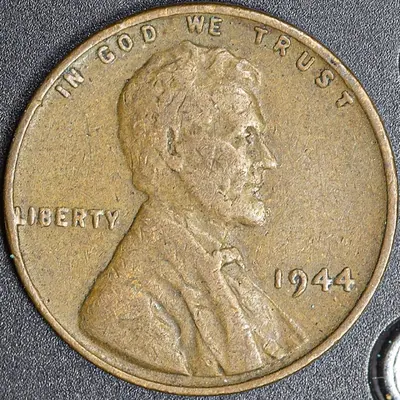
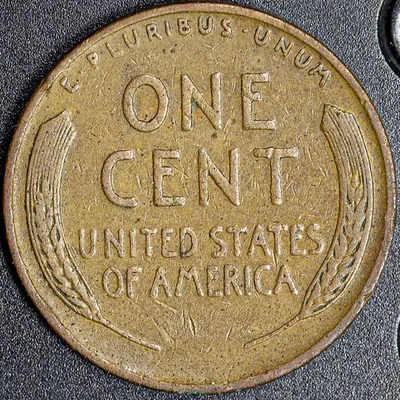
The Mint struck about 950 million cents in 1942, the last full-size bronze year before the 1943 steel cent. That makes most 1942 pennies common:
- Loose coins: PriceCharting’s 2026 eBay data puts single uncertified 1942 and 1942-D cents at roughly $1–$10 apiece and the 1942-S at $2–$19; worn pieces usually trade by the pound or in mixed lots for much less.
- Gem red coins: an MS67 Red in a PCGS or NGC holder generally brings $70–$300.
- Top grades: a 1942-S MS68 Red PCGS CAC brought $9,000 and a 1942-D MS68 Red PCGS $6,600, both at Heritage in February 2025.
- Proofs: 32,600 were made; cameo proofs have sold for up to $9,150.
The last bronze cent before the war changed it
1942 sits right at the turning point in the cent’s composition, summarized in the third table above. CoinWeek notes that the War Production Board, created by executive order in January 1942, put copper on its list of critical war materials, and that tin was almost entirely removed from the cent during 1942, with little visible change. Wikipedia adds that private companies tested substitutes under Mint contract, including fiber, tempered glass and several plastics; that bronze cent production was cut back drastically in July 1942 and stopped in December; and that Congress authorized the wartime steel cent on December 18, 1942.
That is why a 1942 cent is still copper-colored and weighs 3.11 grams, while the 1943 that followed is steel and weighs about 2.7 grams. A silver-looking 1942 is plated or altered, not a Mint product. See our 1943 steel penny guide for the next year.
| 1942 coin | Where struck | Pieces made | Typical uncertified sale |
|---|---|---|---|
| 1942 (blank under date) | Philadelphia | 657,796,000 | $1–$10 |
| 1942-D | Denver | 206,698,000 | $2–$9 |
| 1942-S | San Francisco | 85,590,000 | $2–$19 |
| 1942 proof | Philadelphia | 32,600 | $40–$60 |
Look under the date on the obverse for the mint mark.
The experiments that replaced the 1942 bronze cent
The search for a substitute metal ran through 1942. According to Wikipedia, several corporations worked under contract with the Mint to test metallic and non-metallic materials for the cent, including fiber, tempered glass and several kinds of plastic. Because real Lincoln cent dies could not leave government custody, the test pieces used other designs, which is why experimental “cents” from this period do not look like the 1942 Lincoln cent.
Five days after Congress acted on December 18, 1942, Treasury Secretary Henry Morgenthau announced that the new cent would be zinc-coated steel. That choice soon drew complaints: Wikipedia notes the steel cents spotted and stained, and the public confused them with dimes. For collectors, the result is that the 1942 is the final bronze cent of the war years, and any 1942-dated cent that is not bronze deserves expert attention.
Why ordinary 1942 cents are cheap
CoinWeek groups 1942–1958 wheat cents in its lowest price tier: in MS63 Red-Brown, most of those dates cost $1 or less, and typical circulated coins are worth about 3 to 10 cents each. Citing David Lange’s Complete Guide to Lincoln Cents, it explains that mintages rose from 1940 on and survival rates were high, so there are simply too many to be scarce. The 1942-S, with the lowest mintage of the three, sells for a little more than the others in most grades but is not rare.
Reading the 1942 price table
Four patterns stand out in the grade-by-grade numbers at the top of this page:
- Up to MS66 Red, prices stay low. Most certified MS64–MS66 Red coins sell for about $10–$75, close to the cost of grading.
- An MS67 Red is a routine auction lot. NGC Auction Central lists dozens of Heritage and Stack’s Bowers sales of MS67 Red 1942-dated cents since 2020, nearly all between $70 and $300; Heritage’s July 2026 listings put dealer bid for an MS67 1942-D at about $100.
- MS67+ and MS68 are the condition rarities. Plus-graded MS67 1942-D coins brought $464 (NGC) and $561 (PCGS CAC) at Heritage in 2026. MS68 Red coins jump to thousands: a PCGS MS68 Red 1942-S sold for $7,800 at Heritage in June 2021 and a CAC-approved one for $9,000 in February 2025, while NGC MS68 Red 1942-S coins brought $2,684–$3,840 in 2024–2026.
- The services differ sharply at the top. In MS68 Red, PCGS and CAC-approved coins have sold for two to three times NGC coins of the same grade.
Varieties and errors worth money
- 1942 doubled die obverse (FS-101): doubling on the obverse lettering. Sales are thin: a PCGS XF40 brought $239 in January 2026 and a PCGS MS62 Red-Brown $450 in February 2026. Many raw “doubled die” listings are machine doubling.
- 1942-S doubled die: PriceCharting tracks a few sales, including an ANACS MS64 at $30 in July 2025, so treat it as a minor variety.
- 1942-D repunched mint mark (FS-504): a D punched twice. A PCGS MS64 Red sold for $300 in March 2025.
- Striking mistakes: a 1942 struck partly off center, on a clipped blank, or from a cracked die can sell above face, priced by how visible the mistake is rather than by the date.
1942 proof cents
Philadelphia struck 32,600 proofs in 1942. The second table above lists prices by grade. Most PR64–PR65 coins sell for about $60–$230, PR66 for about $320–$970, and PR67 for about $1,750–$3,050. Cameo contrast is where the big money is: a PCGS PR66 Red Deep Cameo brought $4,320 at Heritage in September 2024, and a PCGS PR67 Red Cameo with a CAC sticker $9,150 in September 2026. Look for frosted devices against mirror fields before you price one.
Melt value
At 3.11 grams of 95% copper, a 1942 cent carries a few cents’ worth of metal. Melting one-cent coins is prohibited under 31 CFR Part 82, so a worn 1942 is worth its collector value, not its metal value.
How to check your coin with CoinLens
Two photos are enough: Lincoln’s side and the wheat side. Coin Identifier – CoinLens (iPhone and Android) then tells you it is a 1942 wheat cent, which mint struck it, what it is made of and its minting years, plus a rough value to keep in your collection list. Confirm a doubled die, a full-red gem or a cameo proof with PCGS or NGC before you sell.
Where to sell a 1942 penny
A jar of worn 1942s is best sold as part of a wheat cent lot, by count or by weight. A bright uncirculated single or a raw proof will find buyers on eBay. Save the auction houses (Heritage, Stack’s Bowers, GreatCollections) for coins that justify a slab: MS67+ and MS68 red gems, attributed doubled dies and repunched mint marks, and cameo proofs. Other 1940s dates are covered in our 1940s wheat penny guide.
Frequently asked questions
How much is a 1942 penny with no mint mark worth?
Single raw 1942 Philadelphia cents sold for about $1 to $10 on eBay in late 2026, and worn coins in bulk lots for less. A PCGS MS67+ Red sold for $586 in November 2026.
Is a 1942 penny copper or steel?
Copper. 1942 cents are 95% copper with tin and zinc and weigh 3.11 grams. The Mint switched to zinc-coated steel only in 1943, then back to copper alloy in 1944.
Is the 1942-S penny rare?
It is the lowest-mintage 1942 cent at 85,590,000, so it sells for a little more than the P and D, but it is not rare. Only top-grade red coins bring big money.
Where is the mint mark on a 1942 penny?
On the obverse, directly under the date. No letter means Philadelphia, D means Denver, S means San Francisco.
Is there a 1942 doubled die penny?
Yes. The 1942 doubled die obverse (FS-101) shows doubling on the obverse lettering. Certified examples sold for $239 (XF40) and $450 (MS62 Red-Brown) in early 2026. Many raw ‘doubled die’ listings are machine doubling.
Sources
- CoinWeek: Understanding Lincoln wheat cents worth $1 or less (1942 tin removal, War Production Board, wheat cent price tiers)
- Wikipedia: Lincoln cent (1942 experiments, July cutback, December 18 1942 Act, steel cent weight)
- Lincoln cent mintage figures (Wikipedia)
- NGC Auction Central: 1942 1C MS
- NGC Auction Central: 1942-D 1C MS
- NGC Auction Central: 1942-S 1C MS (PCGS MS68 Red $7,800, Jun 2021)
- NGC Auction Central: 1942 1C PF
- PriceCharting: 1942 Lincoln wheat penny sold listings
- PriceCharting: 1942-D Lincoln wheat penny sold listings
- PriceCharting: 1942-S Lincoln wheat penny sold listings
- PriceCharting: 1942 doubled die FS-101 sold listings
- PriceCharting: 1942-S doubled die sold listings
- PriceCharting: 1942 proof Lincoln cent sold listings
- PriceCharting: 1942-D FS-504 repunched mint mark sold listings
Values are estimates, not offers. Condition decides the price; for a valuable coin, get a professional grade.