How Much Is a 1960 Penny Worth? (Small Date vs Large Date)
A 1960 Large Date penny sells for about $1 to $3 raw; the scarcer Philadelphia Small Date brings about $5 to $7.50. Gems go far higher: Heritage sold a 1960 Small Date PCGS MS67 Red for $2,585 on July 9, 2015, and a 1960-D Small Date PCGS MS67+ Red sold for $2,999.99 on eBay in June 2025.
Have one in hand? Scan it with CoinLens to identify it and see an estimate in seconds.
| Coin | Raw uncirculated (middle half) | MS66 Red, PCGS/NGC (eBay 2026) | MS67 Red, PCGS/NGC | Top sale we found |
|---|---|---|---|---|
| 1960 Small Date | $5.00–$7.55 | $19.85–$45.99 | $204 (NGC, Heritage 2023); $306.99–$383 (NGC, eBay 2026) | $2,585 (PCGS MS67 Red, Heritage, Jul 2015) |
| 1960 Large Date | $1.10–$2.82 | $19.20–$37.15 | $149–$183 (NGC, Heritage 2024–2026) | $1,300 (PCGS MS67 Red, eBay, Jun 2025) |
| 1960-D Small Date | $1.35–$5.00 | $19.60–$78 | $120–$164 (NGC, Heritage 2023) | $2,999.99 (PCGS MS67+ Red, eBay, Jun 2025) |
| 1960-D Large Date | $1.00–$2.79 | $13.83–$74.99 | $129–$169 (NGC, Heritage 2024); $139–$149 (Jun 2026) | $528.94 (PCGS MS67 Red, eBay, Aug 2026) |
Which one is yours? Check it with CoinLens →
Raw = middle half of the 26–30 latest raw eBay sales per coin collected by PriceCharting (May–November 2026). Certified results from PriceCharting and from Heritage results on NGC Auction Central. Not a price guide.
DEMO
Check your 1960 Lincoln Memorial Cent
Add a photo of each side
Add a photo of at least one side first.
Demo — photos stay on your device. Nothing is uploaded.
DEMO
Your photos are ready. The identification happens in the CoinLens app.
On the web this is a demo — it can't recognize coins. In the app, the same two photos give you the coin's name, details and a value estimate.
Scan these in the free appEXAMPLE — what CoinLens shows
Value estimate:
Sample from our guide's data, not a result for your photo.
That was a sample. Scan your coin →·
Coin facts
- Coin
- Lincoln Memorial Cent
- Years
- 1960
- Mints
- Philadelphia (no mint mark), Denver (D)
- Composition
- 95% copper, 5% tin and zinc
- Weight
- 3.11 g
- Diameter
- 19.05 mm
- Designer
- Victor David Brenner (obverse), Frank Gasparro (reverse)
Mintage
- 1960 (Large and Small Date)
- 586,405,000
- 1960-D (Large and Small Date)
- 1,580,884,000
- 1960 proof (both dates)
- 1,691,602
- Philadelphia cents struck in January 1960
- 2,075,000
| Date | Price | Sale |
|---|---|---|
| July 9, 2015 | $2,585 | Summer FUN Signature |
| August 10, 2016 | $1,527.50 and $1,880 | ANA Signature, Anaheim |
| October 3, 2016 | $1,116.25 | Dallas Signature |
| June 8, 2017 | $734.38 | Long Beach Expo Signature |
| August 2, 2017 | $399.50 | ANA Signature, Denver |
| June–October 2019 | $228–$336 | Weekly online auctions |
Which one is yours? Check it with CoinLens →
Heritage results listed on NGC Auction Central for the 1960 Small Date (coin ID 12861).
| Variety | Grade | Price | Date |
|---|---|---|---|
| 1960-D/D Small over Large Date (FS-01-1960D-101) | NGC MS64 Red | $199.99 | eBay, August 2026 |
| 1960-D/D Small over Large Date | ANACS AU50 | $52 | eBay, September 2025 |
| 1960-D/D Small over Large Date | Raw | $34.99–$80 | eBay, 2024–2026 |
| 1960-D D/D repunched mint mark (FS-502) | Raw / ANACS MS65 Red | $0.99–$44.95 | eBay, 2024–2026 |
| 1960 proof Small over Large Date (FS-102) | PCGS PR67 Red | $374.95 | eBay, February 2025 |
| 1960 proof Small over Large Date (FS-102) | NGC PR68 Red | $799.99–$1,020 | eBay, 2025–2026 |
| 1960 proof Small over Large Date (FS-102) | PCGS PR68 Cameo | $2,500 | eBay, December 2024 |
| 1960 Small Date proof (normal) | PCGS PR68 Cameo | $228 | Heritage, October 2020 (CoinWeek) |
Which one is yours? Check it with CoinLens →
eBay sales via PriceCharting; variety numbers from Wexler's Die Varieties and the Cherrypickers' Guide cross-references it lists.
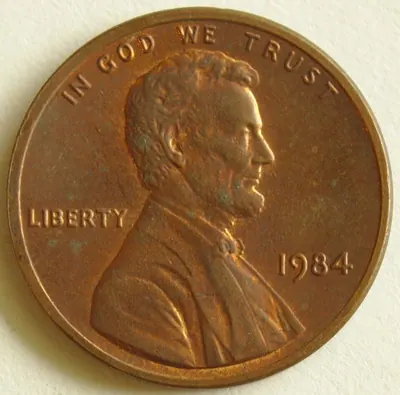
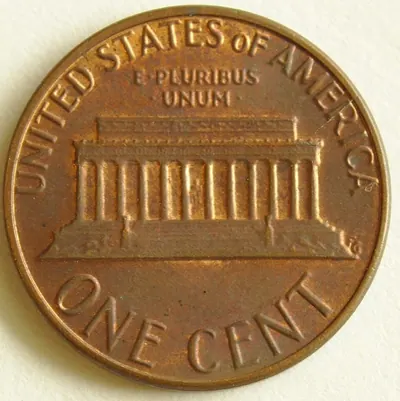
The Mint changed the size of the date early in 1960, so every 1960 cent is either a Small Date or a Large Date. That one detail decides most of its value:
- 1960 Small Date (Philadelphia, no mint mark): about $5 to $7.50 raw uncirculated, the scarce one.
- 1960 Large Date (Philadelphia): about $1 to $3 raw.
- 1960-D Small or Large Date: about $1 to $5 raw.
- Varieties: the 1960-D/D Small over Large Date sells for $35 to $200, and the proof Small over Large Date for $375 to $2,500.
- Gems: Heritage sold a 1960 Small Date PCGS MS67 Red for $2,585 in July 2015. A 1960-D Small Date PCGS MS67+ Red sold for $2,999.99 on eBay in June 2025.
Worn 1960 cents from change usually trade near face value, often in bulk lots of copper cents.
How to tell Small Date vs Large Date
You need a 10x loupe. It helps to have a second 1960 cent to compare, since most 1960 coins are Large Dates. Check three things in the date:
| Feature | Small Date | Large Date |
|---|---|---|
| The 0 | Small and slightly oval | Large and perfectly round |
| Tails of the 9 and 6 | Short, tight curls | Long, wide sweeping tails |
| Overall look | Thick, stocky digits | Thinner, taller digits |
CoinWeek’s David Lange described the change as “most noticeable as longer tails to the 9 and 6.” The oval 0 is the fastest check. If you have to think hard about whether the 0 is round, compare it with another 1960; side by side the difference is obvious.
Then look under the date for a D. No letter means Philadelphia, and only the Philadelphia Small Date carries a real premium in raw condition.
Why there are two dates: the 1960 story
The change was a technical fix. The Mint’s Engraving Department worried that the small 0 in the date would chip or clog the dies and print as a round blob. Very early in 1960 it swapped the obverse master die for one with all four digits enlarged. No announcement was made, because nobody expected anyone to notice (CoinWeek, David W. Lange).
The production numbers explain why the Philadelphia Small Date is scarce. Philadelphia struck only 2,075,000 cents in January 1960 and none in February while new dies were made; Denver struck 73,450,000 in January alone. After that, only Large Dates were made. A few dies were hubbed with both date sizes, creating the overlapping varieties below.
Collectors noticed anyway. The Coin Press Magazine broke the story on May 12, 1960 under the headline “FLASH – First True Die Variety in Fifty-one Years.” The Mint Director first denied any change. Coin World, then just a few months old, picked up the story, and the wire services carried it nationwide. What followed was a speculative boom:
- Philadelphia dealer Harry J. Forman advertised 1960 Small Date rolls at $110 in November 1960.
- Sealed $50 bags of Small Dates reportedly sold for as much as $12,000 (Wikipedia).
- Denver police raided an operation that was removing the D from 1960-D Small Dates to fake the Philadelphia coin (reported in The Numismatist, September 1960).
The boom faded, and Q. David Bowers later pointed out that enough Philadelphia Small Dates exist to supply every member of the American Numismatic Association (Wikipedia). That is why a raw one now sells for a few dollars, not hundreds. The fake-D story still matters: a “Philadelphia Small Date” with a smoothed, scraped area under the date may be an altered 1960-D.
1960 penny value by grade
The value table above combines raw eBay sales with certified results. Four takeaways:
Raw coins. Only the Philadelphia Small Date earns a real premium, about $5 to $7.55 for uncirculated coins. The other three sell for $1 to $5.
MS66 Red is still cheap. PCGS and NGC MS66 Red examples of all four coins sold for about $14 to $78 on eBay in 2026, barely more than the grading fee.
MS67 Red is the threshold. NGC MS67 Red Large Dates brought $149 to $183 at Heritage in 2024–2026, and Philadelphia Small Dates $306.99 to $383 on eBay in 2026. Above that, a plus grade or PCGS holder can jump the price: NGC MS67+ Red 1960-D Small Dates sold for $1,120 three times in 2024–2026.
Heritage vs eBay. In May 2026 Heritage sold a PCGS MS66 Red 1960-D Small Date for $390.40 and an NGC example for $353.80. eBay buyers paid about $20 to $78 for the same grade. NGC’s database lists coins by their base attribution, so some higher Heritage results may be coins with extra appeal or minor varieties; we can’t tell from the record.
The 1960 Small Date MS67 price collapse
Few modern coins show a sharper fall. PCGS MS67 Red Philadelphia Small Dates sold at Heritage for $2,585 in July 2015, and for $1,527.50 to $1,880 in the summer of 2016. By August 2017 one brought $399.50, and by 2019 they sold for $228 to $336. An NGC MS67 Red brought $204 at Heritage in April 2023 (all via NGC Auction Central).
We don’t have population data to explain the drop. The likely cause is more coins reaching that grade as people submitted them (our inference). For you it means two things. Don’t price an MS67 from an old auction record. And a newly graded MS67 Small Date is worth a few hundred dollars, not a few thousand.
Varieties worth money
1960-D/D Small Date over Large Date (FS-01-1960D-101)
This is the Denver variety most often searched as “1960-D/D small over large.” Wexler’s Die Varieties lists it as 1960-D WDDO-001: a Small Date hubbed over a Large Date, with doubling on the B of LIBERTY and inside the G of GOD. The same die has a widely repunched D/D mint mark, the second D sitting well north of the first. That is why sellers call it “FS-101 & 501”: the doubled date and the repunched mint mark on one coin.
How to check a 1960-D Small Date for it:
- Confirm the mint mark shows a clear second D above the first.
- Look at the date for traces of the larger digits around the small ones.
- Check the B in LIBERTY and the inside of the G in GOD for doubling.
Sales: an ANACS AU50 sold for $52 (September 2025) and an NGC MS64 Red for $199.99 (August 2026). Raw coins brought $34.99 to $80.
1960-D D/D repunched mint mark (FS-502)
A separate repunched mint mark, listed as FS-502 (RPM-001). Raw examples sold for $0.99 to $44.95 in 2024–2026, and an ANACS MS65 Red for $40. Only clearly attributed, uncirculated examples bring the upper end.
Proof Small over Large and Large over Small Date
All 1960 proofs were struck at Philadelphia, and both date sizes appear in proof sets. CoinWeek estimates that the January and February sets, 65,114 and 145,711, were Small Dates, about 12% of the 1,691,602 proofs. Walter Breen estimated 100,000 to 200,000. A normal Small Date proof in PCGS PR68 Cameo brought $228 at Heritage in October 2020.
The rarities are proof dies hubbed with both sizes. Wexler lists the Large over Small Date (FS-01-1960-101) and Small over Large Date (FS-01-1960-102). He notes that a single proof die averages about 3,000 strikes, so no more than about 3,000 of the Small over Large can exist. The diagnostics, per CoinWeek:
- Small over Large: a prominent notch left of the 1, small curved traces of a 9 and 6 on those digits, and what looks like a small donut-shaped 0 inside the large 0.
- Large over Small: misaligned letters in LIBERTY, strongest on BERTY, with the large 9 and 6 extending over the small ones and the small 0 visible inside the large one.
FS-102 sales on eBay: $374.95 (PCGS PR67 Red, February 2025), $799.99 to $1,020 (NGC PR68 Red, 2025–2026) and $2,500 (PCGS PR68 Cameo, December 2024). Since the overdates need a Large Date die, CoinWeek’s tip is to search Large Date proof sets.
Grading, melt value and selling
1960 cents are 95% copper and weigh 3.11 grams, so their metal is worth a few cents, but melting cents is prohibited (31 CFR Part 82). Grading pays only for full red coins that could reach MS67 or for attributed varieties. Ordinary circulated 1960 cents sell in bulk with other copper cents; a raw Philadelphia Small Date in uncirculated red is worth a few dollars on eBay. For valuable coins, use Heritage, GreatCollections or eBay with the certificate shown.
How to check your coin with CoinLens
Photograph both sides with CoinLens for an instant ID and value estimate. Then use a loupe on the 0 and the tails of the 9 and 6 to settle Small vs Large Date, and check a 1960-D for the doubled D. CoinLens gives estimates; confirm any variety with PCGS or NGC before selling.
Frequently asked questions
How do I tell a 1960 small date from a large date?
Look at the 0 and the tails of the 9 and 6. The Small Date has thick, stocky digits, a small oval 0 and short, tight tails on the 9 and 6. The Large Date has thinner digits, a large round 0 and long tails on the 9 and 6. A 10x loupe and a second 1960 cent to compare make it easy.
How much is a 1960 small date penny worth?
Raw uncirculated Philadelphia Small Dates sold for about $5 to $7.50 on eBay in 2026, and NGC or PCGS MS66 Red coins for about $20 to $46. Top MS67 Red coins have sold for $204 to $383 recently, down from over $1,500 in 2015–2016.
How much is a 1960 penny with no mint mark worth?
A Large Date sells for about $1 to $3 raw and a Small Date for about $5 to $7.50. Certified MS67 Red coins bring about $150 to $380, with rare high sales of $1,300 (Large Date, 2025) and $2,585 (Small Date, 2015).
How much is a 1960-D small date penny worth?
About $1.35 to $5 raw. Certified coins bring about $20 to $78 in MS66 Red and $120 to $164 in NGC MS67 Red at Heritage; NGC MS67+ Red coins sold for $1,120 and a PCGS MS67+ Red for $2,999.99.
What is the 1960-D small date over large date penny?
A Denver variety made from a die that was hubbed with both date sizes, so a Small Date sits on top of a Large Date. Its die also has a widely repunched D/D mint mark. Listed as FS-01-1960D-101, it sold for $52 (ANACS AU50) to $199.99 (NGC MS64 Red) in 2025–2026.
Is a 1960 penny copper?
Yes. 1960 cents are 95% copper with tin and zinc and weigh 3.11 grams. Melting them is prohibited by federal rule.
Why was the 1960 small date penny such a big deal?
It was the first new Lincoln cent variety most people had heard of, and newspapers spread the story in 1960. Rolls sold for $110 and $50 bags reportedly for as much as $12,000, before prices fell back.
Sources
- CoinWeek (David W. Lange): The 1960 Small Date Cent: The Coin That Kicked Off a Collecting Frenzy
- CoinWeek: 1960 Lincoln Cent Overdate Varieties in Proof – Identification Tips and Value
- Wexler's Die Varieties: 1960 doubled dies (proof Small/Large Date overdates)
- Wexler's Die Varieties: 1960-D doubled dies (WDDO-001 Small over Large Date, FS-01-1960D-101)
- NGC Auction Central: 1960 Small Date 1C MS auction results
- NGC Auction Central: 1960 Large Date 1C MS auction results
- NGC Auction Central: 1960-D Small Date 1C MS auction results
- NGC Auction Central: 1960-D Large Date 1C MS auction results
- PriceCharting: 1960 Small Date sold listings
- PriceCharting: 1960 Large Date sold listings
- PriceCharting: 1960-D Small Date sold listings
- PriceCharting: 1960-D Large Date sold listings
- PriceCharting: 1960-D FS-101 Small over Large Date sold listings
- PriceCharting: 1960-D FS-502 D over D sold listings
- PriceCharting: 1960 proof doubled die FS-102 sold listings
- Lincoln cent mintage figures (Wikipedia)
- Lincoln cent history, 1960 small date excitement (Wikipedia)
- 31 CFR Part 82 — prohibition on melting one-cent coins (eCFR)
Values are estimates, not offers. Condition decides the price; for a valuable coin, get a professional grade.