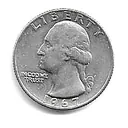
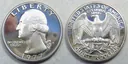
How Much Is a 1966 Quarter Worth? (No Mint Mark, SMS & Errors)
A circulated 1966 quarter is copper-nickel clad and worth 25 cents. Special Mint Set coins sell for about $2–$10 raw. The money is in top-grade business strikes and one variety: a PCGS MS68 sold for $4,209 at Heritage on September 17, 2026, and a doubled die reverse in PCGS VF30 brought $1,200.
Have one in hand? Scan it with CoinLens to identify it and see an estimate in seconds.
| Grade | Typical sale | Sales found | Note |
|---|---|---|---|
| Circulated | 25¢ | Single worn coins sell for about $1–$2 on eBay, mostly shipping | Face value in practice |
| Uncirculated, raw | $2–$10 | Raw ‘BU’ business strikes $3.95–$9.99 (eBay, Oct–Nov 2026) | Hard to tell from SMS without experience |
| PCGS MS64 | $20–$45 | $11.18–$69.95 (eBay, 2022–2026) | — |
| MS65–MS66 | $15–$60 | PCGS MS66 ‘Omaha Bank Hoard’ $20 and $60 (eBay, Aug–Sep 2026) | A toned PCGS MS65 brought $100 |
| MS67 | $100–$230 | PCGS MS67 $144 (Heritage, Oct 15, 2026); NGC MS67 $228 (eBay, Oct 2026) | Some coins labeled MS67 sell for under $15; check whether they are SMS |
| MS68 | $800–$4,200 | NGC MS68 $824 (Heritage, Nov 12, 2026); NGC MS68 $1,550 (eBay, Mar 2026); PCGS MS68 $4,209 (Heritage, Sep 17, 2026) | Top of the market |
| Doubled die reverse (FS-801) | — | PCGS VF30 $1,200 (eBay, Oct 2025) | The one listed 1966 variety |
Which one is yours? Check it with CoinLens →
Our estimates from eBay and Heritage sales recorded by PriceCharting, not a price guide. We sorted the sales by listing title into business strikes and Special Mint Set coins, because the two sell for very different prices in the same grade.
DEMO
Check your 1966 Washington Quarter
Add a photo of each side
Add a photo of at least one side first.
Demo — photos stay on your device. Nothing is uploaded.
DEMO
Your photos are ready. The identification happens in the CoinLens app.
On the web this is a demo — it can't recognize coins. In the app, the same two photos give you the coin's name, details and a value estimate.
Scan these in the free appEXAMPLE — what CoinLens shows
Value estimate:
Sample from our guide's data, not a result for your photo.
That was a sample. Scan your coin →·
Coin facts
- Coin
- Washington Quarter
- Years
- 1966
- Mints
- Philadelphia, Denver and San Francisco (no mint mark on any 1966 quarter)
- Composition
- Copper-nickel clad (75% copper, 25% nickel outer layers on a pure copper core)
- Weight
- 5.67 g
- Diameter
- 24.26 mm
- Designer
- John Flanagan
Mintage
- 1966 business strikes (all mints)
- 821,101,500
- 1966 Special Mint Set (SMS)
- 2,261,583
| Grade | Typical sale | Range found | Note |
|---|---|---|---|
| Raw, from a set | $2–$4 | $1.30–$9.50 (eBay, Oct–Nov 2026) | Median about $3.25 |
| NGC MS66 SMS | $10–$20 | $6–$29.99 (eBay, 2025–2026) | Most common certified grade |
| NGC MS67 SMS | $10–$25 | $9.12–$24.99; PCGS MS67 Cameo $62.95 (eBay, Nov 2026) | Cameo coins bring more |
| NGC MS68 SMS | $15–$60 | $10–$103.56; NGC MS68 Cameo $651.34 (eBay, Oct 2026) | Cameo is the big multiplier |
| MS69 SMS | — | $180 (eBay, Feb 2026) | One sale found |
Which one is yours? Check it with CoinLens →
Estimates from SMS-labeled sales recorded by PriceCharting. NGC grades SMS coins with 'MS' grades and an SMS label; PCGS uses 'SP' grades for Specimen strikes.
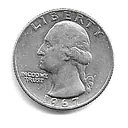
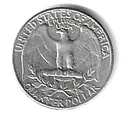
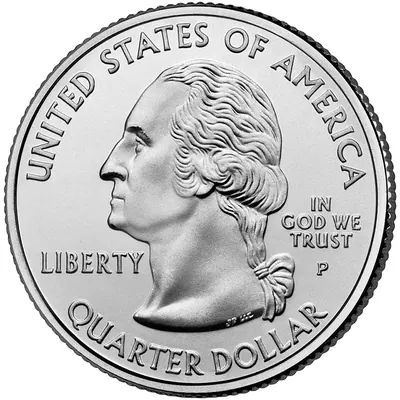
The Mint struck 821,101,500 quarters dated 1966 for circulation, and every one is copper-nickel clad. A worn 1966 quarter is worth 25 cents.
A 1966 quarter is worth more in three cases:
- It is a flawless business strike. PCGS MS67 coins have sold for $144 at Heritage (October 2026), and MS68 coins for $824 to $4,209. The top sale we found is a PCGS MS68 at $4,209 (Heritage, September 17, 2026).
- It is a doubled die reverse (FS-801). A worn PCGS VF30 brought $1,200 on eBay in October 2025.
- It is a Special Mint Set cameo. Ordinary SMS quarters are cheap ($2–$4 raw), but an NGC MS68 Cameo sold for $651.34 in October 2026.
Why there is no mint mark on a 1966 quarter
In 1965 the US switched its dimes and quarters from 90% silver to clad and was short of coins. To fight the shortage and discourage hoarding, the Treasury removed mint marks from all coins dated 1965, 1966 and 1967. Philadelphia, Denver and San Francisco all struck 1966 quarters, and Wikipedia’s mintage table gives one combined figure for all three.
So:
- A 1966 quarter with no mint mark is normal. It is not a “no mint mark error” and has no premium for that reason.
- No one can tell which mint made a 1966 quarter. Grading services list it simply as “1966”.
- Mint marks came back in 1968, moved to the obverse, to the right of Washington’s ponytail (see the comparison photo above).
1966 compared with 1965 and 1967
The three no-mint-mark years look alike, so collectors often confuse them. The numbers explain why 1966 gems are the hardest of the three to price:
| Year | Business strikes | Special Mint Sets |
|---|---|---|
| 1965 | 1,819,717,540 | 2,360,000 |
| 1966 | 821,101,500 | 2,261,583 |
| 1967 | 1,524,031,848 | 1,863,344 |
1966 has by far the smallest circulation mintage of the three, less than half of 1965. It is still a huge number, so worn coins carry no premium. But fewer coins struck means fewer that left the Mint without marks, which probably helps explain why a PCGS MS68 can reach four figures. The SMS mintage, by contrast, is almost the same as in 1965, which is why 1966 SMS quarters stay cheap. If someone offers you a “rare low-mintage 1966 quarter” in worn condition, the mintage story does not apply: rarity only matters at the very top of the grade scale.
How to tell what kind of 1966 quarter you have
- Check the edge. A copper stripe means clad, which every genuine 1966 quarter should show. A solid silver-white edge on a 1966 quarter would mean a wrong-planchet error or an altered coin; weigh it (clad 5.67 g, silver about 6.25 g) and have it authenticated.
- Look for wear. Rubbing on Washington’s cheek, hair and the eagle’s breast means circulated. That coin is worth 25 cents.
- Decide: business strike or SMS? Business strikes have frosty, slightly grainy luster and usually some bag marks. SMS coins came from the 1966 Special Mint Set and have smoother, satiny or semi-reflective surfaces with sharper lettering. Most are still in the Mint’s plastic holders or in NGC slabs labeled “SMS”.
- Check the reverse lettering. Use a 10x magnifier on UNITED STATES OF AMERICA and QUARTER DOLLAR for clear doubling (see the doubled die section below).
1966 quarter value: business strikes
These are the coins struck for circulation. Most were spent, and only a tiny share survive in top grades, which is why the price climbs steeply above MS66.
- Circulated: 25 cents. Single worn coins “sell” on eBay for $1–$2, which is mostly the shipping charge.
- Raw uncirculated: about $2–$10. Sellers listed raw business strikes “not SMS” at $3.95 each in October 2026.
- PCGS MS64: $11.18–$69.95 in 2022–2026 eBay sales, most about $20–$45.
- MS65–MS66: usually $15–$60. Two PCGS MS66 coins from the Omaha Bank Hoard sold for $20 and $60 in August–September 2026.
- MS67: a PCGS MS67 sold for $144 at Heritage on October 15, 2026, and an NGC MS67 for $228 on eBay in October 2026.
- MS68: the top of the market. An NGC MS68 sold for $824 at Heritage on November 12, 2026, another NGC MS68 for $1,550 on eBay in March 2026, and a PCGS MS68 for $4,209 at Heritage on September 17, 2026.
The jump from MS67 to MS68 is huge for the same coin. If a 1966 quarter in your hands is sharp, untoned and without visible marks under a magnifier, it may be worth grading. Most are not: grading costs more than any 1966 quarter below about MS67 is worth.
1966 Special Mint Set (SMS) quarters
In 1966 the Mint did not make proof sets. Instead it sold Special Mint Sets, 2,261,583 of them, each with a 1966 cent, nickel, dime, quarter and 40% silver half dollar. The coins were struck with more care than business strikes but are not true proofs.
Because the Mint made over two million of them and most stayed in sets, SMS quarters are common in high grades, the opposite of business strikes:
- Raw SMS quarters: about $2–$4 (median sale about $3.25 in October–November 2026).
- NGC MS66 and MS67 SMS: mostly $10–$25.
- NGC MS68 SMS: mostly $15–$60.
- MS69 SMS: one sale found, $180 (February 2026).
- Cameo SMS coins are the exception. Coins with frosted design on reflective fields earn a Cameo label and are scarce: an NGC MS68 Cameo brought $651.34 and a PCGS MS67 Cameo $62.95.
Why an MS68 1966 quarter can sell for $10 or $4,209
This is the single most important thing to know about 1966 quarter prices. Price sites and sold-listing searches often mix SMS coins and business strikes together. In the sales we looked at:
- MS68 SMS quarters sold for a median of about $44.
- MS68 business strikes sold for $824 to $4,209.
The grade number is the same, but the coins are not. Check the holder: NGC labels SMS coins “SMS” next to the grade, and PCGS gives them “SP” (Specimen) grades instead of “MS”. If an “MS68 1966 quarter” is cheap, it is almost certainly an SMS coin; if a raw coin is described as a “1966 MS68”, treat that claim with suspicion, because only a grading service assigns that grade.
The 1966 doubled die reverse (FS-801)
The one widely listed 1966 quarter variety is a doubled die reverse, catalogued as FS-801. On a doubled die, the die itself received a doubled image when it was made, so every coin it struck shows the doubling. On a doubled die reverse it is the eagle side.
What it sells for: a PCGS VF30 example sold for $1,200 on eBay in October 2025, which shows how scarce it is: even a worn one carries a big premium.
How to check:
- Use a 10x magnifier on the reverse lettering.
- Genuine doubling shows as a clear second outline, with separation and rounded corners, on letters and design.
- Flat, shelf-like doubling is machine doubling, from a loose die bouncing during the strike. It is common and worth nothing extra.
If you think you have one, send it to PCGS or NGC with the FS-801 attribution requested.
Other 1966 quarter errors
- Off-center strikes: part of the coin is blank and the design is shifted. Worth more when the date is still visible.
- Clipped planchets: a curved or straight bite missing from the edge, made when the blank was cut from a bad strip.
- Struck-through and lamination errors: grease or debris pressed into the surface, or flaking metal, common on clad coins.
- Wrong-planchet strikes: a quarter struck on a blank meant for another coin, or on a leftover silver blank. These are rare and need authentication.
Values for these depend on how dramatic the error is. Most minor clips and strike-throughs sell for a few dollars; big, certified errors bring more. Damage after the coin left the Mint, such as a squeezed, hammered or acid-treated coin, is not an error.
Three 1966 quarter myths
- “It’s silver because it’s from the 1960s.” Only quarters dated 1964 and earlier are 90% silver. Every 1966 quarter is clad.
- “No mint mark means it’s a rare Philadelphia error.” All 1966 quarters lack a mint mark, from every mint.
- “A shiny one is worth hundreds.” Bright SMS coins from broken-up sets are plentiful. Only a certified business strike in MS67 or MS68, or a verified FS-801, brings that kind of money.
Melt value
A 1966 quarter contains no silver. Its copper-nickel metal is worth less than its 25-cent face value.
How to check your coin with CoinLens
Photograph both sides with CoinLens. It identifies the coin, its year and composition from a database of almost 500,000 coins and gives an instant value estimate you can save to your collection. CoinLens gives estimates and does not detect doubled dies, so use a magnifier for the FS-801 check, and send a possible MS68 or a suspected variety to PCGS or NGC.
For the next year, when the Mint struck over 1.5 billion quarters, see the 1967 quarter value guide.
Where to sell a 1966 quarter
- Circulated coins: spend them; they are worth 25 cents.
- Raw SMS quarters and complete 1966 Special Mint Sets: eBay or a coin shop; complete sets in the original holder sell best.
- Certified MS67–MS68 business strikes, SMS cameos and the FS-801 doubled die: Heritage, GreatCollections or eBay, with the holder and certification number shown.
Frequently asked questions
How much is a 1966 quarter worth?
25 cents if circulated. Raw uncirculated coins sell for about $2–$10, PCGS MS67 business strikes for about $100–$230, and MS68s for $800–$4,209. 1966 Special Mint Set quarters are cheaper: usually $2–$4 raw and $10–$60 certified.
Why does my 1966 quarter have no mint mark?
No 1966 quarter has a mint mark. The Mint left mint marks off all coins dated 1965 to 1967 during the coin shortage, even though Philadelphia, Denver and San Francisco all struck quarters. A 1966 quarter with no mint mark is normal and not an error.
Is a 1966 quarter silver?
No. 1966 quarters are copper-nickel clad, like every quarter made for circulation since 1965. You can see the copper core as a stripe on the edge. 1964 was the last year of 90% silver quarters.
What is a 1966 SMS quarter?
A quarter from the 1966 Special Mint Set, which the Mint sold instead of a proof set; 2,261,583 sets were made. SMS coins were struck with more care and have satin to semi-glossy surfaces. Raw ones sell for about $2–$4.
What 1966 quarter errors are worth money?
The 1966 doubled die reverse (FS-801), with doubling on the reverse design, is the one widely listed variety; a PCGS VF30 sold for $1,200 in 2025. Major errors such as off-center strikes, clipped planchets and wrong-planchet strikes are valued case by case.
Is a 1966 quarter worth anything today?
Only in top condition or as an error. More than 821 million were struck, so worn coins are worth 25 cents. A flawless business strike can be worth hundreds or thousands if it grades MS67 or MS68.
How do I tell a 1966 SMS quarter from a regular one?
SMS quarters have smoother, satiny or slightly reflective fields and sharper details, and most are still in sets or NGC holders labeled SMS. Business strikes have frosty, grainy luster and often show bag marks. If in doubt, an expert or a grading service can tell them apart.
Sources
- Wikipedia: Washington quarter mintage figures (1966: 821,101,500; 1966 SMS 2,261,583; no mint marks 1965–1967)
- Wikipedia: Washington quarter (clad composition from 1965)
- PriceCharting: 1966 Washington quarter, eBay and Heritage sold listings by grade
Values are estimates, not offers. Condition decides the price; for a valuable coin, get a professional grade.