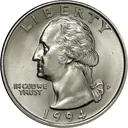
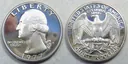
How Much Is a 1981 Quarter Worth? (1981-P, 1981-D & 1981-S Type 1 vs Type 2)
A circulated 1981 quarter is worth 25 cents. Value comes from top grades, the 1981-S Type 2 proof (PCGS PR70 DCAM, $154 at Heritage on November 12, 2026) and errors: a 1981-D flip-over double strike in PCGS MS64 sold for $7,200 at Heritage in August 2020.
Have one in hand? Scan it with CoinLens to identify it and see an estimate in seconds.
| Coin | Circulated | Raw uncirculated | MS65 | MS66 | MS67 |
|---|---|---|---|---|---|
| 1981-P | 25¢ | About $2 (median sale) | $10–$20 | $15–$35; PCGS $30–$84 | $60–$150; NGC $99 (Heritage, Mar 2024); NGC $360 (eBay, Jan 2023) |
| 1981-D | 25¢ | About $2 (median sale) | $10–$20 | $5–$33 | $60–$120; PCGS $64–$84 (Heritage, 2024–2025); PCGS $199 (eBay, Jun 2024) |
Which one is yours? Check it with CoinLens →
Our estimates from eBay and Heritage sales recorded by PriceCharting (2022–November 2026), not a price guide. A few toned or 'PQ' coins sell far above these ranges; a rainbow-toned PCGS MS66 1981-P brought $150.
DEMO
Check your 1981 Washington Quarter
Add a photo of each side
Add a photo of at least one side first.
Demo — photos stay on your device. Nothing is uploaded.
DEMO
Your photos are ready. The identification happens in the CoinLens app.
On the web this is a demo — it can't recognize coins. In the app, the same two photos give you the coin's name, details and a value estimate.
Scan these in the free appEXAMPLE — what CoinLens shows
Value estimate:
Sample from our guide's data, not a result for your photo.
That was a sample. Scan your coin →·
Coin facts
- Coin
- Washington Quarter
- Years
- 1981
- Mints
- Philadelphia (P), Denver (D), San Francisco (S): proof only, Type 1 and Type 2 mint marks
- Composition
- Copper-nickel clad (75% copper, 25% nickel outer layers, pure copper core)
- Weight
- 5.67 g
- Diameter
- 24.26 mm
- Designer
- John Flanagan
Mintage
- 1981-P
- 601,716,000
- 1981-D
- 575,722,833
- 1981-S proof (Type 1 and Type 2 combined)
- 4,063,083
| Coin | Raw (median) | PR68 | PR69 (median) | PR70 (median) | Top sale found |
|---|---|---|---|---|---|
| 1981-S Type 1 (filled S) | $3 | $6–$20 | $9 | $30 | NGC PF70 Ultra Cameo $56.25 (eBay, Feb 2026) |
| 1981-S Type 2 (clear S) | $5 | $3–$45 | $15 | $160 | PCGS PR70 DCAM $257.25 (eBay, Mar 2026) |
Which one is yours? Check it with CoinLens →
Medians and ranges of PriceCharting-recorded eBay and Heritage sales, 2023–2026. Heritage sold PCGS PR70 Deep Cameo Type 2 quarters for $109 (August 20, 2026) and $154 (November 12, 2026).
| Error | Coin and grade | Price | Where / when |
|---|---|---|---|
| Flip-over double strike | 1981-D, PCGS MS64 | $7,200 | Heritage, August 15, 2020 |
| Partial collar | 1981-P, NGC MS65 (Manhattan Collection) | $74 | Heritage, January 15, 2025 |
| Filled mint mark | 1981-P or 1981-D, circulated | $1.45–$1.95 | eBay, 2026 (no real premium) |
Which one is yours? Check it with CoinLens →
Individual sales recorded by PriceCharting. Error values vary hugely with how dramatic the error is.
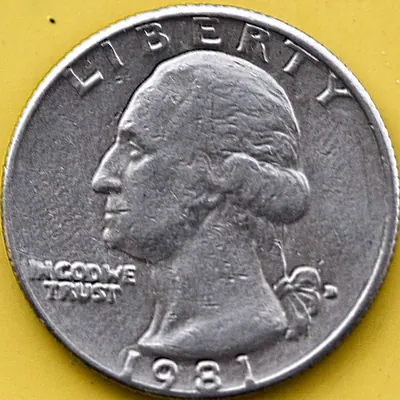
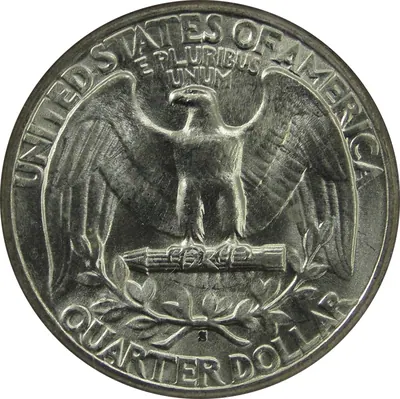
The Mint struck 601,716,000 1981-P and 575,722,833 1981-D quarters, so a circulated 1981 quarter is worth 25 cents.
Three things make a 1981 quarter worth more:
- Top grades. PCGS MS66 1981-P quarters sold for about $30–$84 in 2025–2026, MS67 coins mostly for $60–$150, and an NGC MS67 1981-P brought $360 on eBay in January 2023.
- The 1981-S Type 2 proof. A PCGS PR70 Deep Cameo sold for $154 at Heritage on November 12, 2026, and others brought up to $257.25 on eBay. A Type 1 in the same grade sells for about $30.
- Errors. A 1981-D flip-over double strike graded PCGS MS64 sold for $7,200 at Heritage on August 15, 2020.
How to identify a 1981 quarter
- Mint mark: on the obverse, to the right of the ribbon behind Washington’s hair. P = Philadelphia, D = Denver, S = San Francisco proof. 1980 was the first year the P appeared on quarters, so a 1981 Philadelphia coin carries one too.
- Edge: copper stripe (clad, no silver).
- Proof or not: proofs have mirror fields and frosted design and come from proof sets. If your coin has an S, it is a proof, even if it has been spent and worn down.
1981-P and 1981-D values by grade
Both mints made close to 600 million quarters, and millions more survive in 1981 Mint sets. That means uncirculated 1981 quarters are easy to find, and only the very best coins carry a premium.
- Raw uncirculated: about $2 each in PriceCharting-recorded sales.
- MS65: median about $14 for both mints.
- MS66: 1981-D coins have a median sale near $10; 1981-P coins are stronger, with PCGS MS66s at $30–$84.
- MS67: the 1981-P has a median sale of about $100 and the 1981-D about $93. Heritage sold an NGC MS67 1981-P for $99 in March 2024 and PCGS MS67 1981-Ds for $84 (May 2024) and $64 (October 2025).
No MS68 sales turned up for either mint in the records we checked. MS67 is effectively the top grade for these coins in the market today.
The grading service matters. In the sales we reviewed, PCGS-graded coins brought more than NGC coins in the same grade, and coins from smaller services (ICG, ANACS) less. Toning matters too: a rainbow-toned PCGS MS66 1981-P sold for $150, far above the typical MS66 price.
1981 in numbers
Compared with the years around it, 1981 was an ordinary production year for circulation quarters and a big year for proofs:
| Year | Philadelphia | Denver | San Francisco proofs |
|---|---|---|---|
| 1980 | 635,832,000 | 518,327,487 | 3,554,806 |
| 1981 | 601,716,000 | 575,722,833 | 4,063,083 |
| 1982 | 500,931,000 | 480,042,788 | 3,857,479 |
The 1981-S proof mintage of just over four million was higher than in 1980 or 1982. That figure combines Type 1 and Type 2 coins. Wikipedia’s mintage table gives only the combined number, and we found no official split. Judging by prices and by how rarely they are offered, Type 2 coins are much scarcer.
What a gem 1981 quarter looks like
Most uncirculated 1981 quarters grade MS63 to MS65 because they were shipped in bags and rolls and knocked against each other. Before you pay to grade one, check it under a bright lamp with a 5x magnifier:
- Washington’s cheek and jaw: the largest open area on the obverse. Any nick or scratch here keeps a coin below MS66.
- The field in front of the face: look for tiny ticks and hairlines.
- The eagle’s breast feathers: a sharp strike shows clear feather detail; a weak strike looks flat in the center even on an uncirculated coin.
- The rims and the letters of UNITED STATES OF AMERICA: small dings on the rim are common and lower the grade.
- Luster: turn the coin under the light. A full, unbroken cartwheel of luster is a good sign; dull or spotted surfaces are not.
A coin that is clean in all five places is a candidate for MS66 or MS67. Anything with visible marks on the cheek is worth face value plus a dollar or two, so keep it in your collection rather than paying grading fees. Coins from intact 1981 Mint sets, still in their original cello packaging, are the best place to look for an MS67.
The 1981-S Type 1 vs Type 2 proof
The 1981-S proof is the reason most people look up this year. During 1981 the San Francisco Mint switched to a new S mint mark punch on its proof dies, so 1981-S proofs exist with two different-looking S marks.
How to tell them apart
Use a 10x magnifier and look at the S on the obverse, right of the hair ribbon:
- Type 1: the S looks blobby and filled, like a thick blob with little separation between the curves. The openings of the S are small or closed.
- Type 2: the S is clear and crisp, with open loops and flat, well-defined serifs at the top and bottom ends.
Lighting makes a difference on mirror-finish proofs. Tilt the coin under a single lamp so the S is lit from the side, not from straight on, and compare the two loops of the letter. If you are unsure, compare with photos on the holders of graded examples, which list “Type 1” or “Type 2” on the label.
Values
The S mint mark changes the price by a factor of about five in top grade:
- Type 1: raw proofs sell for about $3, PR69 coins for about $9, and PR70 coins for a median of about $30.
- Type 2: raw proofs sell for about $5, PR69 coins for about $15, and PR70 Deep Cameo coins for a median of about $160. Heritage sold PCGS PR70 DCAM examples for $109 on August 20, 2026 and $154 on November 12, 2026, and one brought $257.25 on eBay in March 2026.
The jump from PR69 to PR70 is the key, and it is much steeper for Type 2 than for Type 1, whose PR70s add only about $20 over a PR69. A PR69 Type 2 is worth only about $15, so the premium sits almost entirely in the perfect PR70 grade.
Check the whole proof set
The 1981 proof set included the cent, nickel, dime, quarter, half dollar and Susan B. Anthony dollar, and the mint mark change affected all of them. If your quarter is a Type 2, check the other coins in the set too: a set that is Type 2 throughout is worth more than one with only some Type 2 coins. Keep proof coins in their original holder; handling or cleaning them leaves hairlines that ruin a PR69 or PR70 grade.
Three common Type 2 mistakes
- Calling a worn or polished S a Type 2. Wear and cleaning soften both styles. Judge only coins with full mirror surfaces.
- Mixing up the 1979-S. The 1979-S proof also has Type 1 and Type 2 mint marks, with a different look. Check the date before comparing photos.
- Paying PR70 money for an ungraded coin. Only a grading service can call a coin PR70, and that grade is where nearly all the Type 2 premium sits.
Errors worth looking for
1981 quarters are not known for a famous die variety, but there are real mint errors:
- Double strikes and flip-over double strikes: the coin shows two overlapping impressions. On a flip-over, the coin flipped between strikes, so the second strike shows part of the other side. The 1981-D example graded PCGS MS64 brought $7,200 at Heritage in August 2020.
- Partial collar: part of the edge has a raised lip or no reeding because the coin was not fully inside the collar die. An NGC MS65 1981-P from the Manhattan Collection sold for $74 at Heritage in January 2025.
- Broadstrikes: struck with no collar at all, so the coin is wider than normal with a plain edge.
- Off-center strikes and clipped planchets: part of the design missing, or a curved bite from the edge.
What is not worth money: a filled mint mark. Grease in the die can fill in the P or D, and sellers sometimes list these as errors. They sold for $1.45–$1.95 in 2026, about the same as any other 1981 quarter with shipping. Have any suspected major error authenticated by PCGS or NGC.
Melt value
There is no silver in any 1981 quarter, proofs included. The copper core and copper-nickel faces are worth less than the 25-cent face value, so melt never sets the price of a 1981 coin.
How to check your coin with CoinLens
Take a photo of each side with CoinLens. It names the coin, reads the year and mint, lists the composition and gives an instant value estimate you can add to your collection. The estimate does not settle Type 1 versus Type 2 or confirm an error; for those, a PCGS or NGC attribution is what buyers trust.
Two years later, no Mint sets were made at all, which made gem coins scarce: see the 1983 quarter value guide.
Where to sell
- Circulated 1981 quarters: spend them.
- Proof sets with Type 2 coins: eBay or coin shops; sets sell better when the Type 2 is identified.
- Graded PR70 Type 2s, MS67 gems and errors: eBay, GreatCollections or Heritage, with the holder and certification number shown.
Frequently asked questions
How much is a 1981 quarter worth?
25 cents if circulated. Raw uncirculated coins sell for about $2, MS66s for $5–$35, and MS67s mostly for $60–$150, with a few up to $360. A 1981-S Type 2 proof in PCGS PR70 Deep Cameo sells for about $110–$260.
What is a 1981-S Type 2 quarter?
In 1981 the San Francisco Mint changed the S punch on proof dies partway through the year. Type 1 has a blobby, filled S; Type 2 has a clear, sharply defined S with flat serifs. Type 2 proofs are scarcer: PCGS PR70 Deep Cameo examples sold for $109–$257 in 2026.
How do I tell a 1981-S Type 1 from a Type 2 quarter?
Look at the S mint mark with a 10x magnifier. If the S looks like a blob with its openings filled in, it is Type 1. If the S is crisp and clear, with open loops and flat ends on the top and bottom, it is Type 2.
Is a 1981 quarter silver?
No. 1981 quarters are copper-nickel clad with no silver, including the 1981-S proofs. Silver proof quarters were not made again until 1992.
Where is the mint mark on a 1981 quarter?
On the obverse, to the right of the ribbon at the back of Washington’s hair. P = Philadelphia, D = Denver, S = San Francisco proof.
What 1981 quarter errors are worth money?
Major errors such as double strikes, off-center strikes and partial collars. A 1981-D flip-over double strike in PCGS MS64 sold for $7,200 at Heritage in 2020; a 1981-P partial collar in NGC MS65 brought $74 there in 2025.
Is a 1981 quarter with no mint mark rare?
No. Every 1981 quarter was struck with a P, D or S mint mark. A coin where you can’t see one has a worn or filled mint mark; these sell for only about $1.50–$2.
Sources
- Washington quarter mintage figures (Wikipedia, citing washingtonquarters.org / U.S. Mint)
- PriceCharting: 1981-P Washington quarter, eBay and Heritage sold listings
- PriceCharting: 1981-D Washington quarter, eBay and Heritage sold listings
- PriceCharting: 1981-S Type 1 proof quarter, eBay sold listings
- PriceCharting: 1981-S Type 2 proof quarter, eBay and Heritage sold listings
Values are estimates, not offers. Condition decides the price; for a valuable coin, get a professional grade.