Coin Roll Hunting: A Beginner's Guide to Searching Bank Rolls
Coin roll hunting means buying bank rolls at face value, searching for silver, copper, key dates and errors, and returning the rest. US rolls hold 50 cents, 40 nickels, 50 dimes, 40 quarters or 20 halves. The big prize is rare: a 2001-D cent/dime mule found in circulation sold for $114,000 (Heritage, June 2021).
Have one in hand? Scan it with CoinLens to identify it and see an estimate in seconds.
| Denomination | Coins per roll | Face value per roll | Wrapper color | What to look for |
|---|---|---|---|---|
| Cent | 50 | $0.50 | Red | Pre-1982 copper, wheat cents (1909–1958), doubled dies, errors |
| Nickel | 40 | $2.00 | Blue | 1942–1945 silver war nickels, older dates, 2005-D Speared Bison |
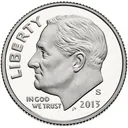
| Dime | 50 | $5.00 | Green | 1964 and earlier 90% silver, 1982 no-mint-mark dime |
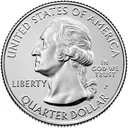
| Quarter | 40 | $10.00 | Orange | 1964 and earlier 90% silver, W-mint quarters, 2004-D Wisconsin Extra Leaf |
| Half dollar | 20 | $10.00 | Tan | 1964 90% silver, 1965–1970 40% silver Kennedys, proofs |
| Small dollar | 25 | $25.00 | — | Rare 2000-P Sacagawea varieties, Presidential edge errors |
Which one is yours? Check it with CoinLens →
Standard US roll counts and wrapper colors from the coin wrapper references cited. Some older or bank-made rolls differ.
DEMO
Check your Coin Roll Hunting: A Beginner's Guide to Searching Bank Rolls
Add a photo of each side
Add a photo of at least one side first.
Demo — photos stay on your device. Nothing is uploaded.
DEMO
Your photos are ready. The identification happens in the CoinLens app.
On the web this is a demo — it can't recognize coins. In the app, the same two photos give you the coin's name, details and a value estimate.
Scan these in the free appEXAMPLE — what CoinLens shows
Value estimate:
Sample from our guide's data, not a result for your photo.
That was a sample. Scan your coin →·
| Denomination | Bank box | Federal Reserve standard bag |
|---|---|---|
| Cents | 50 rolls = $25 | $50 |
| Nickels | 50 rolls = $100 | $200 |
| Dimes | 50 rolls = $250 | $1,000 |
| Quarters | 50 rolls = $500 | $1,000 |
| Half dollars | 50 rolls = $500 (about 25 lb) | $1,000 |
Which one is yours? Check it with CoinLens →
Boxes hold 50 rolls (CoinWeek for halves; box face values follow from the roll counts). Bag sizes from Federal Reserve Financial Services. Banks order boxes from their cash supplier; ask ahead.
| Find | Denomination | How to spot it | Worth |
|---|---|---|---|
| 90% silver | Dimes, quarters, halves dated 1964 or earlier | Date; no copper stripe on the edge | Silver melt (live below) |
| 40% silver | Kennedy halves 1965–1970 | Date only (they look clad) | Silver melt (live below) |
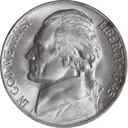
| War nickels | Nickels Sept 1942–1945 | Large P, D or S above Monticello | 35% silver melt (live below) |
| Copper cents | 1982 and earlier | Weigh: 3.11 g copper vs 2.5 g zinc (1982 has both) | Copper value; collectors buy in bulk |
| Wheat cents | 1909–1958 | Wheat ears on the back | A few cents each; check key dates |
| 1969-S, 1972, 1995 doubled dies | Cents | Doubled LIBERTY and IN GOD WE TRUST | Premium varies widely; see our variety pages |
| 1982 no-P dime | Dimes | 1982 with no mint mark above the date | Premium over face; see our 1982 dime page |
| 2005-D Speared Bison | Nickels | Raised line through the bison’s back, D mint mark | About $20–$50 circulated (CoinWeek) |
| W-mint quarters | 2019 and 2020 quarters | W mint mark right of Washington’s ponytail | Over face; early 2019-W finds sold for $75–$100 (Coin World) |
| 2004-D Wisconsin Extra Leaf | Quarters | Extra leaf on the corn stalk, left side | Premium over face; see our Wisconsin quarter page |
| Proof coins | Any, esp. halves | Mirror fields, frosted design, S mint mark | Small premium |
Which one is yours? Check it with CoinLens →
Silver and copper rules from the Coinage Act of 1965 and the US Mint; variety values from CoinWeek, NGC and our variety pages. Melt values at today's spot are in the table below.
| Find | Silver (troy oz) | Melt each |
|---|---|---|
| 90% dime (1964 and earlier) | 0.07234 | $3.14 melt |
| 90% quarter (1964 and earlier) | 0.18084 | $7.84 melt |
| 90% half (1964 and earlier) | 0.36169 | $15.68 melt |
| 40% Kennedy half (1965–1970) | 0.1479 | $6.41 melt |
| War nickel (1942–1945) | 0.05626 | $2.44 melt |
Silver weights are the coins' legal specifications; worn coins hold slightly less.
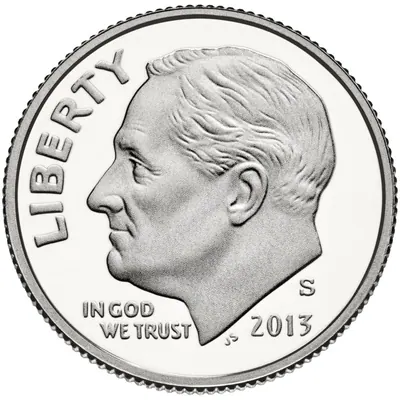
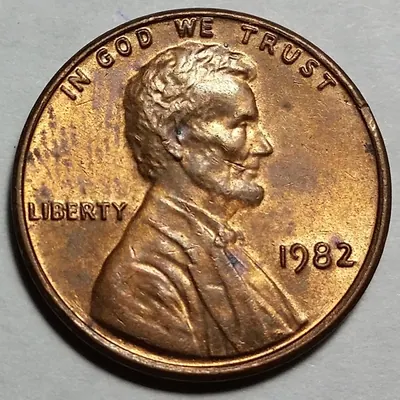
Coin roll hunting (CRH) is the cheapest treasure hunt in collecting. You buy rolls of coins from a bank at face value, search every coin for something worth more, keep the finds and take the rest back. You can’t lose money on the coins themselves, only time.
What you’re looking for, in rough order of how often it turns up:
- Copper cents dated 1982 and earlier, and wheat cents (1909–1958).
- Silver: dimes, quarters and halves dated 1964 or earlier (90%), Kennedy halves 1965–1970 (40%), and war nickels (1942–1945, 35%).
- Modern collectibles: 2019-W and 2020-W quarters, the 1982 no-P dime, the 2005-D Speared Bison and the 2004-D Wisconsin Extra Leaf.
- Doubled dies and major errors: rare, but they are the reason people keep searching.
The cheat sheet table above has the checks for each.
Step 1: Get rolls and boxes from a bank
Start with your own bank. Most banks exchange rolls free for account holders; non-customers may be refused or charged a fee. Ask at the teller window for a few rolls of whatever denomination you want to search.
For volume, order boxes. A box is 50 rolls: $25 of cents, $100 of nickels, $250 of dimes or $500 of quarters or halves. A half-dollar box weighs about 25 lb and is, in one CoinWeek writer’s words, “about the size of a quarter sheet cake.” Call ahead. In that writer’s case, the bank phoned in the order, an armored-car service filled it, and he collected it at the teller window about a week later.
Half dollars take more effort. They rarely circulate, so most branches don’t keep them. Coin World confirmed with the Mint that the Federal Reserve has ordered circulation-quality Kennedy halves in recent years, so banks can get them, but you may need to ask a branch to order specially. One Coin World story describes a Washington state bank that ordered halves by mistake instead of quarters and sold a collector the whole $500 box of 2021-D halves.
Supply can tighten. In summer 2020 banks rationed coin. The Federal Reserve and the US Coin Task Force stressed this was a circulation slowdown, not a shortage: people stopped spending coins during the pandemic. The Fed limited allocations to banks until coins moved again. If your bank says no, try a credit union or another branch.
Etiquette that keeps your supply open
- Be a customer and keep it friendly. Tellers do this as a favor.
- Don’t dump loose coin on the bank you buy from; return searched coins wrapped, or use a second “dump bank”. CoinWeek recommends this, partly so you don’t buy back your own searched rolls.
- Avoid coin-counting kiosks for returns unless you take a gift card. Coinstar’s fee is about 12% unless you take a gift card (Bankrate).
Step 2: Search efficiently
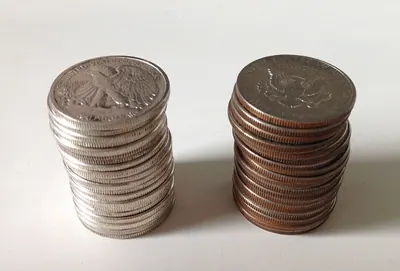
- Edge first. Fan the roll out or stack the coins and look at the edges. Silver dimes, quarters and halves have a solid silver edge, with no copper stripe (see the stacked halves in the photo). This finds silver in seconds.
- Then dates and mint marks. Read every date. You’re looking for 1964 and earlier, 1965–1970 halves, 1942–1945 nickels, W mint marks on 2019–2020 quarters, and a missing mint mark on 1982 dimes.
- Then the varieties. Use a 5× or 10× magnifier on candidates: doubling on LIBERTY and IN GOD WE TRUST on 1969-S, 1972 and 1995 cents; the extra corn leaf on 2004-D Wisconsin quarters; the spear line on 2005-D bison nickels.
- Weigh copper cents in batches. Cents from 1962 to 1981 are 95% copper (3.11 g); cents from 1983 on are copper-plated zinc (2.5 g). For 1982, weigh each coin. A 0.01 g scale makes it quick.
- Set aside anything odd: off-center strikes, missing clad layers, wrong colors, coins from other countries.
What each denomination tends to give
Cents
Cents are the cheapest box at $25 and the most productive for volume finds. Expect copper cents in every box, and some wheat cents. Copper cents are mostly saved for their metal content rather than sold one by one. The rare finds are doubled dies: the 1969-S doubled die is the great rarity, while the 1972 and 1995 doubled dies are more affordable but still well over face value. Our 1969-S and 1972 doubled die pages show the diagnostics.
Nickels
The prize is the war nickel (late 1942–1945). It is 35% silver and has a large P, D or S above Monticello, the first time a P mint mark appeared on a US coin. See our war nickels guide. Also watch for the 2005-D Speared Bison; CoinWeek says circulated examples typically sell for $20–$50.
Dimes
Look for 90% silver Roosevelt and Mercury dimes dated 1964 or earlier, and the 1982 dime with no mint mark, a Philadelphia coin struck from a die missing its P. See our 1982 no-mint-mark dime page for values.
Quarters
Pre-1965 silver quarters still appear occasionally. The modern hunt is for W-mint quarters. In 2019 the Mint released 2 million quarters of each of the five designs struck at West Point, straight into circulation, the first circulating coins with a W mint mark. NGC estimated they were under 1% of 2019 quarters. In 2020 it repeated the program with a V75 privy mark marking the end of World War II. The first 2019-W quarters found sold for $75–$100, per Coin World. One famous early find came from a coffee-shop register in Burbank. See 2019-W quarter value.
Half dollars
Half dollars are the favorite of many hunters: only 20 coins to a roll, and people still spend or deposit inherited silver Kennedys. Look for the 1964 Kennedy (90% silver), 1965–1970 Kennedys (40% silver) and occasional proof coins from broken-up sets. Results vary a lot. A CoinWeek writer who searched a full $1,000 of halves, 2,000 coins, reported one 40% silver half and three proofs.
How often will you find something?
There are no reliable published statistics on hit rates per box. Results depend on your area, your bank’s customers and how many other hunters search the same coin. The only hard figures are anecdotes: NGC’s under-1% estimate for 2019-W quarters, and the CoinWeek search of 2,000 halves. Forum posts trade “per box” averages, but these are hobbyist reports, not data. Treat any “you’ll find X per box” claim with caution.
How to check your finds with CoinLens
When a roll turns up something you can’t place, such as a worn date, an older type or a foreign coin, photograph both sides with Coin Identifier – CoinLens (iPhone and Android). The AI identifies the coin within seconds and shows its year, composition and an instant value estimate. You can also save finds to a collection that tracks their total value, which makes it easy to log what each box produced. CoinLens doesn’t detect doubled dies or errors, so check those with a magnifier and the cheat sheet. Free scans are limited; Premium unlocks unlimited scans.
What to do with your finds
- Silver: save it, or sell to a coin shop at a price tied to spot. The melt table above shows today’s value per coin.
- Copper cents and wheat cents: most hunters accumulate them; individual coins are worth little.
- Varieties and errors: check sold listings, and grade anything that could be worth $100 or more.
- Everything else: wrap it and return it to the bank. A different bank (your dump bank) avoids re-searching your own coins.
For the coins most worth watching for, see what coins are worth money in pocket change.
Frequently asked questions
What is coin roll hunting?
Buying rolls of coins at face value from a bank, searching them for coins worth more than face (silver, copper, key dates, errors), keeping the finds, and depositing or exchanging the rest.
Is coin roll hunting still worth it?
Financially it’s a small-stakes hobby: you only ever pay face value, so your risk is time, not money. Silver and rare varieties are scarce in modern rolls; one CoinWeek writer searched 2,000 half dollars and reported a single 40% silver coin plus three proofs. Most hunters do it for the search itself and the occasional good find.
How do I get coin rolls from the bank?
Ask at the teller window of a bank or credit union where you have an account; most exchange rolls free for customers. For a full box of 50 rolls, call ahead: half dollar boxes usually have to be ordered and can take about a week to arrive.
Which coins are best for roll hunting?
Half dollars are popular because each roll is only 20 coins and silver Kennedys still turn up. Cents are cheap to search and yield copper, wheat cents and doubled dies. Quarters and dimes can produce pre-1965 silver and W-mint quarters.
What do I do with the coins I don't keep?
Deposit them or exchange them at a bank. Collectors call the bank where they return searched coins a ‘dump bank’; using a different bank than the one you buy from helps you avoid re-searching your own coins, per CoinWeek. Coin counting kiosks charge a fee of roughly 12% unless you take a gift card.
What are the best finds in coin rolls?
Common finds are pre-1982 copper cents, wheat cents and occasional 90% or 40% silver. Rarer finds include W-mint quarters (under 1% of 2019 quarters, per NGC) and major errors: the known 2001-D cent/dime mules were found in bags or rolls from circulation.
How many coins are in a roll of half dollars?
Twenty, for $10 face value. A bank box holds 50 rolls, $500, and weighs about 25 pounds.
Sources
- Coin wrapper: US roll counts and colors (Wikipedia)
- CoinWeek (Aug 2018): A $1,000 Kennedy half dollar roll search (box size, ordering, results)
- Federal Reserve Financial Services: coin depositing and ordering (standard bag sizes)
- Coin collecting by the roll: who assembles rolls (CoinWeek)
- Dump bank: one half of the coin roll hunting equation (CoinWeek)
- Bankrate: best ways to change coins into cash (Coinstar fees, bank policies)
- ABA Banking Journal (July 2020): Coin task force on circulation slowdown
- Coin World: Federal Reserve is ordering half dollars for general circulation
- Rare Lincoln cent / Roosevelt dime reverse mule: $114,000 Heritage June 2021; found in bags or rolls (CoinWeek)
- Coinage Act of 1965 (Wikipedia)
- Lincoln cent composition changes (Wikipedia)
- Jefferson nickel wartime alloy (Wikipedia)
- NGC (Apr 2019): First 2019-W quarter certified; W quarters under 1% of 2019 quarters
- Coin World: First 2019-W quarters found in circulation (early sales $75–$100)
- Coin World: 2020-W quarters with V75 privy mark
- CoinWeek: The curiosity of the 2005-D Speared Bison nickel
Values are estimates, not offers. Condition decides the price; for a valuable coin, get a professional grade.