What Coins to Look For in Pocket Change: A 5-Minute Checklist
Sort change in five passes: silver (dimes, quarters and halves dated 1964 or earlier), war nickels (big mint mark over Monticello), pre-1982 copper cents, key dates, then visible errors. Errors still turn up in circulation: a 2004-D Wisconsin 'extra leaf' quarter sold for $432 (NGC MS66, Heritage, January 2023).
Have one in hand? Scan it with CoinLens to identify it and see an estimate in seconds.
| Pass | What to pull out | How to spot it fast | Why it's worth keeping |
|---|---|---|---|
| Dimes, quarters, halves dated 1964 or earlier; Kennedy halves 1965–1970 | Solid silver edge, no copper stripe | 90% (or 40%) silver: worth melt, many times face |
| Jefferson nickels 1942–1945 | Large P, D or S above Monticello | 35% silver |
| Lincoln cents dated 1981 and earlier (some 1982) | Weigh: copper 3.11 g, zinc 2.5 g | 95% copper; collectors and hoarders save them |
| Low-mintage dates in each series | Check date and mint mark against a key-date list | Premiums over face, sometimes large |
| Doubled lettering, off-center strikes, extra design elements | Magnifier on date, LIBERTY and mottoes | Collector premiums from small to large |
Which one is yours? Check it with CoinLens →
Specifications from the US Mint and the coin articles cited. A checklist, not a price guide; see the linked guides for values.
DEMO
Check your What Coins to Look For in Pocket Change: A 5-Minute Checklist
Add a photo of each side
Add a photo of at least one side first.
Demo — photos stay on your device. Nothing is uploaded.
DEMO
Your photos are ready. The identification happens in the CoinLens app.
On the web this is a demo — it can't recognize coins. In the app, the same two photos give you the coin's name, details and a value estimate.
Scan these in the free appEXAMPLE — what CoinLens shows
Value estimate:
Sample from our guide's data, not a result for your photo.
That was a sample. Scan your coin →·
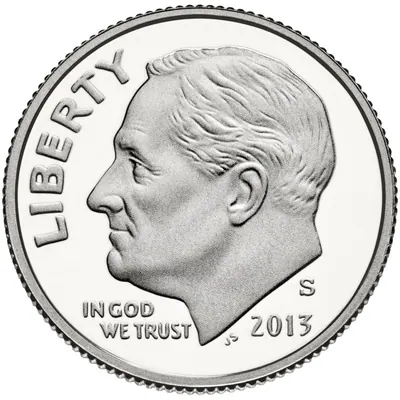
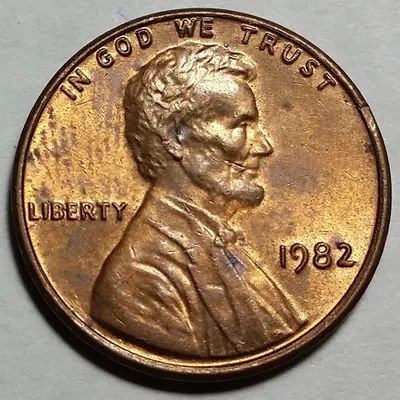
You need five minutes, good light, a cheap digital scale (0.01 g) and a 5x–10x magnifier. Go through your change in five passes, from the fastest check to the slowest. The table above is the whole checklist.
Pass 1: Silver (edges first)
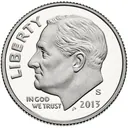
Stack dimes and quarters and look at the edges. A copper stripe means clad (no silver). A solid silver-white edge means check the date: 1964 or earlier is 90% silver. For half dollars, 1964 and earlier are 90% and 1965–1970 Kennedys are 40%.
Pass 2: War nickels
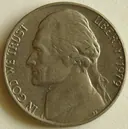
Flip every Jefferson nickel and look above the dome of Monticello. A large P, D or S there marks a 1942–1945 “war nickel” with 35% silver.
Pass 3: Copper cents
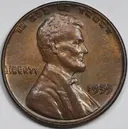
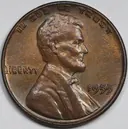
Lincoln cents dated 1981 and earlier are 95% copper; from 1983 they’re copper-plated zinc. 1982 is mixed, so weigh those: 3.11 g is copper, 2.5 g is zinc. Keep the wheat-reverse cents (1909–1958) for pass 4.
Pass 4: Key dates
Check the date and mint mark of older coins against key-date lists for each series — for example 1909-S VDB, 1914-D and 1931-S cents, 1916-D dimes, 1932-D and 1932-S quarters. The mint mark location changes by series and year. Our guide to coins worth money lists the dates that matter and what they sell for.
Pass 5: Errors
Under the magnifier, check:
- Date, LIBERTY and IN GOD WE TRUST for doubling (1955, 1969-S, 1972 and 1995 cents are the famous ones).
- Off-center strikes, where part of the design is missing and a blank crescent shows.
- Extra or missing design elements, like the “extra leaf” on 2004-D Wisconsin quarters.
- Wrong-color coins, such as a copper-colored 1943 cent (most are plated fakes; real ones don’t stick to a magnet).
Ignore scratches, dents, green corrosion and color changes — that’s damage, not errors.
How to check your coin with CoinLens
When you’ve pulled out a pile of “maybes,” photograph each coin’s front and back with Coin Identifier – CoinLens (iOS). The AI identifies the coin from a database of almost 500,000 coins, shows an instant value estimate and its composition, and lets you save coins to a collection with its total value. Free scans are limited; Premium unlocks unlimited scans. Values are estimates; get valuable finds graded. Download CoinLens on the App Store.
What to do with what you find
- Silver: keep it or sell it to a coin shop or bullion dealer at a price tied to spot.
- Copper cents: keep them in rolls; most are worth face for now.
- Key dates and errors: identify them exactly, check sold listings, and grade anything valuable before selling.
Frequently asked questions
What is the fastest way to find silver coins in change?
Look at the edges of a stack of dimes or quarters. Clad coins (1965 and later) show a copper stripe; 90% silver coins have a solid silver-white edge. Then confirm the date is 1964 or earlier.
Are wheat pennies in pocket change worth money?
Wheat-reverse Lincoln cents (1909–1958) are all copper-alloy and collectible, but most common dates are worth only a little above face. Keep them and check the date and mint mark for keys like 1909-S VDB, 1914-D and 1931-S.
Are 1982 pennies worth money?
1982 is the changeover year: some are copper (3.11 g) and some are zinc (2.5 g), in large and small date styles. Weigh them to sort. Most are worth about face, but copper examples are worth keeping.
What errors can I still find in pocket change?
Modern errors that turn up include the 2004-D Wisconsin ‘extra leaf’ quarter, off-center cents, 1995 doubled die cents and the 1992 and 1998–2000 ‘close AM’ and ‘wide AM’ cents. A 5x–10x magnifier helps.
Should I take my change to a coin shop?
Sort it first with this checklist. A coin shop will buy silver at a price tied to spot and may pay premiums for key dates and errors, but not for ordinary change.
Sources
- Coinage Act of 1965 (Wikipedia)
- Jefferson nickel: wartime 35% silver alloy (Wikipedia)
- Lincoln cent: 1982 change to copper-plated zinc, 3.11 g to 2.5 g (Wikipedia)
- Kennedy half dollar composition by year (Wikipedia)
- 2004-D Wisconsin extra leaf high, NGC MS66, Heritage Jan 2023 (NGC Auction Central)
- 10 coins worth more than face value you can find in change (CoinWeek)
- US Mint coin specifications
Values are estimates, not offers. Condition decides the price; for a valuable coin, get a professional grade.