Where Is the Mint Mark on My Coin? (Every US Coin, With Photos)
On coins made since 1968, the mint mark is on the front near the date: below the date on cents, above it on dimes and Kennedy halves, right of Washington's ponytail on quarters. Older coins usually have it on the back. It matters: a 1909-S VDB cent set a $345,375 record (GreatCollections, January 2023).
Have one in hand? Scan it with CoinLens to identify it and see an estimate in seconds.
| Coin | Years | Mint mark location |
|---|---|---|
| Indian Head cent | 1908-S and 1909-S only | Back, below the wreath (bottom center); all other years Philadelphia, no mark |
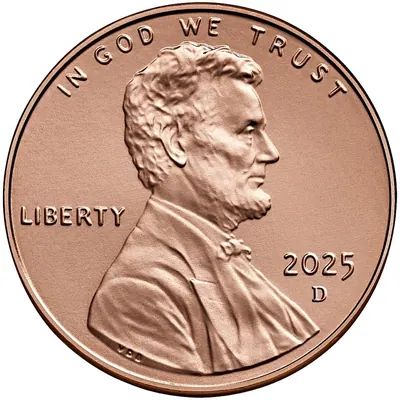
| Lincoln cent | 1909–present | Front, under the date (P only on 2017 cents; W on 2019 collector cents) |
| Shield nickel | 1866–1883 | None: all struck in Philadelphia |
| Liberty Head nickel | 1912-D and 1912-S only | Back, left of CENTS, below the dot |
| Buffalo nickel | 1913–1938 | Back, centered under FIVE CENTS |
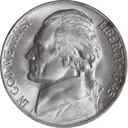
| Jefferson nickel | 1938–1964 | Back, right of Monticello |
| Jefferson ‘war nickel’ (35% silver) | 1942–1945 | Back, large letter above Monticello’s dome (incl. P) |
| Jefferson nickel | 1968–2004 | Front, just clockwise from the last digit of the date |
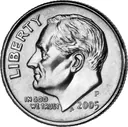
| Jefferson nickel | 2005 / 2006–present | Front, under LIBERTY (2005); under the date (2006 on) |
| Seated Liberty half dime and dime | 1837–1891 | Back: inside the wreath before 1860, below the wreath after |
| Barber dime | 1892–1916 | Back, below the wreath |
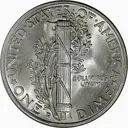
| Mercury dime | 1916–1945 | Back, between the E of ONE and the base of the olive branch |
| Roosevelt dime | 1946–1964 | Back, left of the torch |
| Roosevelt dime | 1968–present | Front, above the date |
| Seated Liberty quarter, half, dollar | 1838–1891 | Back, below the eagle, above the denomination |
| Barber quarter and half | 1892–1916 / 1915 | Back, below the eagle |
| Standing Liberty quarter | 1916–1930 | Front, base of the wall, just left of Liberty’s foot |
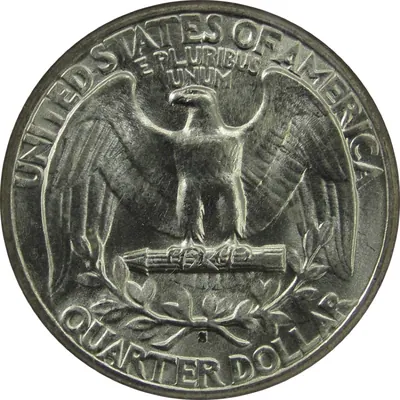
| Washington quarter | 1932–1964 | Back, below the wreath under the eagle |
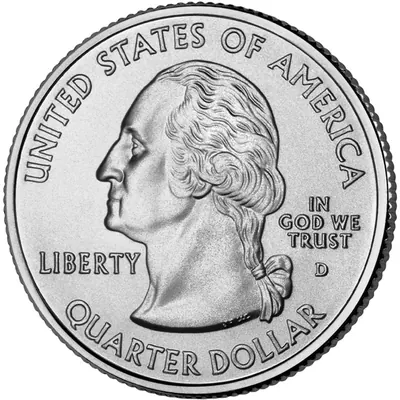
| Washington quarter | 1968–1998 | Front, lower right, right of Washington’s ponytail |
| State and DC/Territories quarters | 1999–2009 | Front, right of the ponytail, below IN GOD WE TRUST |
| American Women quarters | 2022–2025 | Front, lower right, under Washington’s chin by the date |
| Walking Liberty half | 1916–some 1917 | Front, under ‘Tr’ of IN GOD WE TRUST |
| Walking Liberty half | 1917–1947 | Back, lower left under the tree |
| Franklin half | 1948–1963 | Back, above the bell’s yoke, below the E of STATES |
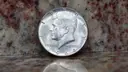
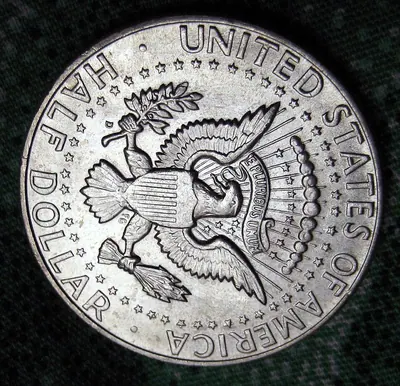
| Kennedy half | 1964 | Back, left of the eagle’s claw holding the olive branch |
| Kennedy half | 1968–present | Front, above the date |
| Morgan dollar | 1878–1921 | Back, above the D and O of DOLLAR |
| Peace dollar | 1921–1935 | Back, above the tip of the eagle’s wing |
| Eisenhower dollar | 1971–1978 | Front, below the neck, above the date (Philadelphia: none) |
| Susan B. Anthony dollar | 1979–1981, 1999 | Front, above Anthony’s right shoulder (viewer’s left) |
| Sacagawea dollar | 2000–2008 | Front, below the date |
| Native American and Presidential dollars | 2007/2009–present | On the edge, in the edge lettering with the date |
| American Silver Eagle (proofs) | 1986–present | Back (bullion coins have no mint mark) |
| Liberty Head $10 and $20 gold | 1838/1850–1907 | Back, below the eagle |
| Indian Head $2.50 and $5 gold | 1908–1929 | Back, left of the arrowheads |
| Saint-Gaudens $20 gold | 1907–1933 | Front, above the date |
Which one is yours? Check it with CoinLens →
Locations from the Wikipedia series articles and CoinWeek collector guides cited below. No US coins carry mint marks for 1965–1967. Before 1980, Philadelphia coins have no mint mark except war nickels and Susan B. Anthony dollars.
DEMO
Check your Where Is the Mint Mark on My Coin? (Every US Coin, With Photos)
Add a photo of each side
Add a photo of at least one side first.
Demo — photos stay on your device. Nothing is uploaded.
DEMO
Your photos are ready. The identification happens in the CoinLens app.
On the web this is a demo — it can't recognize coins. In the app, the same two photos give you the coin's name, details and a value estimate.
Scan these in the free appEXAMPLE — what CoinLens shows
Value estimate:
Sample from our guide's data, not a result for your photo.
That was a sample. Scan your coin →·
| Mark | Mint | Years it struck coins | Notes |
|---|---|---|---|
| None / P | Philadelphia | 1793–present | P on war nickels (1942–45), the 1979 Anthony dollar, then most coins from 1980; on cents only in 2017 |
| D | Denver | 1906–present | First coins struck February 1906 |
| S | San Francisco | 1854–present | Stopped regular coinage after 1955; later proofs and some circulating issues |
| W | West Point | 1984-dated gold onward | W quarters in 2019 (2 million per design); W cents for collectors in 2019 |
| CC | Carson City | 1870–1893 | With a gap 1885–1889; prized on Morgan dollars |
| O | New Orleans | 1838–1861, 1879–1909 | Morgan dollars, Barber coins, earlier silver and gold |
| C | Charlotte | 1838–1861 | Gold coins only |
| D (gold, before 1862) | Dahlonega | 1838–1861 | Gold only; not the same as Denver’s D |
Which one is yours? Check it with CoinLens →
Years from the Wikipedia articles on each mint. No US coins carry mint marks for 1965–1967.
A mint mark is a small letter showing which US Mint struck the coin. Today’s mints are P (Philadelphia), D (Denver), S (San Francisco) and W (West Point). Older coins can carry CC (Carson City), O (New Orleans) and, on early gold, C (Charlotte) or D (Dahlonega).
- Coins dated 1968 or later: look on the front (obverse), near the date. The cent has it under the date, the dime and Kennedy half above the date, and the quarter right of Washington’s ponytail.
- Coins dated 1964 or earlier: look on the back (reverse), usually near the bottom.
- Modern dollars since 2007–2009: look on the edge, where the mint mark is part of the edge lettering.
- No letter at all? The coin is most likely from Philadelphia, or it’s dated 1965–1967, when no coins carried mint marks.
The first table above gives the exact spot for every major US series, from Indian Head cents to Saint-Gaudens gold. The second explains each letter.
How to look for a mint mark
- Clean your hands, not the coin. Hold it by the edge. Never rub or polish a coin to read it.
- Use light from the side. A single lamp at a low angle makes the tiny raised letter cast a shadow.
- Use magnification. A 5× to 10× loupe or your phone camera’s zoom works. Mint marks on dimes and cents are about the size of a digit in the date.
- Know where to look first. Check the table for your coin type and date before scanning the whole surface. The photos above show two of the most common modern spots: under the date on the cent and beside the ponytail on the quarter.
- Don’t confuse it with initials. Designers’ initials appear on many coins: “FG” under the eagle on the Kennedy half (visible in the 1964-D photo), “VDB” on some 1909 cents. Mint marks are single letters, or CC.
Mint marks by era
Before 1965: mostly on the back. On classic silver coins the mark sits on the reverse: under the wreath on Barber dimes and 1932–1964 Washington quarters, under the eagle on Barber and Seated Liberty quarters and halves, and above “DO” of DOLLAR on Morgan dollars. A few designs broke the pattern. The Standing Liberty quarter put it on the front, by Liberty’s foot. The earliest 1916–1917 Walking Liberty halves have it on the front too, before it moved to the back.
Several early series have almost no mint marks. The Shield nickel was struck only in Philadelphia. The Indian Head cent has a mint mark in just two years, 1908-S and 1909-S, under the wreath on the back. The Liberty Head nickel has one only on the 1912-D and 1912-S, left of CENTS.
1965–1967: none at all. During the coin shortage that came with the switch from silver to clad, Mint Director Eva Adams blamed collectors in part, and the Coinage Act of 1965 let the Mint drop mint marks. Coins dated 1965, 1966 and 1967 have none, whichever mint struck them. Marks returned in 1968.
1968 on: mostly on the front. When marks came back they moved to the obverse on cents, nickels (from 1968), dimes, quarters and halves. That’s why a modern coin’s mark is near the date.
Dollars and the edge. Eisenhower dollars show D or S above the date, with none on Philadelphia coins. The Susan B. Anthony dollar puts the mark by her shoulder, and Sacagawea dollars of 2000–2008 put it below the date. From 2007 (Presidential dollars) and 2009 (Native American dollars), the date and mint mark moved to the edge lettering. If you can’t find one on the face of a modern golden dollar, roll it and read the edge.
Why “no mint mark” doesn’t always mean Philadelphia
- 1965–1967: no coins carried mint marks.
- Philadelphia before 1980: Philadelphia coins were unmarked, except the 1942–1945 war nickels and the 1979 Susan B. Anthony dollar. The P became standard in 1980, but never on the cent, apart from 2017, when every Philadelphia cent carried a P for the Mint’s 225th anniversary.
- West Point without a W: before it carried a W, West Point struck cents with no mint mark from 1974 to 1986, and quarters with no mint mark from 1977 to 1979, indistinguishable from Philadelphia coins.
- Bullion coins: American Silver Eagle bullion coins have no mint mark; only the proofs and some collector versions do.
- Missing-mint-mark errors: a few coins that should have a mark don’t, such as the 1982 Roosevelt dime from Philadelphia, which was supposed to carry a P. See our guide to the 1982 no-mint-mark dime.
The rare and the famous: W, CC and O
W for West Point. West Point’s first W coin was a 1984-dated $10 Olympic gold piece. Circulating coins with a W came only in 2019, when the Mint released 2 million of each America the Beautiful quarter design struck at West Point, and in 2019 it also made W cents for collectors.
CC for Carson City. The Nevada mint coined from 1870 to 1893, with a gap in the late 1880s, using silver from the Comstock Lode. Carson City Morgan dollars are among the most collected coins in America largely because of that CC.
O for New Orleans. The New Orleans Mint struck coins from 1838 to 1861 and again from 1879 to 1909. Morgan dollars and Barber coins with an O are common finds in old collections.
C and D on early gold. Before the Civil War, branch mints at Charlotte (C) and Dahlonega (D) in the Southern gold regions struck only gold coins, from 1838 to 1861. Don’t confuse a Dahlonega D on pre-1862 gold with Denver’s D, which began in 1906.
Why the mint mark matters for value
For many dates, one mint made far fewer coins than the others, and that difference drives price. The 1909-S VDB cent (484,000 released) is the key Lincoln cent, and a PCGS MS67 Red CAC example set a $345,375 record at GreatCollections in January 2023. The 1916-D Mercury dime (264,000 struck) is the key to its series. Carson City “CC” Morgan dollars sell for premiums for the same reason. Always note the mint mark when you look up a value.
Beware of added mint marks
Valuable mint marks get faked: added or altered letters are a known problem on key dates. Wikipedia notes the mint marks on the 1932-D and 1932-S quarters have been counterfeited, and the 1909-S VDB and 1916-D dime are classic targets. Have potentially valuable coins authenticated by PCGS, NGC or ANACS.
How to check your coin with CoinLens
Tiny letters are hard to read on a worn coin. Take a sharp photo of each side with Coin Identifier – CoinLens (iPhone and Android). The app identifies the coin from almost 500,000 in its database and shows its minting years, composition and an instant value estimate. Then use the table above to confirm the mint mark, since the mark can change the value. Free scans are limited; Premium unlocks unlimited scans.
Where to sell coins with valuable mint marks
Common mint marks don’t change much: a worn 1964-D quarter is worth the same silver as a 1964 from Philadelphia. Key mint-mark dates are different. Get them authenticated and graded first, then sell through a dealer, a major auction house or eBay with the certification number in the listing. See how to get coins graded.
Frequently asked questions
What do the mint mark letters stand for?
P = Philadelphia, D = Denver, S = San Francisco, W = West Point (the four mints operating today). Older coins can also show CC (Carson City), O (New Orleans), and on early gold, C (Charlotte) and D (Dahlonega).
What does it mean if my coin has no mint mark?
Usually that it was struck in Philadelphia, which didn’t use a P on most coins before 1980 (and still doesn’t on the cent, except in 2017). Coins dated 1965–1967 have no mint mark from any mint.
Why don't 1965–1967 coins have mint marks?
Mint marks were removed during the switch from silver to clad coinage under the Coinage Act of 1965, to discourage collectors from hoarding coins during a shortage. They returned in 1968.
Does the mint mark change a coin's value?
It can matter a lot. The same date can be common from one mint and scarce from another: only 264,000 1916-D Mercury dimes were struck, and just 484,000 1909-S VDB cents were released — both are key dates worth far more than their Philadelphia counterparts.
Where is the mint mark on a 1964 quarter?
On silver Washington quarters (1932–1964) it’s on the back, below the eagle’s wreath. 1964 quarters from Philadelphia have no mint mark; Denver coins show a D.
Sources
- Mint mark — US mint letters and history (Wikipedia)
- Mint Marks — collecting basics (United States Mint)
- Lincoln cent — mint mark under date; 1909-S VDB 484,000 released (Wikipedia)
- Buffalo nickel — mint mark under FIVE CENTS (Wikipedia)
- Jefferson nickel — mint mark locations by period (Wikipedia)
- Mercury dime — mint mark location; 1916-D mintage 264,000 (Wikipedia)
- Roosevelt dime — mint mark locations (Wikipedia)
- Washington quarter — mint marks 1965–1967 and post-1967 location (Wikipedia)
- Walking Liberty half dollar — mint mark locations (Wikipedia)
- Franklin half dollar — mint mark location (Wikipedia)
- Kennedy half dollar — mint mark locations (Wikipedia)
- Morgan dollar — mint marks CC, O, S, D (Wikipedia)
- Peace dollar — mint mark location (Wikipedia)
- Wikipedia: Indian Head cent (1908-S, 1909-S)
- CoinWeek: 1908-S Indian Head cent, the first mint-marked penny
- Wikipedia: Shield nickel (Philadelphia only, no mint mark)
- CoinWeek: 1912-S Liberty Head nickel collector's guide (mint mark left of CENTS)
- Wikipedia: Barber coinage (mint mark locations)
- Wikipedia: Seated Liberty coinage (mint mark locations)
- Wikipedia: Standing Liberty quarter
- CoinWeek: Washington quarter, silver 1932–1964 (mint mark below wreath)
- CoinWeek: 1999 Delaware state quarter collector's guide (mint mark location)
- CoinWeek: American Women quarters 2022–2025
- CoinWeek: Eisenhower dollar 1971–1978 collector's guide
- CoinWeek: Susan B. Anthony dollar 1979–1999
- CoinWeek: 2000-D Sacagawea dollar collector's guide
- Wikipedia: Susan B. Anthony dollar (mint mark on obverse, left of the bust)
- Wikipedia: Sacagawea dollar (edge mint mark from 2009)
- Wikipedia: Presidential dollar coins (edge lettering)
- Wikipedia: American Silver Eagle (proof mint marks)
- NGC Coin Explorer: Liberty Head $10 (mint mark below eagle)
- NGC Coin Explorer: Liberty Head $20 (mint mark below eagle)
- Wikipedia: Indian Head gold pieces
- Wikipedia: Saint-Gaudens double eagle
- Wikipedia: Philadelphia Mint
- Wikipedia: Denver Mint
- Wikipedia: San Francisco Mint
- Wikipedia: West Point Mint
- Wikipedia: Carson City Mint
- Wikipedia: New Orleans Mint
- Wikipedia: Charlotte Mint
- Wikipedia: Dahlonega Mint
- Wikipedia: Coinage Act of 1965 (mint marks omitted 1965–1967)
- CoinWeek: 1909-S V.D.B. Lincoln cent collector's guide (MS67RD $345,375, GreatCollections, Jan 2023)
Values are estimates, not offers. Condition decides the price; for a valuable coin, get a professional grade.