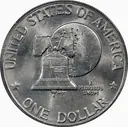
How Much Is a 1776–1976 Eisenhower Dollar Worth? (Bicentennial Ike: Type 1, Type 2 & Silver)
A circulated 1776–1976 Bicentennial Eisenhower dollar is copper-nickel clad and worth about face value. Premiums come from the S-mint 40% silver coins and top grades: a 1976-D Type 2 in PCGS MS67+ sold for $10,200 (Heritage, June 2024). Type 1 and Type 2 differ in the reverse lettering.
Have one in hand? Scan it with CoinLens to identify it and see an estimate in seconds.
| Coin | Circulated | Notable sales | Notes |
|---|---|---|---|
| 1976 Type 1 / Type 2 (P, D), clad | About face value | — | Type 2 scarce in MS66, very hard in MS67+ (PCGS) |
| 1976-S clad proof | Small premium | — | In 1975 (Type 1) and 1976 (Type 2) proof sets |
| 1976-S 40% silver (uncirculated or proof) | Silver melt (0.3162 oz) + premium | PCGS PR70 DCAM proof $1,242 (GreatCollections, Aug 2021) | All silver coins are Type 1 |
Which one is yours? Check it with CoinLens →
Estimates from the cited auction data and PCGS commentary, not a price guide.
DEMO
Check your Dual date 1776–1976 (struck 1975–1976) Eisenhower Dollar, Bicentennial reverse
Add a photo of each side
Add a photo of at least one side first.
Demo — photos stay on your device. Nothing is uploaded.
DEMO
Your photos are ready. The identification happens in the CoinLens app.
On the web this is a demo — it can't recognize coins. In the app, the same two photos give you the coin's name, details and a value estimate.
Scan these in the free appEXAMPLE — what CoinLens shows
Value estimate:
Sample from our guide's data, not a result for your photo.
That was a sample. Scan your coin →·
Coin facts
- Coin
- Eisenhower Dollar, Bicentennial reverse
- Years
- Dual date 1776–1976 (struck 1975–1976)
- Mints
- Philadelphia (no mint mark), Denver (D), San Francisco (S)
- Composition
- Copper-nickel clad; S-mint collector versions 40% silver
- Weight
- 22.68 g
- Diameter
- 38.1 mm
- Designer
- Frank Gasparro (obverse), Dennis R. Williams (Liberty Bell and Moon reverse)
Mintage
- 1976 Type 1 (P)
- 4,019,000
- 1976 Type 2 (P)
- 113,318,000
- 1976-D Type 1
- 21,048,710
- 1976-D Type 2
- 82,179,564
| Coin | Type 1 | Type 2 |
|---|---|---|
| Philadelphia (no mint mark), clad | 4,019,000 | 113,318,000 |
| Denver (D), clad | 21,048,710 | 82,179,564 |
| San Francisco (S) clad proof | 2,845,450 (in 1975 proof sets) | 4,149,730 (in 1976 proof sets) |
| San Francisco (S) 40% silver | 4,908,319 uncirculated; 3,998,621 proof | None (all silver coins are Type 1) |
Which one is yours? Check it with CoinLens →
From Wikipedia's Eisenhower dollar article. More than 220 million Bicentennial dollars were struck in all.
| Coin | Grade | Sold | Venue, date |
|---|---|---|---|
| Type 1 clad proof | PCGS PR70 DCAM | $25,300 (record) | Heritage, July 2011 |
| Type 2 clad proof | PCGS PR70 DCAM | $22,550 (record) | GreatCollections, Nov 2014 |
| Type 2 clad proof | PCGS PR70 DCAM | $1,050–$1,440 | Heritage, 2024 |
| 1976-D Type 2 | PCGS MS67+ | $10,200 | Heritage, June 2024 |
| 1976-D Type 1 | PCGS MS67 | $3,120 and $5,520 | Heritage, June 2024 |
| 1976-D Type 2 | PCGS MS67 | $2,782.50 | eBay, Apr 2026 |
| 1976 Type 1 (Philadelphia) | PCGS MS66 CAC | $2,440 | Heritage, Apr 2026 |
| 1976 Type 2 (Philadelphia) | NGC MS67 CAC | $1,770 | Heritage, July 2026 |
| 1976-S silver proof | PCGS PR70 DCAM | $1,242 | GreatCollections, Aug 2021 |
Which one is yours? Check it with CoinLens →
Records from CoinWeek; other sales from PriceCharting sold records and Coin World (see sources). Not a price guide. The proof records were set when few PR70s existed; recent PR70 prices are far lower.
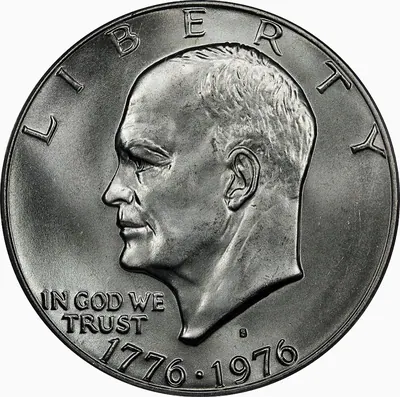
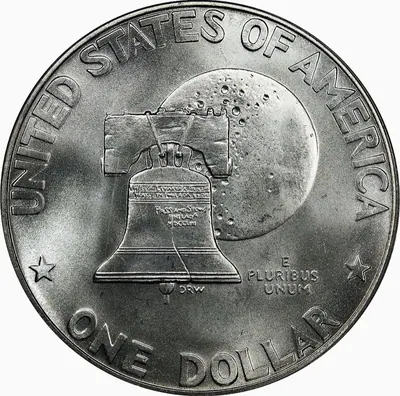
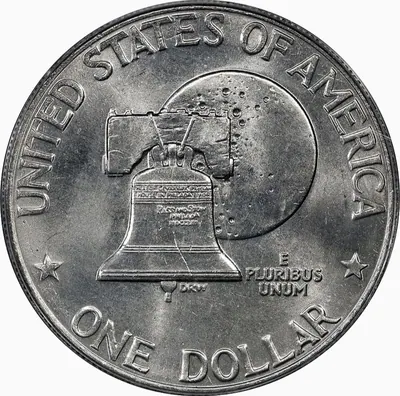
The 1776–1976 Bicentennial Eisenhower dollar was struck in 1975 and 1976 with a Liberty Bell over the Moon reverse. Circulation coins from Philadelphia and Denver are copper-nickel clad and worth about $1 when worn.
Worth more:
- 1976-S 40% silver: sold in three-piece silver sets in uncirculated and proof finishes. Each holds 0.3162 troy ounces of silver. Top grades are scarce: a PCGS PR70 Deep Cameo proof sold for $1,242 at GreatCollections in August 2021.
- High-grade clad coins: PCGS notes Type 2 coins are common through MS65 but scarce in MS66 and very hard to find in MS67 or higher.
Type 1 vs. Type 2
Early in production, Chief Engraver Frank Gasparro modified the reverse dies. The result:
- Type 1: bold, thick, blocky lettering on the reverse.
- Type 2: narrower, sharper lettering.
All silver coins are Type 1. All three mints struck both types in clad. Dollars in 1975 proof sets are Type 1; those in 1976 proof sets are Type 2.
How to identify your coin
- Mint mark: obverse, above the dual date. None = Philadelphia; D = Denver; S = San Francisco.
- Silver or clad (S only): edge stripe and weight (24.59 g silver vs. 22.68 g clad).
- Type: compare the reverse letters with a known example of each type.
Errors
Off-center strikes, clipped planchets and wrong-planchet strikes are the Bicentennial Ike errors that bring premiums. Machine doubling on the lettering is common and adds nothing.
Melt value
Clad coins have no silver. For a 1976-S silver coin, melt value is 0.3162 troy ounces times spot.
Why there’s no 1975 dollar
Public Law 93-127, signed on October 18, 1973, ordered special reverses for coins delivered between July 4, 1975 and December 31, 1976. To bridge the gap, Congress let the Mint keep striking 1974-dated coins in December 1974. Bicentennial dollars went into production in February 1975, silver strikes at San Francisco began on April 23, 1975, and the first coins reached circulation on October 13, 1975. Every dollar made in 1975 and 1976 is dated 1776–1976, so no 1975-dated Ike exists.
The design story
The reverse came from a public competition that closed in January 1974. Dennis R. Williams, an art student at the Columbus College of Art and Design in Ohio, was picked in March 1974. Chief Engraver Frank Gasparro simplified his lunar features and adjusted the lettering and the bell, and Williams helped strike the first prototypes on August 12, 1974; a prototype set went to President Ford. Not everyone approved: some numismatists objected that the Liberty Bell already appeared on the Franklin half dollar.
Type 1 vs Type 2 in detail
The first table above shows how the two types split by mint. Type 1 has flat, bold, sans-serif reverse lettering. Type 2 has thinner letters with small serifs that match the obverse, and its dies also lowered the obverse relief and softened Eisenhower’s features. The quickest check is the R in LIBERTY: no serifs on Type 1, serifs on Type 2.
The change happened because the clad coins struck up indistinctly with the original design (the silver coins didn’t have the problem), so Mint Director Mary Brooks halted production for new dies; the Mint announced the switch on November 28, 1975. That’s why Philadelphia made only about 4 million Type 1 coins against 113 million Type 2, and why the Philadelphia Type 1 is the scarce business strike, especially in top grades. All 40% silver coins are Type 1. Clad proofs exist in both: Type 1 in 1975 proof sets and Type 2 in 1976 sets.
What top grades bring
The second table above shows the range. The two clad proof records, $25,300 for a Type 1 PR70 Deep Cameo in 2011 and $22,550 for a Type 2 in 2014, came when very few coins had reached PR70; by 2024, Type 2 PR70s sold for about $1,050–$1,440. Business strikes are where condition rarity lasts: a 1976-D Type 2 in PCGS MS67+ brought $10,200 at Heritage in June 2024, and NGC had graded only 53 Philadelphia Type 2 coins in MS67, none higher, when one sold for $1,770 in July 2026.
Two curiosities
- A unique 1976 silver proof without the S mint mark reportedly turned up in a Woodward & Lothrop department store cash drawer in Washington, D.C., and sold privately for almost $30,000 in 1987.
- A 1776–1976-D struck on a silver planchet has been reported by error specialists, but none has been offered at auction or graded.
How to check your coin with CoinLens
Photograph both sides in CoinLens. The app identifies the coin, shows whether it is clad or silver and gives an instant value estimate you can save to your collection. CoinLens gives estimates; for a flawless-looking coin or a suspected error, ask PCGS or NGC to grade it.
Where to sell
Clad coins can be spent. Silver S coins sell to coin dealers. Certified top-grade coins sell best at Heritage, GreatCollections or on eBay.
Frequently asked questions
What is the difference between a Type 1 and Type 2 1976 Ike dollar?
Look at the reverse lettering. Type 1 has bold, thick, blocky letters; Type 2, introduced after Frank Gasparro modified the dies, has narrower, sharper letters. Comparing UNITED STATES OF AMERICA side by side with a known example is the quickest check.
Is a 1776-1976 Eisenhower dollar silver?
Only S-mint collector coins sold in three-piece silver sets are 40% silver. Philadelphia and Denver coins and clad S proofs contain no silver.
How do I tell if my Bicentennial Ike is silver?
It must have an S mint mark. A silver coin has no copper stripe on the edge and weighs 24.59 g; clad coins weigh 22.68 g.
What is on the back of the Bicentennial Ike dollar?
The Liberty Bell superimposed on the Moon, designed by Dennis R. Williams, then a college student, who won the Bicentennial coin design competition.
Why is there no 1975 Eisenhower dollar?
In December 1974 Congress let the Mint keep striking 1974-dated coins, and from 1975 all dollars carried the Bicentennial dual date 1776–1976. Bicentennial dollars were struck from February 1975 and first released on October 13, 1975.
What is the most valuable Bicentennial Ike?
Among regular coins, perfect proofs: a Type 1 clad proof in PCGS PR70 Deep Cameo sold for a record $25,300 at Heritage in 2011. Among business strikes, a 1976-D Type 2 in PCGS MS67+ brought $10,200 in June 2024.
Why did the Mint change from Type 1 to Type 2?
The clad coins struck up poorly with the original bold lettering, so Mint Director Mary Brooks halted production for a die change. The Mint announced the new Type 2 design on November 28, 1975.
Sources
- Eisenhower dollar (Bicentennial coinage, Type I/II, silver pieces)
- PCGS registry: 1976 $1 Type 2 MS66 (rarity commentary)
- Greysheet auction results: 1976-S silver Eisenhower dollar
- PCGS registry: 1976-S $1 Silver (population commentary)
- CoinWeek: 1976-S Eisenhower dollar clad proof collector's guide (Type 1/2, records)
- Coin World: Market analysis, top proof 1976 Bicentennial dollar ($1,242)
- PriceCharting: 1976-D Type 1 Eisenhower dollar sales
- PriceCharting: 1976-D Type 2 Eisenhower dollar sales
- PriceCharting: 1976 Type 1 Eisenhower dollar sales
Values are estimates, not offers. Condition decides the price; for a valuable coin, get a professional grade.