How Much Is an Eisenhower (Ike) Dollar Worth? (1971–1978 Values, Silver & Key Coins)
Most Eisenhower (Ike) dollars, struck 1971–1978, are copper-nickel clad and worth about $1 in circulated condition. Only S-mint collector coins dated 1971–1974 and 1776–1976 are 40% silver (0.3162 troy oz). Gems are the exception: a 1971-D in PCGS MS67+ sold for $10,200 in 2023.
Have one in hand? Scan it with CoinLens to identify it and see an estimate in seconds.
| Type | Years | Circulated | What to look for |
|---|---|---|---|
| Clad, Apollo 11 reverse | 1971–1974, 1977–1978 | About face value | Gem grades; 1971-D Friendly Eagle |
| 40% silver S (uncirculated and proof) | 1971–1974 | Silver melt (0.3162 oz) + premium | Blue Ike and Brown Ike packaging |
| Clad, Bicentennial reverse | 1776–1976 | About face value | Type 1 vs Type 2 lettering |
| 40% silver S, Bicentennial | 1776–1976 | Silver melt + premium | PCGS MS69 sold for $15,000 (Jan 2024) |
| Top-grade clad | Any | — | 1971-D PCGS MS67+ $10,200 (Heritage, Jan 2023) |
Which one is yours? Check it with CoinLens →
Year-specific values and records are in the 1971 and 1776–1976 guides. Estimates, not a price guide.
DEMO
Check your 1971–1978 Eisenhower Dollar
Add a photo of each side
Add a photo of at least one side first.
Demo — photos stay on your device. Nothing is uploaded.
DEMO
Your photos are ready. The identification happens in the CoinLens app.
On the web this is a demo — it can't recognize coins. In the app, the same two photos give you the coin's name, details and a value estimate.
Scan these in the free appEXAMPLE — what CoinLens shows
Value estimate:
Sample from our guide's data, not a result for your photo.
That was a sample. Scan your coin →·
Coin facts
- Coin
- Eisenhower Dollar
- Years
- 1971–1978
- Mints
- Philadelphia (no mint mark), Denver (D), San Francisco (S)
- Composition
- Copper-nickel clad; S-mint collector coins 1971–1976: 40% silver
- Weight
- 22.68 g
- Diameter
- 38.1 mm
- Designer
- Frank Gasparro (obverse and Apollo 11 reverse); Dennis R. Williams (Bicentennial reverse)
| Year | Philadelphia | Denver |
|---|---|---|
| 1971 | 47,799,000 | 68,587,424 |
| 1972 | 75,890,000 | 92,548,511 |
| 1973 (mint sets only) | 1,769,258 | 1,769,258 |
| 1974 | 27,366,000 | 45,517,000 |
| 1776–1976 Type 1 | 4,019,000 | 21,048,710 |
| 1776–1976 Type 2 | 113,318,000 | 82,179,564 |
| 1977 | 12,596,000 | 32,983,006 |
| 1978 | 25,702,000 | 33,102,890 |
Which one is yours? Check it with CoinLens →
From Wikipedia's Eisenhower dollar article (citing the Red Book). 230,798 unsold 1973 coins were reported melted.
| Year | Silver uncirculated ('Blue Ike') | Silver proof ('Brown Ike') |
|---|---|---|
| 1972-S | 2,193,056 | 1,811,631 |
| 1973-S | 1,883,140 | 1,013,646 |
| 1974-S | 1,900,156 | 1,306,579 |
Which one is yours? Check it with CoinLens →
Wikipedia. The 1971-S and 1776–1976-S silver coins are covered in their own guides.
| Coin | What it is | Sold | Date |
|---|---|---|---|
| 1972 Type 2 | Round Earth with one large island southeast of Florida; one proof-type die used at Philadelphia from March 1972 | $2,150 (PCGS MS65 CAC, eBay) | June 2026 |
| 1973-D | Mint-set-only year | $12,925 (MS67) | June 2013 |
| 1973-D | Mint-set-only year | $850 (PCGS MS66+, eBay) | Oct 2024 |
| 1978 | Last year of the series | $6,000 (PCGS MS67, Heritage) | Jan 2023 |
| 1974-D and 1977-D on silver planchets | Wrong-planchet errors; 10–20 of each known | — | — |
Varieties from Wikipedia; sales from Wikipedia and PriceCharting sold records (see sources). Not a price guide.
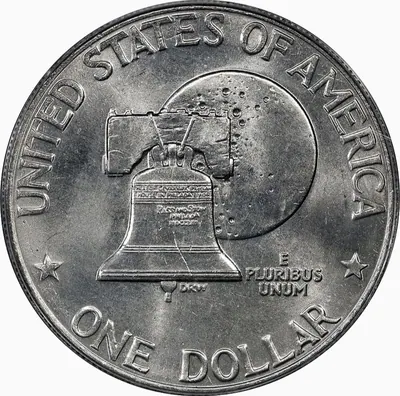
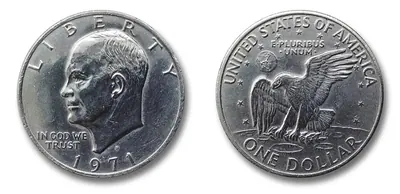
The Eisenhower dollar, or Ike dollar, was the last large-size US dollar coin, struck from 1971 to 1978. Nearly all were made in copper-nickel clad and are worth about $1 when worn. Ike dollars circulated mainly in and around Nevada casinos.
What makes an Ike worth more:
- 40% silver S coins (1971–1974 and 1776–1976): sold to collectors in uncirculated (“Blue Ike”) and proof (“Brown Ike”) versions, each with 0.3162 troy ounces of silver.
- Gem condition: Ikes were bag-handled, so flawless coins are scarce. A 1971-D in PCGS MS67+ sold for $10,200 at Heritage in January 2023.
- Varieties and errors: the 1971-D Friendly Eagle, Bicentennial Type 1 vs Type 2, off-center and wrong-planchet strikes.
The two designs
- Apollo 11 reverse (1971–1974, 1977–1978): an eagle landing on the Moon, adapted from the Apollo 11 mission insignia.
- Bicentennial reverse (1776–1976): the Liberty Bell over the Moon, by Dennis R. Williams. Struck in two lettering styles, Type 1 and Type 2.
For year-by-year details see the 1971 and 1776–1976 guides in this section.
How to identify your Ike
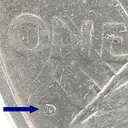
- Date under the portrait; mint mark between the neck and the date.
- Silver check: S mint mark, no copper edge stripe, 24.59 g.
- Condition: look for bag marks on Eisenhower’s cheek and jaw; few marks means a possible high grade.
Melt value
Clad Ikes contain no silver. For a 40% silver S coin, melt value is 0.3162 troy ounces times the spot price.
How the Ike dollar came about
The coin was born in a political fight. After Eisenhower died in 1969, Congress agreed to put him on a new dollar but disagreed about silver. House Banking chairman Wright Patman wanted base metal; the Senate passed Colorado Senator Peter Dominick’s amendment for 40% silver, helped by a letter from Mamie Eisenhower. The compromise was clad coins for circulation and 40% silver for collectors. When Patman blocked it in the House, the Senate attached it as a rider to his own bank-holding bill, and President Nixon signed Public Law 91-607 on December 31, 1970, minutes before a pocket veto would have killed it.
The law spelled out the design: Eisenhower’s likeness on the front and “the symbolic eagle of Apollo 11 landing on the moon” on the back. It authorized up to 150 million 40% silver pieces and moved 25.5 million troy ounces of silver from the General Services Administration to the Treasury.
The design
Chief Engraver Frank Gasparro based the portrait on a sketch he made at Eisenhower’s New York victory parade on June 19, 1945. The reverse follows the Apollo 11 mission patch conceived by astronaut Michael Collins. Mint Director Mary Brooks found Gasparro’s first eagle “too fierce, too warlike,” so it was softened.
Blue Ikes, Brown Ikes and the silver price fight
The silver coins were sold by mail from July 1971: $3 for an uncirculated coin in a blue envelope and $10 for a proof in a brown box, limit five of each. The Mint’s profit, an average of $3.89 per silver coin, drew criticism from Treasury Secretary John Connally, who called it “just unconscionable.” Later, part of the 1974-S silver revenue, about $9 million from 1974 to 1978, went to Eisenhower College in Seneca Falls, New York, which closed in 1982.
Why so few circulated
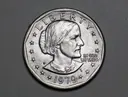
A 1976 Treasury study found that most Ike dollars were used once and then disappeared from circulation. Their main home was the casino floor: numismatist Randy Camper estimates that over 70% of circulating Ikes were used in casinos. The 1973 coins were struck only for mint sets, and from 1977 output was mostly at Denver. In 1979 the smaller Susan B. Anthony dollar replaced the Ike, keeping the Apollo 11 reverse.
Key varieties across the series
Beyond the 1971 and Bicentennial coins (see their guides), collectors look for:
- 1972 Type 2. 1972 dollars come in three reverse types, told apart by the Earth: Type 1 is flattened, Type 2 is round with one large island southeast of Florida, and Type 3 shows two islands south of Florida. Type 2 came from a single proof-style die used at Philadelphia from March 1972 and is the series key.
- 1974-D and 1977-D on silver planchets. Clad-date coins struck by mistake on 40% silver blanks; only 10–20 of each are known, and the first 1974s were found by two Las Vegas blackjack dealers.
- Mint-set years in top grade. A 1973-D in MS67 brought $12,925 in 2013, and a 1978 PCGS MS67 $6,000 at Heritage in 2023.
How to check your coin with CoinLens
Photograph both sides in CoinLens. The app identifies the exact year and mint, shows whether it is clad or silver, and gives an instant value estimate you can save to your collection. CoinLens gives estimates; for a flawless coin or a suspected error, ask PCGS or NGC to grade it.
Where to sell
Clad Ikes can be spent or deposited. Silver S coins sell to coin dealers; certified gems and errors sell best at Heritage, GreatCollections or on eBay.
Frequently asked questions
Are Eisenhower dollars silver?
Only the San Francisco (S) collector versions sold by the Mint from 1971 to 1976 are 40% silver. Every Ike dollar made for circulation is copper-nickel clad.
Are Ike dollars still legal tender?
Yes. They are worth at least $1 and can be spent or deposited, though banks rarely see them.
Why are there no 1975 Eisenhower dollars?
Coins struck in 1975 and 1976 carry the Bicentennial dual date 1776–1976. The Mint continued striking 1974-dated dollars until Bicentennial production began.
What years were Eisenhower dollars made?
1971 through 1978. They were replaced by the smaller Susan B. Anthony dollar in 1979.
How do I tell a silver Ike from a clad one?
Check for an S mint mark above the date, then look at the edge: no copper stripe and a weight of 24.59 g means 40% silver. Clad coins show a copper stripe and weigh 22.68 g.
What is a 1972 Type 2 Eisenhower dollar?
A 1972 Philadelphia dollar struck with a reverse die meant for proofs. The Earth shows a round shape with one large island southeast of Florida. It’s the key variety of the series: a PCGS MS65 CAC sold for $2,150 in June 2026.
What is a Blue Ike or Brown Ike?
Mint packaging for the 40% silver collector coins: uncirculated coins came in pliofilm inside a blue envelope (‘Blue Ike’), proofs in a brown box with a gold eagle seal (‘Brown Ike’). They sold for $3 and $10 in 1971.
Why didn't Eisenhower dollars circulate?
They were large and heavy, and a 1976 Treasury study found most were used once and then stopped circulating. Numismatist Randy Camper estimates over 70% of circulating Ikes were used in casinos.
Sources
- Eisenhower dollar (history, silver collector coins, Type I/II)
- PCGS CoinFacts: 1971-D $1
- Greysheet auction results: 1976-S silver Eisenhower dollar
- Public Law 91-607 (Bank Holding Company Act Amendments of 1970, Title II: Eisenhower dollar), govinfo
- PriceCharting: 1972 Type 2 Eisenhower dollar sales
- PriceCharting: 1978 Eisenhower dollar sales
- PriceCharting: 1973-D Eisenhower dollar sales
- CoinWeek: 1971-D Eisenhower dollar collector's guide (PCGS MS67+ CAC $10,200, Heritage Jan 12 2023, lot 3559)
Values are estimates, not offers. Condition decides the price; for a valuable coin, get a professional grade.