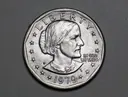
How Much Is a Susan B. Anthony Dollar Worth? (1979, 1980, 1981 & 1999 Values)
Most Susan B. Anthony dollars, struck 1979–1981 and again in 1999, are copper-nickel clad and worth $1. The key variety is the 1979-P Wide Rim (Near Date): a PCGS MS67 sold for $2,915 at GreatCollections in January 2016. The 1981 coins were made only for collector sets.
Have one in hand? Scan it with CoinLens to identify it and see an estimate in seconds.
| Year | Circulated | Worth more | Notes |
|---|---|---|---|
| 1979 (P, D, S) | $1 | 1979-P Wide Rim: PCGS MS67 $2,915 (GreatCollections, Jan 2016) | See the 1979 guide |
| 1980 (P, D, S) | $1 | — | Released to circulation |
| 1981 (P, D, S) | $1 face; small premium | — | Sold only in collector sets (9.7 million) |
| 1999 (P, D) | $1 | — | Reissued before the Sacagawea dollar |
Which one is yours? Check it with CoinLens →
1979 figures are cited auction results; other years carry little or no premium in circulated grades. Not a price guide.
DEMO
Check your 1979–1981, 1999 Susan B. Anthony Dollar
Add a photo of each side
Add a photo of at least one side first.
Demo — photos stay on your device. Nothing is uploaded.
DEMO
Your photos are ready. The identification happens in the CoinLens app.
On the web this is a demo — it can't recognize coins. In the app, the same two photos give you the coin's name, details and a value estimate.
Scan these in the free appEXAMPLE — what CoinLens shows
Value estimate:
Sample from our guide's data, not a result for your photo.
That was a sample. Scan your coin →·
Coin facts
- Coin
- Susan B. Anthony Dollar
- Years
- 1979–1981, 1999
- Mints
- Philadelphia (P), Denver (D), San Francisco (S)
- Composition
- Copper-nickel clad (75% copper, 25% nickel outer layers on a copper core)
- Weight
- 8.1 g
- Diameter
- 26.5 mm
- Designer
- Frank Gasparro
Mintage
- 1979-P
- 360,222,000
- 1979-D
- 288,015,744
- 1979-S
- 109,576,000
- 1981 (P, D, S, collector sets only)
- 9,742,000
- 1999-P
- 29,592,000
- 1999-D
- 11,776,000
| Year | Mintage | Note |
|---|---|---|
| 1979 | 757,813,744 | Released July 2, 1979; about 500 million stockpiled before release |
| 1980 | 89,660,708 | Production cut sharply after public rejection |
| 1981 | 9,742,000 | Collector sets only; none for circulation |
| 1999 (P and D) | 29,592,000 P; 11,776,000 D | Stopgap struck before the Sacagawea dollar |
Which one is yours? Check it with CoinLens →
Mintages from Wikipedia. About 520 million surplus coins were kept in Treasury vaults, not melted; stamp machines, transit systems and vending machines drew them down to about 133 million by the end of 1997.
| Coin | Grade | Sold | Venue, date |
|---|---|---|---|
| 1981-S Type 2 proof | PCGS PR70 DCAM | $439.95 and $499.99 | eBay, Jan and Aug 2026 |
| 1999-P proof | NGC PF70 Ultra Cameo | $155 | eBay, July 2026 |
Which one is yours? Check it with CoinLens →
eBay sales recorded by PriceCharting (see sources). The 1981-S Type 2 is about 350,000 of roughly 4 million 1981 proofs (Coin World).
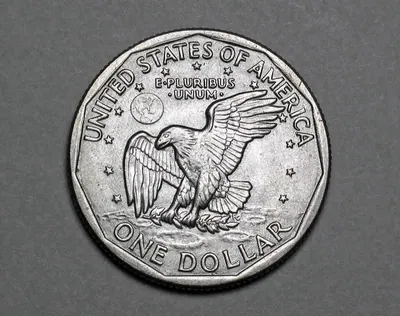
Susan B. Anthony dollar value: quick answer
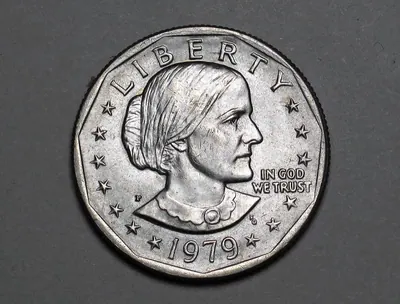
The Susan B. Anthony dollar was the first US small-size dollar and the first circulating US coin to show a real woman. It was struck from 1979 to 1981 and again in 1999, always in copper-nickel clad. Nearly every one is worth $1.
The coin worth looking for is the 1979-P Wide Rim (Near Date). A certified PCGS MS67 sold for $2,915 at GreatCollections in January 2016. The 1979 guide covers it in detail.
Year by year
- 1979: over 750 million struck at three mints. Look for the P-mint Wide Rim.
- 1980: struck for circulation at all three mints; common.
- 1981: 9,742,000 struck across all three mints, sold only to collectors in mint and proof sets.
- 1999: 41,368,000 struck at Philadelphia and Denver to bridge the gap before the Sacagawea dollar.
How to identify your Anthony dollar
- Shape: a round coin with an 11-sided inner border on both sides.
- Mint mark: obverse, left side above Anthony’s right shoulder. P, D or S.
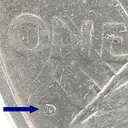
- Proofs: mirror finish with an S mint mark, from proof sets. Proof S mint marks come in two styles (Type 1 and Type 2) in 1979 and 1981.
- Wide Rim check (1979-P only): the date nearly touches the rim.
Errors
Off-center strikes, clipped planchets and wrong-planchet strikes exist and sell to error collectors. Anthony dollar planchets also turn up as errors on other denominations; Heritage has sold a 1979 Kennedy half struck on an Anthony dollar planchet.
Melt value
Anthony dollars contain no precious metal; their metal is worth less than $1.
Why the coin was made
The small dollar was a cost-cutting measure. Coins last far longer than paper bills, and officials expected a smaller, lighter dollar to replace many $1 notes. Mint Director Stella Hackel estimated savings of $19 million a year if half of all $1 bills were replaced. President Carter signed Public Law 95-447 on October 10, 1978.
The design that almost was
Chief Engraver Frank Gasparro first proposed a flowing-haired Liberty with a pole and cap, and the Commission of Fine Arts praised it in 1976. But bills introduced in Congress in May 1978 put Susan B. Anthony on the coin instead, and Senator Jake Garn’s amendment kept the Apollo 11 reverse from the Eisenhower dollar. Anthony’s great-niece rejected one early portrait as “prettified” and another as too old; Gasparro aimed for Anthony at about age 50.
The Mint tested 8-, 10-, 11- and 13-sided coins before keeping the coin round for vending machines. The 11-sided inner border was added to help visually impaired users. That compromise is part of why the public confused the coin with the quarter.
What happened to the surplus
The first table above tells the story. After the 1979 launch flopped, production fell to under 90 million in 1980, and 1981 coins went only into collector sets. About 520 million coins sat in Treasury vaults. They weren’t melted: each cost about 2 cents to make, and the 98 cents of profit had already been counted against the national debt. Instead, Postal Service stamp machines, transit systems (the Baltimore Metro was the largest single user from 1984) and vending machines slowly used them up. Vault stocks fell from about 229.5 million in early 1996 to about 133 million by the end of 1997, and in 1999 the Mint struck a final run as a stopgap before the Sacagawea dollar.
Proof keys: 1981-S Type 2 and 1999-P
Two proofs carry real premiums. The 1981-S Type 2 has a clear, rounded S mint mark instead of the older blob-shaped S; Coin World estimates about 350,000 of roughly 4 million 1981 proofs have it, making it the key of the series. Perfect PR70 examples sold for about $440–$500 on eBay in 2026. The 1999-P proof was sold on its own, the only Anthony proof with a P mint mark; an NGC PF70 sold for $155 in July 2026. The second table above has the sales.
How rare is the 1981-S Type 2?
Estimates differ widely. Coin World puts it at about 350,000 of roughly 4 million 1981-S proofs. PCGS, as reported by CoinWeek, estimates 650,000–675,000, about 15–17% of 4,063,083. No Mint record exists, so treat both as estimates.
How to check your coin with CoinLens
Photograph both sides in CoinLens. The app identifies the year and mint, shows composition and gives an instant value estimate you can save to your collection. CoinLens gives estimates; for a possible Wide Rim or an error, use PCGS or NGC.
Where to sell
Ordinary Anthony dollars can be spent or deposited. Certified Wide Rim coins, gem proofs and errors sell best on eBay, at Heritage or GreatCollections.
Frequently asked questions
How much is a Susan B. Anthony dollar worth?
Almost all are worth $1. Exceptions are the 1979-P Wide Rim (Near Date) variety, coins in exceptional uncirculated grades, proofs and errors.
Is a Susan B. Anthony dollar silver?
No. All Anthony dollars, including proofs, are copper-nickel clad with no silver or gold.
Why were 1981 Susan B. Anthony dollars not in circulation?
The coin was unpopular because it was easily confused with the quarter. Production for circulation stopped, and the 9,742,000 dollars dated 1981 were struck only for sale to collectors in mint and proof sets.
Why were Anthony dollars made again in 1999?
Treasury stockpiles ran low in the late 1990s, before the new Sacagawea dollar was ready, so the Mint struck 41,368,000 Anthony dollars dated 1999 as a stopgap.
What is the 1979 dollar coin Wide Rim?
A 1979-P variety with a wider rim, so the date sits very close to the edge. It is scarcer than the normal Narrow Rim (Far Date) and sells for a premium, especially in high grades.
Why was the Susan B. Anthony dollar made?
To save money: coins last far longer than paper dollars. Mint Director Stella Hackel estimated $19 million a year in savings if half of $1 bills were replaced. President Carter signed the law, Public Law 95-447, on October 10, 1978.
Why does the Anthony dollar have an 11-sided border?
The Mint tested 8-, 10-, 11- and 13-sided coins but kept the coin round so it would work in vending machines. The 11-sided inner border was added to help visually impaired people tell it apart from a quarter.
Why were Susan B. Anthony dollars made again in 1999?
Vending machines, transit systems and the Postal Service had used up the stockpile of 1979–1981 coins, and the new Sacagawea dollar wasn’t ready. The Mint struck 29,592,000 at Philadelphia and 11,776,000 at Denver in 1999.
Sources
- Susan B. Anthony dollar (history, 1981 collector-only mintage, 1999 reissue)
- PCGS CoinFacts: 1979-P SBA$1 (mintages)
- PCGS CoinFacts: 1979-P SBA$1 Wide Rim (sale history)
- Coin World: 'Wide Rim' Anthony sells for a tad under $3,000
- Wikipedia: Susan B. Anthony dollar (law, design, mintages, surplus, 1999 issue)
- Coin World (2014): Three different S mint marks on 1979, 1981 Anthony dollars
- PriceCharting: 1981-S Type 2 proof Susan B. Anthony dollar sales
- PriceCharting: 1999-P proof Susan B. Anthony dollar sales
- CoinWeek: Type I and II 1979 and 1981 Susan B. Anthony dollars (PCGS estimates)
Values are estimates, not offers. Condition decides the price; for a valuable coin, get a professional grade.