1998 Wide AM Penny Value: How to Spot It and What It's Worth
A normal 1998 penny is worth one cent. If the A and M in AMERICA are clearly separated, it is the 1998 Wide AM (FS-901): raw coins sell for about $5 to $24 on eBay, PCGS MS65 Red for about $40 to $150, and a PCGS MS67 Red sold for $795 on March 31, 2025.
Have one in hand? Scan it with CoinLens to identify it and see an estimate in seconds.
| Grade | Typical sold prices | Dates |
|---|---|---|
| Raw (uncertified) | $5–$24 (middle half of 30 sales) | April–November 2026 |
| ANACS AU55–AU58 | $18–$30 | January 2024 – April 2026 |
| ANACS / ICG MS60 | $10–$13 | June–July 2024 |
| MS63 Red (PCGS / ANACS) | $25–$43 | July 2024 – November 2025 |
| MS64 Red (PCGS) | $30–$80 | October 2023 – July 2026 |
| MS65 Red (PCGS) | $40–$150 | March 2024 – November 2025 |
| MS66 Red (PCGS) | $134.95–$185 | April 2023 – August 2026 |
| MS67 Red (NGC) | $202.50–$383 | September–October 2025 |
| MS67 Red (PCGS) | $485–$795 | July 2024 and March 2025 |
Which one is yours? Check it with CoinLens →
Individual eBay sales of attributed coins collected by PriceCharting (observed November 2026). NGC MS66 Red sales ranged from $15 to $300, too scattered to call typical. Estimates, not a price guide.
DEMO
Check your 1998 Lincoln Memorial Cent, Wide AM reverse (FS-901)
Add a photo of each side
Add a photo of at least one side first.
Demo — photos stay on your device. Nothing is uploaded.
DEMO
Your photos are ready. The identification happens in the CoinLens app.
On the web this is a demo — it can't recognize coins. In the app, the same two photos give you the coin's name, details and a value estimate.
Scan these in the free appEXAMPLE — what CoinLens shows
Value estimate:
Sample from our guide's data, not a result for your photo.
That was a sample. Scan your coin →·
Coin facts
- Coin
- Lincoln Memorial Cent, Wide AM reverse (FS-901)
- Years
- 1998
- Mints
- Philadelphia (no mint mark), Denver (D), San Francisco (S, proof only)
- Composition
- Copper-plated zinc (97.5% zinc, 2.5% copper)
- Weight
- 2.5 g
- Diameter
- 19.05 mm
- Designer
- Victor David Brenner (obverse), Frank Gasparro (reverse)
Mintage
- 1998 (all reverses)
- 5,032,200,000
- 1998-D
- 5,225,200,000
- 1998-S proof
- 2,086,507
- 1998 Wide AM working dies identified
- 31 (Wexler)
| Year | Wide AM working dies identified | Raw, middle half of recent eBay sales | Certified MS66 Red, eBay |
|---|---|---|---|
| 1998 | 31 | $5–$24 | PCGS $134.95–$185 |
| 1999 | 4 | $7–$63 | $299–$799.95 (all services) |
| 2000 | 23 | See our 2000 Wide AM guide | — |
Which one is yours? Check it with CoinLens →
Die counts from Wexler's Die Varieties; prices from PriceCharting's eBay sold listings, November 2026.
| Coin | Grade | Price | Venue and date |
|---|---|---|---|
| 1998 (normal) | Raw uncirculated | $1–$3 | eBay, 2026 (middle half of 27 sales) |
| 1998 (normal) | NGC MS69 Red | $672–$840 | eBay, July 2024 – April 2026 |
| 1998 (normal) | NGC MS69 Red | $408 | Heritage, April 30, 2023 |
| 1998-D | PCGS MS68 Red | $252–$288 | Heritage, June 2019 and April 2023 |
| 1998-S proof (normal) | PCGS PF70 Red Ultra Cameo | $33–$43 | Heritage, March–April 2024 |
| 1998-S Close AM proof | PCGS PF69 Red Ultra Cameo | $195.20–$439.20 | Heritage, June 22, 2026 |
| 1998-S Close AM proof | PCGS PF68 Red Ultra Cameo | $139–$231.80 | Heritage, June 22, 2026 |
Which one is yours? Check it with CoinLens →
Heritage results from NGC Auction Central; eBay sales from PriceCharting.
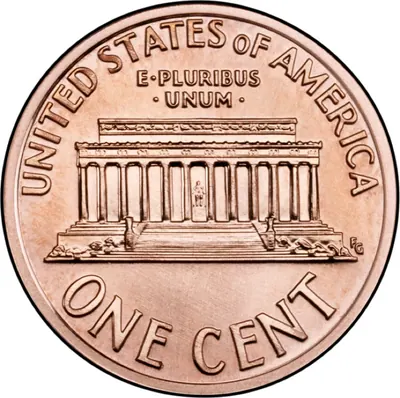
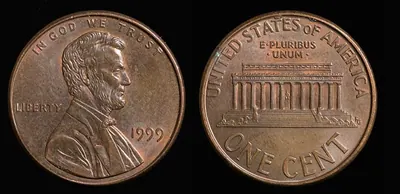
Philadelphia and Denver made over 10 billion cents dated 1998; an ordinary one is face value. What you want is the 1998 Wide AM (FS-901): a Philadelphia business strike whose back was made with a die meant for proofs. Recent sales:
- Uncertified: typically $5 to $24, the middle half of 30 eBay sales logged by PriceCharting from April to November 2026.
- Certified, circulated to MS64: about $10 to $80.
- PCGS MS65–MS66 Red: about $40 to $185.
- MS67 Red: NGC coins sold for $202.50 to $383, PCGS coins for $485 (July 2024) and $795 (March 2025), the top sale we found.
More Wide AM dies have been identified for 1998 than for any other year, so it is the Wide AM most people actually find.
How to tell a 1998 Wide AM penny: three diagnostics
You need a 5x–10x loupe and a normal 1998 or later cent to compare against.
1. The AM gap
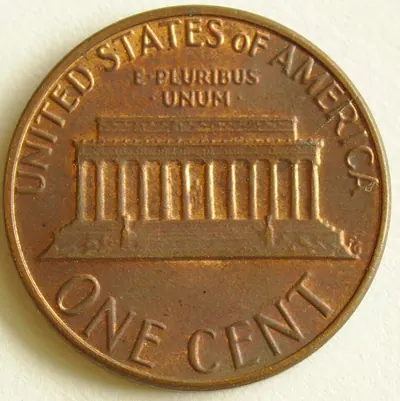
Find AMERICA at the top right of the Lincoln Memorial side and look where the feet of the A and M meet. On normal 1998 cents they almost touch. On the Wide AM there is a gap about as wide as the space between the other letters, as on the 1984 coin pictured above.
2. The FG initials
Frank Gasparro’s initials FG sit just right of the Memorial’s base. The proof-style design that makes the Wide AM, which variety researcher John Wexler calls LMRD-006, has a different G:
| Feature | Normal 1998 (Close AM) | 1998 Wide AM |
|---|---|---|
| A and M of AMERICA | Bottoms nearly touch | Clear gap |
| Serif on the G of FG | None | A distinct serif at the top left of the upright stroke |
| Upright stroke of the G | Stops at the lower curve | Extends below the lower curve |
| FG position | Closer to the Memorial’s base | Farther from the base (CoinWeek) |
The FG check is useful on worn coins, where dirt in the AM gap or a soft strike can fool you. If the gap looks wide but the G has no serif, the coin is probably a normal one.
3. Philadelphia only
Grading services attribute FS-901 only on Philadelphia 1998 cents, which carry no letter under the date. Check a 1998-D if you like, but the coins PCGS and NGC attribute as FS-901 are Philadelphia cents.
Why 1998 cents have a proof reverse
The Lincoln Memorial reverse was redesigned in 1993, moving the A and M together. That close-AM design was used for both circulation and proof cents in 1993. From 1994 through 2008 the Mint kept it for circulation cents only, and went back to the older wide-AM design for proofs (Wexler).
A few proof-style reverse dies ended up striking circulation cents. The first one noticed was a 2000 cent found by Maximillian Lucas and announced on the front page of Coin World on January 22, 2001. Collectors soon found the same thing on 1998 and 1999 cents.
Wexler tracks the individual working dies. He has identified 31 circulation dies with the Wide AM reverse for 1998, against 4 for 1999 and 23 for 2000. That is why the 1998 is relatively easy to find and the 1999 is not.
What a 1998 Wide AM sells for, grade by grade
The grade table above comes from attributed, certified coins sold on eBay. Here is what it means for your coin.
Circulated and low Mint State coins barely cover grading. ANACS AU55–AU58 coins sold for $18 to $30, and MS60 coins for $10 to $13. If your coin is worn, a raw sale with clear photos of the AM gap will net about as much.
MS65 is where the money starts, and it has risen. PCGS MS65 Red coins sold for about $40 to $81 in the spring of 2024. Through 2025 most brought $100 to $150, though one sold for $50 in July 2025.
PCGS holders bring more. In MS67 Red, NGC coins sold for $202.50 and $383 in 2025, while PCGS coins brought $485 and $795. NGC MS66 Red coins ranged from $15 to $300, against $134.95 to $185 for PCGS. The listings don’t show why NGC coins sell for less; check that any holder you buy names the Wide AM or FS-901 attribution.
Doubled dies on 1998 Wide AM reverses
Minor reverse doubling is everywhere on 1998 cents: Wexler’s 1998 page lists more than 100 Philadelphia doubled-die reverses, many of them showing doubling beside the Lincoln statue in the 6th and 7th Memorial columns. Two of them were struck with Wide AM reverses:
- 1998 WDDR-027: doubling on the lower right of the 6th column, beside the statue’s legs. Wexler also files it as WWAM-026 in his wrong-reverse records.
- 1998 WDDR-035: doubling between the 6th column and the statue’s right leg, on a Wide AM reverse.
A Wide AM coin with a cataloged doubled die is a double variety. It is a niche item, so ask a variety attributer such as CONECA before you assume a big premium.
The 1998-S Close AM proof: the reverse mix-up
Proof sets of 1998 hide the mirror-image error: San Francisco proofs that received a circulation (Close AM) reverse. Wexler knows of a single proof die with this pairing; a typical Lincoln proof die lasted for roughly 3,000 strikes, so the population is small.
At Heritage’s June 22, 2026 sale, eight 1998-S Close AM proofs sold. PCGS PF69 Red Ultra Cameo coins brought $195.20 to $439.20, an NGC PF69 brought $183, and PCGS PF68 coins brought $139 to $231.80. Normal 1998-S proofs in PCGS PF70 brought only $33 to $43 at Heritage in 2024. If you own 1998 proof sets, check the cent’s AM: a nearly touching A and M on an S coin is worth looking into.
What a normal 1998 penny is worth
Most 1998 cents are normal Close AM coins:
- Raw uncirculated: about $1 to $3.
- MS67 Red: about $15 to $46 on eBay.
- NGC MS69 Red: $672 (July 2024), $840 (March 2026) and $680 (April 2026) on eBay, and $408 at Heritage (April 2023).
- 1998-D PCGS MS68 Red: $252 (June 2019) and $288 (April 2023) at Heritage.
A fourth check: the 1998 hub markers
Wexler found something else useful for this date. The 1998 circulation master hub carried tiny flaws that copied onto most of the working dies made from it:
- a small die dot above the left side of the N in UNUM;
- a diagonal scratch at the top right of the 7th Memorial bay;
- two parallel diagonal scratches at the top of the 8th bay;
- diagonal scratches on the lower left of the Memorial roof.
A Wide AM reverse wasn’t made from that hub; it came from the proof design. In Wexler’s notes on the Wide AM doubled dies, he points out that the hub markers won’t be visible for that reason. In practice: if a 1998 cent with an apparently open AM also shows the dot above UNUM, look again; it is probably a normal coin with a worn or filled gap. The reverse doesn’t hold, though. The markers fade as dies wear, so a missing dot on its own proves nothing.
Checking a roll of 1998 cents
If you search rolls, set aside the no-mint-mark coins first. Then check AMERICA on each under a loupe in good light; a phone camera in macro mode works for a first pass. Put any with a clear gap next to a normal 1998 and check the G in FG. Coins that pass both checks and show full red color are the ones worth grading.
Melt value
The 2.5-gram zinc core and thin copper skin of a 1998 cent contain under a penny’s worth of metal.
How to check your coin with CoinLens
Snap the obverse and reverse in CoinLens to identify the date and mint and see an estimated value. The app won’t measure an AM gap for you, so do that and the FG serif check under a loupe. A bright, full-red coin that passes is the one to submit to PCGS or NGC; CoinLens figures are estimates, and buyers pay for the FS-901 line on a holder.
Frequently asked questions
How do I know if my 1998 penny is a wide AM?
Check the back with a magnifier. On a normal 1998 cent the bottoms of the A and M in AMERICA almost touch. On the Wide AM there is a clear gap, and the G in the designer’s initials FG has a small serif at the top of its upright stroke. The coin has no mint mark.
How much is a 1998 wide AM penny worth?
Raw coins sell for about $5 to $24 on eBay. Certified coins bring about $25 to $80 in MS63–MS64 Red, $40 to $150 in PCGS MS65 Red and $135 to $185 in PCGS MS66 Red. A PCGS MS67 Red sold for $795 in March 2025.
Is the 1998-D wide AM valuable?
The listed and certified variety is the 1998 with no mint mark (Philadelphia). Check a 1998-D anyway, but expect the Wide AM to be a no-mint-mark coin.
Why is the 1998 wide AM cheaper than the 1999?
Supply. Variety researcher John Wexler has identified 31 circulation dies with the Wide AM reverse for 1998 but only 4 for 1999, so 1998 examples turn up far more often.
What is the 1998-S Close AM proof penny?
The reverse mix-up in reverse: a 1998-S proof struck with the circulation Close AM design. Only one proof die is known. PCGS PF69 examples sold for $195.20 to $439.20 at Heritage in June 2026, against about $33 to $43 for a normal PF70 proof.
Should I get my 1998 wide AM graded?
Only if it is uncirculated with full red color. Circulated and MS60–MS64 coins sell for $10 to $80 once graded, which barely covers the fee. A coin that could grade PCGS MS66 Red or better is worth sending.
Sources
- Wexler's Die Varieties: Wrong Design Varieties (LMRD-006 vs LMRD-007, Wide AM working-die counts, 1998-S Close AM)
- Wexler's Die Varieties: 1998 doubled dies (WDDR-027 and WDDR-035 on Wide AM reverses)
- CoinWeek: 1992-D Lincoln Memorial Cent collector's guide (FG placement on Wide AM dies)
- PriceCharting: 1998 Wide AM Lincoln Memorial penny (eBay sold listings)
- PriceCharting: 1998 Lincoln Memorial penny (eBay sold listings)
- PriceCharting: 1999 Wide AM Lincoln Memorial penny (eBay sold listings)
- NGC Auction Central: 1998 1C MS auction results
- NGC Auction Central: 1998-D 1C MS auction results
- NGC Auction Central: 1998-S 1C PF auction results
- NGC Auction Central: 1998-S Close AM 1C PF auction results
- Lincoln cent mintage figures (1998)
Values are estimates, not offers. Condition decides the price; for a valuable coin, get a professional grade.