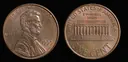
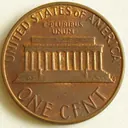
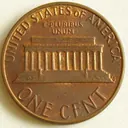
1999 Wide AM Penny Value: How to Spot It and What It's Worth
A normal 1999 penny is worth one cent. If the A and M in AMERICA are clearly apart, it is the 1999 Wide AM (FS-901), the scarcest Wide AM: about $7 to $63 raw and $80 to $800 certified. An ANACS MS66 Red sold for $799.95 on eBay on January 25, 2025.
Have one in hand? Scan it with CoinLens to identify it and see an estimate in seconds.
| Grade | Sold prices | Holder and date |
|---|---|---|
| Raw (uncertified) | $7–$63 (middle half of 30 sales) | eBay, November 2025 – November 2026 |
| AU55 | $79.99–$169 | ANACS, January and March 2026 |
| MS62 | $199.99–$299.99 | PCGS and ANACS, October 2025 – October 2026 |
| MS63 Red-Brown | $125–$275 | PCGS, ANACS, NGC, February 2025 – March 2026 |
| MS64 | $175–$295 | PCGS, ANACS, NGC, May 2025 – June 2026 |
| MS65 Red | $102.50–$475 | PCGS, NGC, ANACS, May 2025 – July 2026 |
| MS66 Red | $299–$799.95 | NGC, PCGS, ANACS, November 2024 – September 2026 |
Which one is yours? Check it with CoinLens →
eBay sales collected by PriceCharting (observed November 2026). Many raw listings are not real Wide AM coins. Estimates, not a price guide.
DEMO
Check your 1999 Lincoln Memorial Cent, Wide AM reverse (FS-901)
Add a photo of each side
Add a photo of at least one side first.
Demo — photos stay on your device. Nothing is uploaded.
DEMO
Your photos are ready. The identification happens in the CoinLens app.
On the web this is a demo — it can't recognize coins. In the app, the same two photos give you the coin's name, details and a value estimate.
Scan these in the free appEXAMPLE — what CoinLens shows
Value estimate:
Sample from our guide's data, not a result for your photo.
That was a sample. Scan your coin →·
Coin facts
- Coin
- Lincoln Memorial Cent, Wide AM reverse (FS-901)
- Years
- 1999
- Mints
- Philadelphia (no mint mark), Denver (D), San Francisco (S, proof only)
- Composition
- Copper-plated zinc (97.5% zinc, 2.5% copper)
- Weight
- 2.5 g
- Diameter
- 19.05 mm
- Designer
- Victor David Brenner (obverse), Frank Gasparro (reverse)
Mintage
- 1999 (all reverses)
- 5,237,600,000
- 1999-D
- 6,360,065,000
- 1999-S proof
- 3,347,966
- 1999 Wide AM working dies identified
- 4 (Wexler)
| Holder | Price | Date |
|---|---|---|
| NGC MS66 Red | $299 | November 2024 |
| PCGS MS66 Red | $449 | November 2024 |
| ANACS MS66 Red | $799.95 | January 2025 |
| NGC MS66 Red | $549.95 | May 2025 |
| ANACS MS66 Red | $329.94 | September 2026 |
Which one is yours? Check it with CoinLens →
eBay sales via PriceCharting.
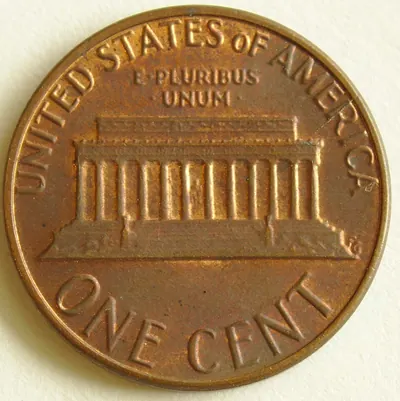
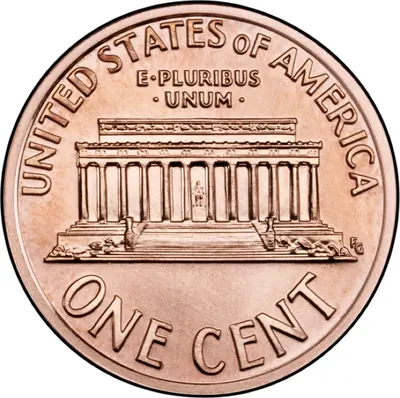
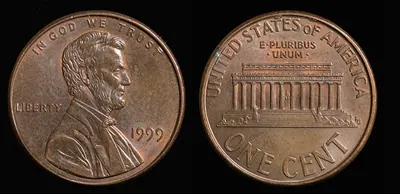
Of the 11-plus billion cents dated 1999, nearly all are face-value coins. The one that isn’t is the 1999 Wide AM (FS-901): a Philadelphia business strike whose reverse die was cut from the proof design. What it brings:
- Not graded: mostly $7 to $63, the middle half of 30 eBay results logged by PriceCharting from late 2025 to November 2026.
- Certified, AU55 to MS64: about $80 to $300.
- MS65 Red: about $100 to $475; MS66 Red: about $300 to $800.
- Top sale we found: $799.95 for an ANACS MS66 Red on eBay in January 2025. Higher grades exist, but we found no MS67 or MS68 sale on a source we could read.
For every other 1999 cent, including the 1999-D, the 1999-S proofs and errors, see our 1999 penny value guide.
How to tell a 1999 Wide AM penny
Work through these four checks with a 5x–10x loupe. A coin has to pass all of them.
- Date and mint mark. The coin reads 1999 with no mint mark under the date.
- The AM gap. On the Lincoln Memorial side, the word AMERICA runs along the upper right. A normal 1999 has the bottoms of the A and M nearly touching, like the coin pictured above. The Wide AM leaves a clear gap about as wide as the other letter spacing.
- The G in FG. The designer’s initials sit to the right of the Memorial’s base. On the proof-style design, the G has a small serif at the top left of its upright stroke, and the stroke runs below the curve of the G. On a normal 1999 the G is plain (Wexler’s Die Varieties).
- FG position. On Wide AM dies the initials sit a little farther from the Memorial’s base than on circulation dies (CoinWeek).
The second and third checks back each other up. Wear, dirt or a weak strike can make a normal AM look slightly open, but they can’t add a serif to the G.
Why the 1999 is the scarcest Wide AM
Starting in 1994, the Mint gave proof cents one reverse design, with a wide AM, and circulation cents another, with a close AM. A small number of proof reverse dies were paired with circulation obverses in 1998, 1999 and 2000.
John Wexler’s die files show how small that number was for 1999:
| Year | Circulation dies with the Wide AM reverse |
|---|---|
| 1998 | 31 |
| 1999 | 4 |
| 2000 | 23 |
Four dies against 31 for the year before explains the price gap. An ANACS AU55 1999 Wide AM sold for $79.99 to $169 in 2026. ANACS AU55 1998 Wide AMs brought only $25 to $29 in 2026. Exactly how many coins the four 1999 dies struck is unknown; no one has a mintage for any Wide AM year.
What a 1999 Wide AM sells for, grade by grade
The grade table above shows a variety that never gets cheap. Every certified coin we found sold for at least $79.99, even worn AU55s and Red-Brown MS62s. A PCGS MS62 Red-Brown brought $299.99 in October 2025, and NGC MS63–MS64 Red-Brown coins sold for $275 to $295. Buyers are paying for confirmation that the coin is the real variety, almost regardless of grade.
Full Red color and a high grade still multiply the price. MS65 Red coins sold for $102.50 to $475, MS66 Red coins for $299 to $799.95. We found no readable record of an MS67 or MS68 sale, so we can’t say what the top grades bring.
Why the grading label changes the price
The MS66 table shows the spread at a single grade: $299 to $799.95 within two years, with NGC, PCGS and ANACS coins mixed through the range. Holder isn’t the only factor, since eye appeal and color vary. But a few patterns hold:
- The attribution on the label matters. PCGS and NGC holders say “Wide AM” and often “FS-901”. ANACS holders say “Type 2 Rev”, sometimes with “Proof Reverse Hub Design”. All three describe the same variety.
- Reference-book fame helps demand. Several sellers note that the 1999 Wide AM appears in the “100 Greatest U.S. Modern Coins” book, one listing it as number 41.
- Raw coins sell at a deep discount because buyers can’t be sure. The middle half of raw sales tops out near $63, below the cheapest certified sale we found.
Is my 1999 Wide AM real? Common mistakes
- Ordinary Close AM coins listed as Wide AM. This is the most common problem with raw listings. Judge by a clear photo of the gap and the G serif, not the title.
- A 1999-D. The certified variety is a no-mint-mark coin. Check a 1999-D anyway, but don’t pay a Wide AM price for one without attribution.
- A worn or damaged AM. A scratch or wear between the letters can look like a gap. The G in FG settles it.
- The 1999-S Close AM proof. This is a different, proof-only variety: a proof struck with the circulation reverse. Its values are on our 1999 penny page.
The same mistake on other US coins
The Wide AM cents belong to a small family that Wexler calls “wrong design” varieties. The design is right for the year, but it went onto the wrong kind of coin. Each time, the Mint was using one design for proofs and a slightly different one for circulation:
- Washington quarters, 1956–1964. Proofs used the “Type B” reverse and circulation coins the “Type A”. Circulation quarters with the proof-style Type B turn up in every one of those years. Look at the spacing of the E and S in STATES.
- Franklin halves, 1958 and 1959. The proof “Type 2” reverse has three distinct feathers on the eagle’s right wing instead of four. Business strikes with it are much scarcer than the normal Type 1.
The Lincoln cent’s version came late. Wexler notes that the Memorial reverse was modified six times in its 50 years, giving seven versions. He found that few collectors knew proofs and circulation cents had different reverses from 1994 to 2008 until the 2000 Wide AM was announced in Coin World in January 2001. The FG initials are his quickest way to tell the versions apart, and they’re why the G-serif check above works.
Melt value
Like any post-1982 cent, a 1999 Wide AM is a zinc coin in a copper coat; its metal is worth well under a cent.
How to check your coin with CoinLens
Scan the coin in CoinLens to confirm the date and mint and get a quick estimate. Treat that as the first filter, not the verdict. The four checks above need a loupe. Because even AU55 certified examples have sold for $80 or more, a 1999 that passes all four is worth submitting whatever its grade.
Where to sell a 1999 Wide AM penny
Slabbed examples move quickly on eBay; show the label and a sharp close-up of the gap. High-grade Red examples (MS66 and up) can also go to Heritage or GreatCollections, which run regular variety sales. Don’t sell a raw 1999 Wide AM as raw if it passes all four checks; certifying it is the single biggest step up in value.
Frequently asked questions
How do I know if my 1999 penny is a wide AM?
Look at AMERICA on the back with a magnifier. On a normal 1999 penny the bottoms of the A and M almost touch. On the Wide AM there is a clear gap, and the G in the designer’s initials FG has a small serif at the top of its upright stroke. The coin has no mint mark.
How much is a 1999 wide AM penny worth?
Raw coins sell for about $7 to $63. Certified coins brought $80 to $169 in AU55, about $125 to $300 in MS62 to MS64, $100 to $475 in MS65 Red and $299 to $800 in MS66 Red. The top sale we found in a citable source is $799.95 for an ANACS MS66 Red (January 2025).
Is a 1999-D wide AM penny valuable?
The listed Wide AM variety is the 1999 with no mint mark (Philadelphia). Check any 1999-D anyway, but the known, certified variety is the Philadelphia coin.
Why is the 1999 wide AM worth more than the 1998 and 2000?
There are fewer of them. Variety researcher John Wexler has identified only 4 circulation dies with the Wide AM reverse for 1999, against 31 for 1998 and 23 for 2000.
Is a worn 1999 wide AM penny worth anything?
Yes. Even circulated coins sell well once certified: ANACS AU55 examples brought $79.99 and $169 in 2026, several times what a 1998 Wide AM in the same grade brings.
What does 'Type 2 Rev' mean on an ANACS holder?
ANACS labels Wide AM cents as ‘Type 2 Rev’ or ‘Wide AM FS-901’, sometimes adding ‘Proof Reverse Hub Design’. It is the same variety PCGS and NGC call Wide AM.
Should I get my 1999 wide AM penny graded?
Yes, if the gap and the FG serif check out. Certified 1999 Wide AM cents sold for $80 and up in every grade we found, while raw coins rarely bring more than $65.
Sources
- Wexler's Die Varieties: Wrong Design Varieties (working-die counts 1998/1999/2000, LMRD-006 FG serif, 1999-S Close AM)
- PriceCharting: 1999 Wide AM Lincoln Memorial penny (eBay sold listings)
- PriceCharting: 1998 Wide AM Lincoln Memorial penny (eBay sold listings)
- CoinWeek: 1992-D Lincoln Memorial Cent collector's guide (FG placement on Wide AM dies)
- Lincoln cent mintage figures (1999)
Values are estimates, not offers. Condition decides the price; for a valuable coin, get a professional grade.