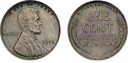
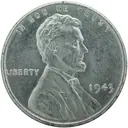
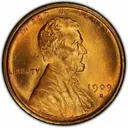
How to Tell a Copper Penny from a Zinc Penny (Date, Weight & 1982 Test)
Check the date first. Cents dated 1981 or earlier are 95% copper (except 1943 steel); 1983 and later are copper-plated zinc. 1982 was struck in both, so weigh it: copper is 3.11 g, zinc 2.5 g. A 3.11 g 1983 cent could be an error that sold for $29,250.
Have one in hand? Scan it with CoinLens to identify it and see an estimate in seconds.
| Years | Composition | Weight | What to check |
|---|---|---|---|
| 1909–1942 | Bronze: 95% copper, tin and zinc | 3.11 g | Copper; check date and mint mark for keys |
| 1943 | Zinc-coated steel | 2.7 g | Sticks to a magnet. A non-magnetic 1943 cent could be a rare copper error |
| 1944–1946 | Gilding metal: 95% copper, 5% zinc | 3.11 g | Copper. A magnetic 1944 cent could be a rare steel error |
| 1947–1962 | Bronze: 95% copper, 5% tin and zinc | 3.11 g | Copper |
| 1962–Sept 1982 | Gilding metal: 95% copper, 5% zinc | 3.11 g | Copper |
| 1982 | Both: copper and copper-plated zinc | 3.11 g or 2.5 g | Weigh it |
| 1983–2025 | Copper-plated zinc: 97.5% zinc, 2.5% copper | 2.5 g | Zinc. A 1983 cent at 3.11 g may be a bronze-planchet error |
Which one is yours? Check it with CoinLens →
Composition and weights from the US Mint as summarized on Wikipedia. 1982 coins came in both alloys and both Large and Small Date styles.
DEMO
Check your 1909–2025 (circulation) Lincoln Cent
Add a photo of each side
Add a photo of at least one side first.
Demo — photos stay on your device. Nothing is uploaded.
DEMO
Your photos are ready. The identification happens in the CoinLens app.
On the web this is a demo — it can't recognize coins. In the app, the same two photos give you the coin's name, details and a value estimate.
Scan these in the free appEXAMPLE — what CoinLens shows
Value estimate:
Sample from our guide's data, not a result for your photo.
That was a sample. Scan your coin →·
Coin facts
- Coin
- Lincoln Cent
- Years
- 1909–2025 (circulation)
- Composition
- Bronze or brass (95% copper) to 1982; copper-plated zinc (97.5% zinc, 2.5% copper) from 1982
- Weight
- 3.11 g
- Diameter
- 19.05 mm
- Designer
- Victor D. Brenner (obverse)
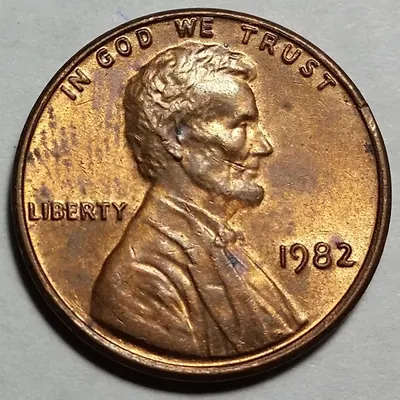
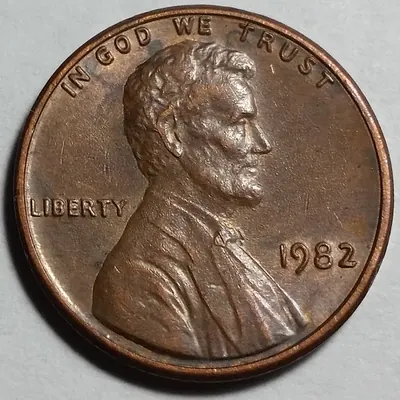
You can sort almost every Lincoln cent by date and confirm with weight:
- 1981 and earlier: 95% copper, 3.11 g (except the 1943 steel cent).
- 1983 and later: copper-plated zinc, 2.5 g.
- 1982: both alloys were struck, so weigh it. That is the only common date you cannot sort by eye.
The weight matters because the Mint’s alloy changes produced rare transitional errors. A 1983 cent struck on a leftover 3.11 g bronze planchet sold for $29,250 at GreatCollections in July 2024 (PCGS MS65RD). See our list of pennies worth money for the other dates to check.
How to tell copper from zinc: 4 checks
1. Read the date
This sorts everything except 1982. Also remember the wartime years: 1943 cents are zinc-coated steel (2.7 g, silver-gray, magnetic), and 1944–1946 cents are 95% copper made partly from recycled shell casings.
2. Weigh it
A digital scale that reads to 0.1 g is enough: 3.1 g = copper, 2.5 g = zinc. Wear and dirt barely move the number. This is the method collectors use to find 1982 varieties and 1983 bronze errors. Billy Crawford identified the first 1983 bronze cent in 2006 because it weighed 3.11 g.
3. Listen to it (rule of thumb)
Drop the cent onto a hard surface next to a cent of known date. Copper cents tend to ring; zinc cents make a duller sound. It is quick for sorting a jar, but confirm anything interesting on a scale.
4. Look at the surface and edge
Zinc cents are only plated with copper. When the plating wears or corrodes you see gray zinc, bubbles or a blotchy surface. Copper cents tone evenly to brown. Do not cut, file or test with acid: it destroys any collector value.
1982: copper or zinc, Large Date or Small Date
1982 cents come in 7 types across Philadelphia and Denver, a mix of copper and zinc, Large Date and Small Date. Weigh first, then check the date style. The rarest combination is a 1982-D Small Date on a copper (bronze) planchet, a transitional error. The copper and zinc versions of the same date and mint are otherwise common.
Copper errors worth money
- 1943 copper (bronze) cent: struck on leftover 1942 bronze planchets. A non-magnetic 1943 cent weighing about 3.11 g deserves authentication; a 1943-D sold for $1.7 million in 2010 (PCGS CoinFacts).
- 1944 steel cent: the reverse error, on a leftover steel planchet. It is magnetic.
- 1983 bronze cent: a 1983 cent at 3.11 g. PCGS MS65RD: $29,250 (GreatCollections, 2024).
Most “copper 1943” cents are copper-plated steel fakes (still magnetic), or altered 1948 cents with the 8 reshaped into a 3.
Metal value
In January 2014 the metal in a pre-1982 copper cent was worth about 2.2 cents and in a zinc cent about 0.55 cents. Since 2006, US Mint rules make it illegal to melt cents or export them in bulk, with penalties of up to $10,000 and five years in prison. Saving copper cents is legal; melting them is not.
How to check your coin with CoinLens
Take a photo of both sides with CoinLens (Coin Identifier - CoinLens on the App Store). It identifies the coin within seconds and shows its composition, minting years and an instant value estimate. A photo cannot weigh a coin, so for 1982, 1983, 1943 and 1944 cents use a scale too. Anything that fails the expected weight should go to PCGS or NGC before you sell it.
Where to sell
Common copper cents sell in bulk by the pound or roll to coin shops and on eBay, for a small premium over face. A confirmed transitional error (1943 copper, 1944 steel, 1983 bronze, 1982-D Small Date bronze) should be certified and sold through a major auction house such as Heritage, Stack’s Bowers or GreatCollections.
Frequently asked questions
What year did pennies stop being copper?
- The Mint switched from 95% copper to copper-plated zinc during 1982 because the copper in a cent was becoming worth more than one cent. 1982 cents exist in both metals; every circulation cent from 1983 on is zinc.
How much does a copper penny weigh?
A 95% copper cent weighs 3.11 grams. A copper-plated zinc cent weighs 2.5 grams. A kitchen or jewelry scale that reads to 0.1 g is enough to tell them apart.
Can I tell copper from zinc without a scale?
Often, yes. A common rule of thumb is the drop test: dropped on a hard surface, copper cents give a higher ringing sound and zinc cents a duller clunk. It works best side by side with a coin of known date. A scale is the reliable method.
Are copper pennies worth more than 1 cent?
Their metal is. In January 2014, the copper and zinc in a pre-1982 cent were worth about 2.2 cents, against about 0.55 cents for a zinc cent. But melting or exporting cents in bulk has been illegal since 2006, so a common copper penny still sells for little more than face value.
What is a 1983 copper penny worth?
A genuine 1983 cent struck on a leftover bronze planchet is a rare transitional error. A PCGS MS65RD example sold for $29,250 with buyer’s fee at GreatCollections in July 2024. Most 1983 cents that look coppery are normal zinc cents; only a 3.11 g weight points to the error.
Sources
- Wikipedia: Penny (United States coin) — composition and weight by year, 2006 melting rule, metal value
- Wikipedia: 1943 steel cent (weight 2.7 g)
- CoinWeek (Jul 30, 2024): Finest 1983 Bronze Cent Error Sells for Record Price at GreatCollections
- Numismatic News (Ken Potter, Jul 29, 2024): 1983 Copper Cent Error Fetches $30,000
- US Mint (archived): United States Mint Moves to Limit Exportation & Melting of Coins (2006)
- PCGS CoinFacts: 1943-D 1C Bronze BN (Sept 2010 private sale via Legend, $1.7 million)
Values are estimates, not offers. Condition decides the price; for a valuable coin, get a professional grade.