Lincoln Shield Penny Errors: Which 2010–2025 Pennies Are Worth Money?
Most Lincoln shield pennies (2010–2025) are worth 1 cent, and no major die varieties are recognized. Value comes from genuine mint errors: off-center strikes, die breaks and rare double denominations, such as a unique 2013-D cent struck over a dime. The 2017-P and 2019-W have special mint marks.
Have one in hand? Scan it with CoinLens to identify it and see an estimate in seconds.
| Coin or error | How common | Recorded value |
|---|---|---|
| Normal circulated shield cent (any year) | Billions per year | Face value (1¢) |
| 2017-P top grade (PCGS MS67+RD) | Common | $31 (Heritage, Jun 2019); $37 (DLRC, Jan 2023) |
| Minor doubled dies (mostly Philadelphia) | Many minor varieties | Small premiums; check sold listings for the exact variety |
| Off-center strikes and die breaks | Scarce | Depends on how dramatic the error is |
| Cent struck over a dime (double denomination) | One 2013-D, two 2014-P and two 2015-P reported | No auction record yet |
Which one is yours? Check it with CoinLens →
Recorded values are individual sales cited below, not a price guide. There are few public auction records for shield cent errors, so value each coin on its own.
DEMO
Check your 2010–present (circulation strikes ended in 2025) Lincoln Shield Cent
Add a photo of each side
Add a photo of at least one side first.
Demo — photos stay on your device. Nothing is uploaded.
DEMO
Your photos are ready. The identification happens in the CoinLens app.
On the web this is a demo — it can't recognize coins. In the app, the same two photos give you the coin's name, details and a value estimate.
Scan these in the free appEXAMPLE — what CoinLens shows
Value estimate:
Sample from our guide's data, not a result for your photo.
That was a sample. Scan your coin →·
Coin facts
- Coin
- Lincoln Shield Cent
- Years
- 2010–present (circulation strikes ended in 2025)
- Mints
- Philadelphia (no mint mark; P in 2017 only), Denver (D), San Francisco (S, proofs), West Point (W, 2019 only)
- Composition
- Copper-plated zinc (97.5% zinc, 2.5% copper)
- Weight
- 2.5 g
- Diameter
- 19.05 mm
- Designer
- Victor D. Brenner (obverse), Lyndall Bass (reverse), sculpted by Joseph Menna
Mintage
- 2010 / 2010-D
- 1,963,630,000 / 2,047,200,000
- 2017-P / 2017-D
- 4,361,220,000 / 4,272,800,000
- 2019-W uncirculated
- 318,695
- 2019-W proof
- 561,495
- 2019-W reverse proof
- 383,590
- 2025 / 2025-D (last circulation year)
- 655,200,000 / 645,200,000
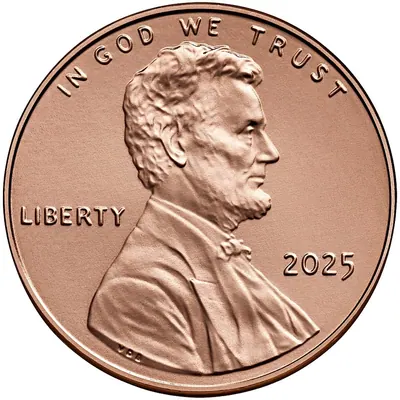
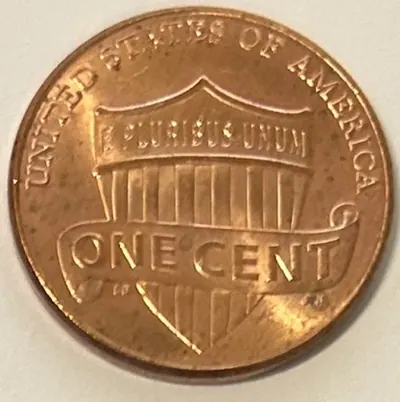
The Union Shield reverse replaced the Lincoln Memorial in 2010 and ran on every circulation cent through 2025, the last year the Mint struck pennies for circulation. Billions were made each year, so a normal shield penny is worth 1 cent.
What can make one worth more:
- Genuine mint errors: off-center strikes, double strikes, die breaks (“cuds”) and wrong-planchet coins. CoinWeek notes there are no major die varieties recognized for the series yet.
- Double denominations: a 2013-D shield cent struck over a 2013-D dime (PCGS AU58) is reported as unique. Two 2014-P and two 2015-P examples are also reported. None has a public auction record yet.
- Minor doubled dies: many minor obverse and reverse doubled dies are known, mostly on Philadelphia coins.
- Special mint marks: the 2017-P is the only year with a P mint mark (common), and the 2019-W was issued only in collector sets.
Before 2010, the 2009 cents had four different reverses; see our 2009 penny value guide.
How to identify a Lincoln shield penny
- Reverse: a shield with E PLURIBUS UNUM across the top and a scroll reading ONE CENT. The sculptor’s initials JFM (Joseph F. Menna) are below the scroll on the right.
- Mint mark: under the date on the obverse. No mint mark means Philadelphia (except 2017-P); D means Denver; S means a San Francisco proof; W (2019 only) means West Point.
- Weight: a normal shield cent weighs 2.5 g. A coin that weighs noticeably more or less, or looks silver, could be on the wrong planchet and is worth checking.
Errors worth money and what to look for
Off-center strikes
Part of the design is missing and a blank crescent shows. More off-center is generally better, as long as the date is still visible.
Double strikes and double denominations
A second image overlapping the first, or a cent design printed over a struck dime (look for dime lettering or Roosevelt’s portrait under Lincoln). These are rare for shield cents. The 2013-D double denomination is described as unique for the date.
Die breaks and cuds
Raised lumps of metal where a piece of the die broke off, usually at the rim. Big cuds that touch the design are collectible; small die cracks add little.
Doubled dies
True die doubling shows rounded, separated second images on letters and numbers, usually on LIBERTY, IN GOD WE TRUST or the date. Flat, shelf-like doubling is machine doubling, which is common and not valuable.
What is not an error
Bubbles, blisters and peeling plating on zinc cents, stains, scratches and coins altered after they left the Mint. These usually add no value.
Metal value
Shield cents are copper-plated zinc (97.5% zinc, 2.5% copper) and weigh 2.5 g. They contain no silver and very little copper, and melting US cents has been illegal since 2006.
How to check your coin with CoinLens
Take a photo of both sides with CoinLens (Coin Identifier - CoinLens on the App Store). It identifies the coin within seconds, shows its composition and minting years, gives an instant value estimate and saves it to your collection. Error checks need your own eyes and a loupe. For a double denomination, a dramatic off-center strike or anything on the wrong metal, get it authenticated by PCGS or NGC before selling.
Where to sell
Normal shield cents are spending money. Certified errors sell best through error specialists or major auction houses (Heritage, Stack’s Bowers, GreatCollections). Minor doubled dies and 2019-W coins sell well on eBay; compare sold listings for the exact variety and grade.
Frequently asked questions
Are any Lincoln shield pennies worth money?
Normal circulated ones are worth 1 cent. The ones worth money are genuine mint errors (off-center strikes, double strikes, cents struck over dimes), some minor doubled die varieties, and the collector-only 2019-W cents.
Is the 2017-P penny rare?
No. 2017 is the only year Philadelphia put a P on the cent, to mark the Mint’s 225th anniversary, but it struck 4,361,220,000 of them. Even top-grade PCGS MS67+RD examples have sold for $31 to $37.
Is the 2019-W penny valuable?
The 2019-W cents were never released into circulation. They came only as bonus coins in 2019 Mint, Proof and Reverse Proof sets, with mintages of 318,695 (uncirculated), 561,495 (proof) and 383,590 (reverse proof). They sell for a premium as collector coins.
Are there any shield penny doubled dies?
No major ones are recognized by the industry. Variety experts such as John Wexler and CONECA have listed many minor obverse and reverse doubled dies, mostly on Philadelphia cents.
Is my shield penny with bubbles or peeling copper an error?
Bubbles, blisters and peeling plating are common on copper-plated zinc cents and usually add little or no value. They are not the major errors collectors pay for.
Are pennies still being made?
The Mint stopped striking cents for circulation in November 2025. 2025 is the last year of circulation shield cents; collector versions continue.
Sources
- CoinWeek: Lincoln Shield Cent, 2010–Present (designers, varieties)
- CoinWeek: The 10th Anniversary of the Lincoln Shield Cent (minor doubled dies, Wexler, CONECA, 2019-W)
- CoinWeek (Mike Byers, Jun 2, 2026): 2013-D Lincoln Shield Cent Double Denomination
- CoinWeek: 2017-P Lincoln Shield Cent — A Collector's Guide (sales records)
- CoinNews: US Mint 2010 annual coin production (2010-D cents 2,047,200,000)
- Wikipedia: Lincoln cent mintage figures (2010–2025)
- Wikipedia: Penny (United States coin) — 2025 production halt, composition
Values are estimates, not offers. Condition decides the price; for a valuable coin, get a professional grade.