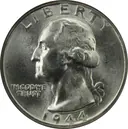
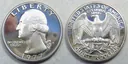
How Much Is a 1938 Quarter Worth? (1938, 1938-S & Proof)
Every 1938 quarter is 90% silver and worth at least melt, and there is no 1938-D. Both the 1938 and 1938-S sell for about $65 in AU and $180 in MS65. Gems pay: a 1938 PCGS MS67 brought $1,159 at Heritage in May 2026, and the record PCGS MS67+ CAC sold for $9,200 in 2012.
Have one in hand? Scan it with CoinLens to identify it and see an estimate in seconds.
| Grade | 1938 (Philadelphia) | 1938-S |
|---|---|---|
| Worn (F–XF) | $18.70–$24 | $23.50–$35 |
| AU | $66 | $63 |
| MS63 | $125 | $128.50 |
| MS64 | $135 | $140 |
| MS65 | $180 | $175 |
| MS66 | $210 | $255 |
| MS67 | $300–$499 (most 2024–2026 sales); PCGS $1,159 (Heritage, May 2026) | $372–$679 (2025–2026) |
| MS67+ / CAC | $525; record PCGS MS67+ CAC $9,200 (Heritage, Mar 2012) | NGC MS67+ $444–$1,035; record PCGS MS67+ CAC $5,170 (Heritage, Oct 2015) |
| Proof (8,045 struck) | Raw about $100–$225; PR67+ $1,479–$1,552; PCGS PR68 $6,600 (Heritage, Dec 2024) | — |
Which one is yours? Check it with CoinLens →
Our estimates from eBay and Heritage sales recorded by PriceCharting (mostly 2023–November 2026), not a price guide. There is no 1938-D. Melt at silver $43.35/oz, November 26, 2026.
DEMO
Check your 1938 Washington Quarter (silver)
Add a photo of each side
Add a photo of at least one side first.
Demo — photos stay on your device. Nothing is uploaded.
DEMO
Your photos are ready. The identification happens in the CoinLens app.
On the web this is a demo — it can't recognize coins. In the app, the same two photos give you the coin's name, details and a value estimate.
Scan these in the free appEXAMPLE — what CoinLens shows
Value estimate:
Sample from our guide's data, not a result for your photo.
That was a sample. Scan your coin →·
Coin facts
- Coin
- Washington Quarter (silver)
- Years
- 1938
- Mints
- Philadelphia (no mint mark, plus proofs), San Francisco (S)
- Composition
- 90% silver, 10% copper
- Weight
- 6.25 g
- Diameter
- 24.3 mm
- Silver (ASW)
- 0.1808 troy oz
- Melt value
- $7.84
- Designer
- John Flanagan
Mintage
- 1938 (no mint mark)
- 9,472,000
- 1938-S
- 2,832,000
- 1938 proof
- 8,045
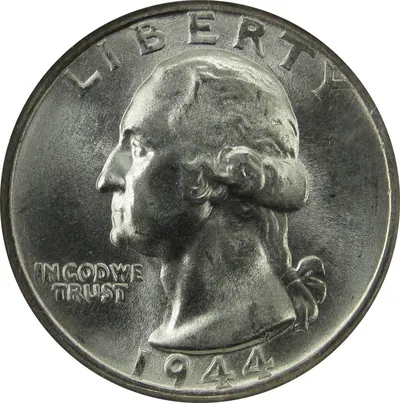
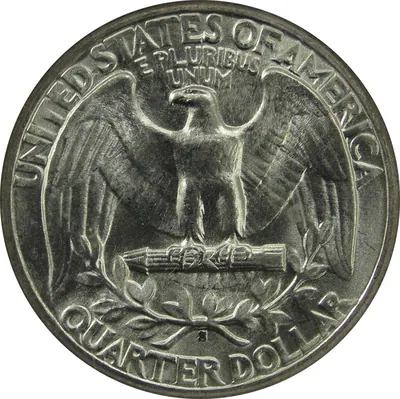
The 1938 quarter is 90% silver and worth at least its melt value. Philadelphia struck 9,472,000 business strikes and 8,045 proofs, and San Francisco 2,832,000. Denver struck none.
- Worn coins: about $19–$35, a premium over melt for this low-mintage year.
- AU to MS65: about $63–$180 for either mint.
- MS67: mostly $300–$680; a 1938 PCGS MS67 brought $1,159 at Heritage in May 2026.
- Records: a 1938 PCGS MS67+ CAC sold for $9,200 at Heritage in March 2012; a 1938-S PCGS MS67+ CAC for $5,170 in 2015.
- Proofs: about $100–$225 raw; PCGS PR68 $6,600 (Heritage, December 2024).
What makes 1938 different
1938 is the only year of the 1930s without a Denver quarter, which makes the date easy to check: any “1938-D” is an altered coin. Philadelphia’s business-strike mintage of 9,472,000 was also the lowest of the decade after 1932, less than a third of the 1934–1936 totals. With San Francisco’s 2.8 million added, the whole year’s circulation output was about 12.3 million, the smallest of any Washington quarter year from 1934 to 1940.
That low output is why even worn 1938 quarters sell above melt: certified F–XF Philadelphia coins brought $18.70–$24, and 1938-S coins $23.50–$35. There is no true rarity, but the year has a strong collector following in high grade.
1938 quarter mintages
| Coin | Mintage |
|---|---|
| 1938 (no mint mark) | 9,472,000 |
| 1938-S | 2,832,000 |
| 1938 proof | 8,045 |
| 1938-D | none struck |
Heritage lot descriptions give the 1938 mintage as 9,480,045, which is the business strikes and the proofs added together.
1938 vs 1938-S: why the scarcer coin isn’t worth much more
The 1938-S had less than a third of Philadelphia’s mintage, yet in our data the two sell for almost the same at most grades:
| Grade | 1938 median | 1938-S median |
|---|---|---|
| AU | $66 | $63 |
| MS63 | $125 | $128.50 |
| MS64 | $135 | $140 |
| MS65 | $180 | $175 |
| MS66 | $210 | $255 |
Heritage results tell the same story: in 2026, PCGS MS65 1938-S coins brought $129–$159 and PCGS MS66s $171, while PCGS MS66 1938s brought $201–$220. Our reading is that enough 1938-S rolls were saved to meet collector demand, so its low mintage shows up only at the very top. The practical lesson: don’t pay a big premium for a mid-grade 1938-S just because of the S.
The gem market
Above MS66, both mints get expensive, and individual coins vary widely:
- 1938 PCGS MS67: $300–$390 at Heritage in 2024–2026 for most coins, but $1,159 for one in May 2026; eBay sales ran $400–$725.
- 1938-S MS67: $372–$679, steady through 2025–2026. NGC’s census showed 53 coins at MS67 with one finer when Heritage sold examples in 2025.
- MS67+: NGC MS67+ 1938-S coins sold for $444 (Heritage) to $1,035 (eBay, a coin noted for an obverse die crack).
- Records: the $9,200 PCGS MS67+ CAC 1938 (2012) and $5,170 PCGS MS67+ CAC 1938-S (2015) are far above anything recent.
As on other 1930s dates, CAC-approved and toned coins sell at the top of these ranges; a 1938 NGC MS65 star with CAC and rainbow toning brought $399, more than double the MS65 median.
Is a 1938 quarter worth grading?
Usually only if it is clearly uncirculated. A worn 1938 sells for roughly the same raw or slabbed, so a grading fee eats the whole premium. The picture changes once a coin shows full mint luster with no rub on the cheek: the step from AU (about $65) to MS63 (about $125) roughly doubles the value, and a clean MS66 is worth three times an AU. Before you send one in, hold it under a single lamp and rotate it. If the luster rolls around the coin like a cartwheel and the fields in front of Washington’s face are free of nicks, it is a good candidate. If you see dull patches or a hazy, cleaned surface, keep it raw and sell it as a nice circulated coin.
1938 proofs
Proof production rose to 8,045 in 1938, up from 5,542 in 1937. Raw proofs sell for about $100–$225, and top grades much more: PCGS PR67+ coins brought $1,479–$1,552, an NGC PR68+ $4,080 and a PCGS PR68 $6,600 at Heritage in 2024. NGC reported 27 coins in PR68 with none finer at the time. A proof has mirror fields and sharp, squared rims; a bright business strike is not a proof, so check carefully before using proof prices.
Varieties and errors
No major 1938 die variety trades regularly. Minor doubled dies appear in ANACS and ICG holders: a 1938 ANACS AU58 DDO-002 sold for $118.39 in August 2026, and a 1938-S ICG MS64 DDO-001 for $90. Die cracks on 1938-S obverses are noted by some sellers but add little. Any 1938 with a D mint mark is altered.
Checking your 1938 quarter
- Mint mark: on the reverse below the wreath. No letter or S only.
- Wear: Washington’s hair above the ear and the eagle’s breast. Full detail there separates MS65 coins from the MS67s.
- Proof or not: deep mirror fields and square rims mean a proof.
- Toning: even, attractive toning can add value; dark spots lower it.
Melt value
Each 1938 quarter contains 0.18084 troy ounces of silver. The calculator below shows today’s value.
Silver melt value calculator
Washington Quarter (silver): 0.1808 troy oz of silver each
Melt value ($7.84 each)
Silver spot $43.35/oz as of November 26, 2026 (gold-api.com)
Melt value today for a pile, a roll or $ face value → Silver melt calculator
Melt value is the floor. Condition and mint details decide the rest — check yours in the app.
How to check your coin with CoinLens
Photograph both sides with CoinLens. It identifies the year and mint mark, confirms the 90% silver composition and gives an instant value estimate you can save to your collection. For a gem or proof, a PCGS or NGC grade decides the price.
The previous year had the famous doubled die; see the 1937 quarter value guide.
Where to sell a 1938 quarter
- Worn coins: a coin shop, which should pay a little above silver value for this date.
- AU and mint-state coins: eBay or a coin dealer.
- Certified MS67s, CAC coins and proofs: Heritage, GreatCollections or eBay, with the holder shown.
Frequently asked questions
Is there a 1938-D quarter?
No. The Denver Mint struck no quarters in 1938, so a 1938 quarter has either no mint mark (Philadelphia) or an S (San Francisco). A coin offered as a 1938-D is altered.
How much is a 1938 quarter worth?
At least its silver melt value. Worn 1938 and 1938-S quarters mostly sell for $12.50–$60; MS67 coins bring $680–$1,900, and a 1938 PCGS MS67+ CAC sold for $9,200 at Heritage.
Is the 1938-S worth more than the 1938?
Only slightly, despite having less than a third of the mintage. In our sales data the two sell for almost the same in most grades: about $63–$66 in AU, $135–$140 in MS64 and $175–$180 in MS65. The 1938-S pulls ahead a little in MS66 ($255 vs $210).
Are there 1938 quarter varieties?
Only minor ones. A 1938 graded ANACS AU58 and attributed as a doubled die (DDO-002) sold for $118.39 in August 2026, and a 1938-S ICG MS64 DDO-001 for $90. Die cracks on 1938-S coins add little.
How much is a 1938 proof quarter worth?
About $100–$225 raw. Top grades are worth much more: a PCGS PR68 sold for $6,600 and an NGC PR68+ for $4,080 at Heritage in 2024; 8,045 proofs were struck.
Sources
- Washington quarter mintage figures (Wikipedia, citing washingtonquarters.org / U.S. Mint)
- PriceCharting: 1938 Washington quarter, eBay and Heritage sold listings
- PriceCharting: 1938-S Washington quarter, eBay and Heritage sold listings
- PriceCharting: 1938 proof Washington quarter, eBay and Heritage sold listings
Values are estimates, not offers. Condition decides the price; for a valuable coin, get a professional grade.