Silver Melt Value Calculator
Melt value is silver weight × spot. A 90% dime holds 0.07234 troy oz, a quarter 0.18084, a half 0.36169, a Morgan dollar 0.77344, and $1 face of worn 90% coins about 0.715. Key dates beat melt: a 1932-S quarter sold for $76,250 (Heritage, July 2026).
Have one in hand? Scan it with CoinLens to identify it and see an estimate in seconds.
Spot $43.35/oz as of November 26, 2026 (gold-api.com). Type your own price to override it.
| Coin | How many | Melt |
|---|---|---|
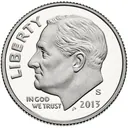
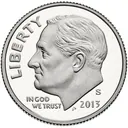
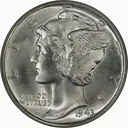
| Dime (1964 and earlier)90% silver · Mercury, Roosevelt · 0.07234 oz each | each $3.14 | |
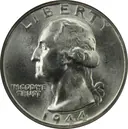
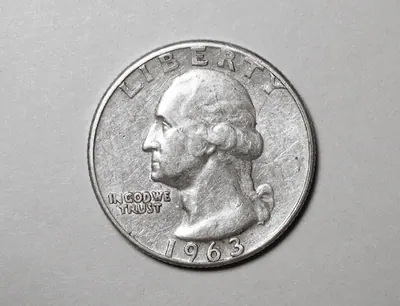
| Quarter (1964 and earlier)90% silver · Washington · 0.18084 oz each | each $7.84 | |
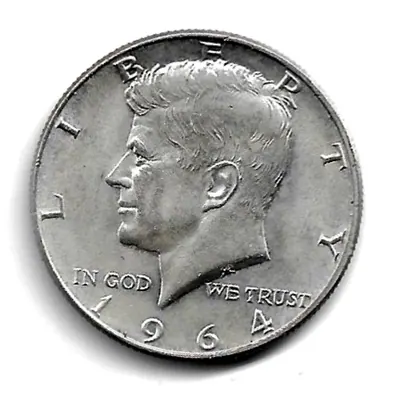
| Half dollar (1964 and earlier)90% silver · Kennedy 1964, Franklin, Walking Liberty · 0.36169 oz each | each $15.68 | |
| Kennedy half (1965–1970)40% silver · 0.1479 oz each | each $6.41 | |
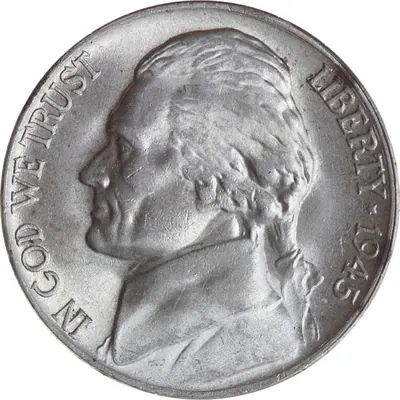
| War nickel (1942–1945)35% silver · large mint mark over Monticello · 0.05626 oz each | each $2.44 | |
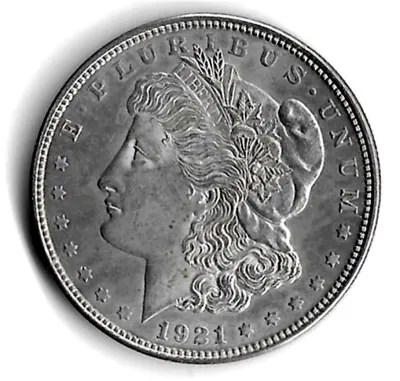
| Morgan or Peace dollar90% silver · 1878–1935 · 0.77344 oz each | each $33.53 | |
| Eisenhower dollar, silver (S mint)40% silver · 1971–1976 collector issues · 0.3162 oz each | each $13.71 | |
| American Silver Eagle.999 fine silver, 1 oz · 1 oz each | each $43.35 |
| Coins (total face value) | Face value $ | Melt |
|---|---|---|
| 90% dimes, quarters, halves (circulated)1964 and earlier · trade standard for worn coins · 0.7150 oz per $1 face | per $1 face $31.00 (31.0× face) | |
| 90% dimes, quarters, halves (uncirculated)1964 and earlier · full weight: 22.5 g silver per $1 · 0.7234 oz per $1 face | per $1 face $31.36 (31.4× face) | |
| 40% Kennedy halves1965–1970 · 2 halves = $1 · 0.2958 oz per $1 face | per $1 face $12.82 (12.8× face) | |
| 35% war nickels1942–1945 · 20 nickels = $1 · 1.1253 oz per $1 face | per $1 face $48.78 (48.8× face) | |
| Morgan or Peace dollars90% · 1878–1935 · 0.77344 oz each · 0.7734 oz per $1 face | per $1 face $33.53 (33.5× face) |
10 dimes, 4 quarters, 2 halves or 20 war nickels = $1 face. 0.715 oz per $1 is the worn-coin standard dealers use; a new $1 holds 0.7234 oz.
Weigh coins on a gram scale. Worn coins weigh a little less than new ones, so the weight mode gives a truer figure for a worn pile than face value.
Silver content 0.000 troy oz
Melt value
Melt value = silver weight (troy oz) × spot. It is not a price guide: dealers buy below melt, and key dates or high grades sell for more.
| Coin | Dates | Weight | Silver | Silver weight (troy oz) | Melt each |
|---|---|---|---|---|---|
| Dime (Barber, Mercury, Roosevelt) | 1892–1964 | 2.50 g | 90% | 0.07234 | $3.14 melt |
| Quarter (Barber, Standing Liberty, Washington) | 1892–1964 | 6.25 g | 90% | 0.18084 | $7.84 melt |
| Half dollar (Barber, Walking Liberty, Franklin, 1964 Kennedy) | 1892–1964 | 12.50 g | 90% | 0.36169 | $15.68 melt |
| Kennedy half dollar | 1965–1970 | 11.50 g | 40% overall | 0.1479 | $6.41 melt |
| Jefferson war nickel | 1942–1945 (large mint mark above Monticello) | 5.00 g | 35% | 0.05626 | $2.44 melt |
| Morgan or Peace dollar | 1878–1935 | 26.73 g | 90% | 0.77344 | $33.53 melt |
| Eisenhower dollar, silver (S mint mark) | 1971–1976 collector coins | 24.59 g | 40% overall | 0.3162 | $13.71 melt |
| Bicentennial quarter, silver (S) | 1976 sets | 5.75 g | 40% overall | 0.0739 | $3.20 melt |
| American Silver Eagle | 1986–today | 1 troy oz | .999 | 1.00000 | $43.35 melt |
Which one is yours? Check it with CoinLens →
Silver weight = legal weight × fineness ÷ 31.1035 g per troy oz. Worn coins weigh slightly less. Melt at silver $43.35/oz, November 26, 2026.
DEMO
Check your Silver Melt Value Calculator
Add a photo of each side
Add a photo of at least one side first.
Demo — photos stay on your device. Nothing is uploaded.
DEMO
Your photos are ready. The identification happens in the CoinLens app.
On the web this is a demo — it can't recognize coins. In the app, the same two photos give you the coin's name, details and a value estimate.
Scan these in the free appEXAMPLE — what CoinLens shows
Value estimate:
Sample from our guide's data, not a result for your photo.
That was a sample. Scan your coin →·
| Roll | Coins | Face value | Silver (troy oz) | Melt per roll |
|---|---|---|---|---|
| 90% dimes | 50 | $5 | 3.617 | $156.80 melt |
| 90% quarters | 40 | $10 | 7.234 | $313.58 melt |
| 90% halves | 20 | $10 | 7.234 | $313.59 melt |
| 40% Kennedy halves | 20 | $10 | 2.958 | $128.23 melt |
| War nickels | 40 | $2 | 2.250 | $97.55 melt |
| Morgan or Peace dollars | 20 | $20 | 15.469 | $670.57 melt |
Which one is yours? Check it with CoinLens →
Worn 90% rolls hold about 1% less silver (0.715 oz per $1 face instead of 0.7234). Melt at silver $43.35/oz, November 26, 2026.
How to use this calculator
The calculator at the top of the page has three modes, because people arrive with silver in three different forms.
- By coin. You have a handful of coins and know what they are: three Mercury dimes, a 1964 Kennedy half, two Morgan dollars. Type how many of each and the calculator adds up the silver and the melt value. Every row shows the silver weight it uses, so you can check the math.
- By face value. You have a coffee can or a roll and you counted it by face value, the way dealers do. Type $7.50 for thirty 90% quarters or $2 for a roll of war nickels. Choose the circulated row for normal worn pocket change and the uncirculated row for bright, unworn coins from old rolls or proof sets.
- By weight. You have a pile you do not want to sort, or silver that is not a US coin: a sterling spoon, a Canadian dollar, a bar. Put it on a gram scale, pick the unit and the purity, and the calculator converts it to troy ounces of pure silver.
The spot price box starts with the silver price snapshot shown next to it, with the date it was read. Type a different number to use the price your dealer quotes or the price you see on a live chart; every row then updates to that price. Nothing you type leaves your browser.
How melt value is calculated
Melt value is the value of the pure silver inside a coin, ignoring everything else about it:
melt value = actual silver weight (troy oz) × silver spot price (per troy oz) × number of coins
The actual silver weight (ASW) comes from the coin’s legal specification: its standard weight in grams times its silver fineness, divided by 31.1035 grams per troy ounce. For a pre-1965 Washington quarter that is 6.25 g × 0.900 ÷ 31.1035 = 0.18084 troy oz.
Two worked examples at an example spot price of $40 per troy ounce:
- A 1964 Kennedy half dollar. 12.50 g × 0.900 = 11.25 g of silver, which is 0.36169 troy oz. At $40, melt is 0.36169 × 40 = $14.47.
- $20 face value of worn 90% dimes (200 dimes). 20 × 0.715 = 14.3 troy oz. At $40, melt is 14.3 × 40 = $572.
The same formula works for any silver item if you know its weight and purity. A 1935–1967 Canadian silver dollar holds 0.60 troy oz (80% silver), a sterling teaspoon is 92.5% silver by weight, and a Silver Eagle is one troy ounce of .999 fine silver. Use the weight mode for these.
Troy ounces versus kitchen ounces
Precious metals are priced per troy ounce, which is 31.1035 grams. The ounce on a kitchen or postal scale is the avoirdupois ounce, 28.35 grams. If you weigh coins in ordinary ounces and multiply by the spot price, you overstate the silver by about 9%, and then you also have to remove the copper. The weight mode does both steps: it converts your scale reading to grams, multiplies by the purity, and divides by 31.1035.
Silver content by coin: where the numbers come from
The silver weights in the table above are the legal standards set by Congress and the US Mint, not measured averages. That matters in three places.
90% coins (1964 and earlier). Dimes, quarters and half dollars were made to the same 90% silver standard in proportion to face value: 2.50 g per dime, 6.25 g per quarter, 12.50 g per half. That is why every $1 of face value holds the same 22.5 g of silver (0.7234 troy oz), whether it is ten dimes, four quarters or two halves. It is also why dealers can price a mixed bag of 90% coins by face value alone. Morgan and Peace dollars are heavier per dollar: 26.73 g at 90% silver, or 0.77344 troy oz each.
Worn coins and the 0.715 rule. Coins lose a little metal to wear after decades in circulation. The common trade convention for circulated 90% coins (BullionStar) is therefore about 0.715 troy oz per $1 face, roughly 1% below the full 0.7234. The calculator’s face-value mode offers both rows; use 0.715 for a jar of old pocket change and 0.7234 for uncirculated rolls or proof coins. In the weight mode you weigh the coins themselves, so wear is already counted.
40% clad coins. After the Coinage Act of 1965, Kennedy half dollars dated 1965–1970 were made of two outer layers of 80% silver bonded to a core of about 21% silver, for 40% silver overall. Each holds 0.1479 troy oz. The same 40% silver-clad metal was used for the collector-only Eisenhower dollars with an S mint mark (1971–1976) and the 1976-S silver Bicentennial quarters, halves and dollars sold in three-coin sets. Ordinary circulation Eisenhower dollars and all 1971 and later Kennedy halves for circulation contain no silver.
35% war nickels. From late 1942 through 1945, nickel was needed for the war, so the Mint struck Jefferson nickels in an alloy of 56% copper, 35% silver and 9% manganese. Each one holds 0.05626 troy oz of silver. They are easy to spot: a large P, D or S mint mark sits above the dome of Monticello on the reverse. The Philadelphia “P” mint mark appeared on a US coin for the first time on these nickels.
What is not silver. Circulation dimes and quarters dated 1965 and later, circulation half dollars from 1971 on, Susan B. Anthony, Sacagawea and Presidential dollars, all cents and all regular nickels contain no silver. The exceptions are collector issues: silver proof sets (made since 1992) and the S-mint 40% silver coins above. A copper-colored stripe on the edge is the quickest sign of a clad coin; our guide to telling whether a coin is silver covers the edge, ring and weight tests.
Melt value versus what dealers pay
Melt value is a reference number, not a sale price. When you sell common silver coins, the buyer has to cover its costs and margin, so you will typically be offered somewhat less than the full melt value; when you buy, you will usually pay more than melt. How large that gap is depends on the dealer, the quantity, the form (90% coins, 40% halves and war nickels are not priced the same way) and on how much demand there is for physical silver that week. When refiners are backed up, the gap can get wide: in March 2026 CoinWeek reported that many coin shops were paying significantly below spot for 90% junk silver, with refiner payments delayed by up to eight weeks. There is no fixed percentage, so we don’t show one; get a quote.
A few practical points:
- Ask for a quote in the same units. Dealers quote junk silver either “per $1 face” or “per ounce”. The face-value mode shows both: the per-$1 figure in each row and the total in ounces.
- Compare two or three buyers. Local coin shops, bullion dealers and online buyers all price differently. Online buyers can pay more but charge or deduct shipping and insurance.
- Sort first. Never sell a can of old silver at a flat melt price before pulling out key dates and unworn coins (see the next section).
Our guide on where to sell coins compares coin shops, shows and auctions.
What “times face value” means
Bullion dealers often quote 90% silver as a multiple of face value, for example “29 times face”. That simply means each $1 of face value is priced at $29. The multiple is just the silver per $1 times spot: at a $40.72 spot price, 0.715 × 40.72 = 29.1, so circulated 90% coins are about 29 times face at melt. In the face-value mode, every row shows this multiple at the spot price in the box, so you can compare a dealer’s “times face” quote with melt directly.
When a coin is worth more than melt
Melt value is the floor for a silver coin, not its ceiling. Coins with collector demand sell above melt, sometimes far above it. Before you price a pile as silver, check for:
- Key dates. The 1916-D Mercury dime (only 264,000 struck) has sold for about $2,200 in VG8 and $4,758 in Fine at Heritage in 2026, against well under $5 in silver. The 1932-D and 1932-S Washington quarters are worth well over melt even when worn; a PCGS MS66+ 1932-S brought $76,250 in July 2026.
- Unworn coins. Full original luster, no flat spots on the high points. Uncirculated common dates often carry a premium; top-grade gems can be worth thousands. A PCGS MS68 1964-D quarter sold for $38,400 at Stack’s Bowers in March 2021.
- Silver dollars. Even worn common Morgan and Peace dollars usually trade above melt, because collectors want them as coins.
- Errors and varieties. Doubled dies, overdates such as the 1943/2-P war nickel, and off-metal strikes sell to error collectors, not to melt buyers.
If you are not sure what a coin is, the date and mint mark lists in our silver quarter years and silver dime years guides cover the dates to look for.
How to check your coins with CoinLens
When a pile mixes silver and clad coins, or you are not sure which of several dates you have, Coin Identifier – CoinLens for iPhone and Android can help: photograph the front and back, and the app identifies the coin within seconds and shows its composition, minting years and an instant value estimate. You can save coins to a collection and see the collection’s total value. Free scans are limited; Premium unlocks unlimited scans. Its values are estimates; for a coin that might be a valuable key date, a professional grading service is the reliable answer.
Add this calculator to your site
Coin clubs, dealers and bloggers can put the same silver melt calculator on their own pages for free. Copy the code below and paste it into any page that accepts HTML. The widget lists US 90%, 40% and 35% silver coins, Morgan and Peace dollars, Silver Eagles and US gold coins, and starts from the same spot price snapshot as this page.
Silver melt value in 2026: why the date matters
Melt values move every trading day with the silver price, so a melt figure is only as good as the date of the price behind it. This page uses a silver spot snapshot of $40.72 per troy ounce read on November 25, 2026 from gold-api.com, and shows that date next to every melt figure. At that price a 90% dime melts for about $2.95, a quarter for $7.36, a half for $14.73, a Morgan dollar for $31.49 and $1 face of worn 90% coins for $29.11. If the price has moved since then, type the current price into the spot box (your dealer’s quote or a live chart) and the whole calculator updates to it.
Frequently asked questions
How do you calculate the melt value of a silver coin?
Multiply the coin’s actual silver weight in troy ounces by the silver spot price. A 90% quarter holds 0.18084 oz, so at $40 spot its melt value is 0.18084 × 40 = $7.23. Multiply by the number of coins for a pile.
How much silver is in $1 face value of 90% silver coins?
0.7234 troy oz when the coins are new (22.5 g of silver in ten dimes, four quarters or two halves). Circulated coins are traded at 0.715 oz per $1 face to allow for wear.
What is the melt value of a 1964 quarter?
A 1964 quarter holds 0.18084 troy oz of silver, so its melt value is 0.18084 × spot. The calculator and table on this page show it at the current spot price.
Are 1965 and later quarters silver?
No. Dimes and quarters dated 1965 and later are copper-nickel clad, with no silver, except silver proof coins sold in sets. Kennedy halves stayed 40% silver through 1970.
Is melt value what a dealer will pay me?
Usually not exactly. Dealers buy bulk silver coins at a price tied to spot but below what they sell for, and the gap changes with demand. Ask two or three dealers for a quote per $1 face or per ounce.
Why do I need troy ounces, not regular ounces?
Silver is priced per troy ounce (31.1035 g). A kitchen-scale ounce is 28.35 g, about 9% lighter. The weight mode converts grams, ounces and pounds to troy ounces for you.
Can I put this silver calculator on my website?
Yes. Copy the embed code in the section ‘Add this calculator to your site’. It is free and keeps a small credit link to CoinLens.
Sources
- Coinage Act of 1965: end of 90% silver dimes and quarters, 40% silver halves (Wikipedia)
- Mercury dime: 2.50 g, 90% silver, 0.07234 troy oz (Wikipedia)
- Washington quarter: 6.25 g, 90% silver to 1964 (Wikipedia)
- Franklin half dollar: 12.50 g, 0.36169 troy oz silver (Wikipedia)
- Kennedy half dollar: 1965–1970 40% silver clad, 11.50 g (Wikipedia)
- Jefferson nickel: 1942–1945 wartime alloy, 56% copper, 35% silver, 9% manganese (Wikipedia)
- Peace dollar: 26.73 g, 0.77344 troy oz silver (Wikipedia)
- Eisenhower dollar: 40% silver collector coins, 24.59 g (Wikipedia)
- American Silver Eagle: 1 troy oz, .999 fine (US Mint)
- Troy ounce: 31.1034768 g (Wikipedia)
- Junk silver FAQ: $1 face of 90% coins contains 0.715 oz (SD Bullion)
- BullionStar: junk silver (0.7234 oz mint spec vs 0.715 oz worn-coin convention; sellers receive at or below melt)
- CoinWeek (March 18, 2026): why 90% junk silver is trading below spot
- CoinWeek: 1932-S Washington quarter, the 25-cent coin that reached $76,250 (Heritage, July 2026)
- PriceCharting: 1916-D Mercury dime sold listings (Heritage VG8 PCGS $2,257; F12 PCGS CAC $4,758)
- NGC Auction Central: 1964-D quarter, PCGS MS68 $38,400 (Stack's Bowers, March 2021)
- Silver spot snapshot used on this page (gold-api.com)
Values are estimates, not offers. Condition decides the price; for a valuable coin, get a professional grade.