Old British Coins Value: Which Pre-Decimal Coins Are Worth Money?
Old British coins are worth most for silver and rare dates. Pre-1920 coins are .925 silver, 1920–1946 coins .500 silver, 1947 onward none (except Maundy money). Key dates beat melt: a 1934 crown (932 minted) sold for £3,000 at Spink. The record is an Edward VIII gold £5 pattern at US$2,280,000 (Heritage, March 2021).
Have one in hand? Scan it with CoinLens to identify it and see an estimate in seconds.
| Coin | Old value | Decimal value | Nickname | Last day as legal tender |
|---|---|---|---|---|
| Farthing | ¼d | — | — | 31 Dec 1960 (last struck 1956) |
| Halfpenny | ½d | — | ha’penny | 31 Jul 1969 |
| Penny | 1d | — | — | 31 Aug 1971 |
| Threepence | 3d | 1.25p | thruppenny bit; ‘joey’ (silver) | 31 Aug 1971 (brass) |
| Sixpence | 6d | 2½p | tanner | 30 Jun 1980 |
| Shilling | 1s = 12d | 5p | bob | 31 Dec 1990 |
| Florin | 2s = 24d | 10p | two-shilling piece | 30 Jun 1993 |
| Half crown | 2s 6d = 30d | 12½p | ‘half-a-dollar’ | 31 Dec 1969 |
| Crown | 5s = 60d | 25p | ‘dollar’ | Still legal tender at 25p |
Which one is yours? Check it with CoinLens →
£1 = 20 shillings = 240 pence until Decimal Day, 15 February 1971. Dates and nicknames from the Wikipedia article for each coin (see sources).
DEMO
Check your Old British Coins Value: Which Pre-Decimal Coins Are Worth Money?
Add a photo of each side
Add a photo of at least one side first.
Demo — photos stay on your device. Nothing is uploaded.
DEMO
Your photos are ready. The identification happens in the CoinLens app.
On the web this is a demo — it can't recognize coins. In the app, the same two photos give you the coin's name, details and a value estimate.
Scan these in the free appEXAMPLE — what CoinLens shows
Value estimate:
Sample from our guide's data, not a result for your photo.
That was a sample. Scan your coin →·
| Coin | Weight | Dated 1919 or earlier (.925) | Melt | Dated 1920–1946 (.500) | Melt |
|---|---|---|---|---|---|
| Sixpence | 2.83 g | 0.0841 oz | $3.65 melt | 0.0455 oz | $1.97 melt |
| Shilling | 5.66 g | 0.1682 oz | $7.29 melt | 0.0909 oz | $3.94 melt |
| Florin (2s) | 11.31 g | 0.3364 oz | $14.58 melt | 0.1818 oz | $7.88 melt |
| Half crown (2s 6d) | 14.14 g | 0.4205 oz | $18.23 melt | 0.2273 oz | $9.85 melt |
| Crown (5s) | 28.28 g | 0.8409 oz | $36.45 melt | 0.4546 oz | $19.71 melt |
Which one is yours? Check it with CoinLens →
Standard weights from Wikipedia; silver content is weight × fineness, in troy ounces. Coins dated 1947 or later are cupronickel and contain no silver. 1920 coins exist in both alloys. Worn coins hold slightly less.
| Coin | Mintage | Sold examples |
|---|---|---|
| 1934 crown (George V wreath) | 932 | £3,000 (AU); £3,200 (EF/better); £2,600 (good EF); £2,200 (PCGS XF45); £1,200–£1,500 (cleaned) |
| 1905 half crown (Edward VII) | 166,008 | £2,000 (bold VF); £1,300 (nearly VF); £250 (almost Fine) |
| 1905 shilling (Edward VII) | 488,390 | £1,900 (good EF); £1,000 (NGC MS62); £650 (good VF); £200 (VF) |
| 1930 half crown (George V) | 809,051 | £1,100 (brilliant unc); £650 (NGC MS62); £320 (EF) |
| 1932 florin (George V) | 717,041 | £1,000 (PCGS MS63); £380 (NGC AU58); £350 (good EF) |
| 1949 brass threepence (George VI) | Scarce date | £1,100 (PCGS MS64); £480 (about unc) |
| 1946 brass threepence (George VI) | Scarce date | £480 (about unc); £300 (PCGS MS63); £170 (bold VF, stained) |
| 1952 sixpence (George VI) | 1,013,477 | £120 (about unc) |
| 1915 half crown (common date) | Common | £45 (MS63); £250 (MS64); £550 (NGC MS65) |
Which one is yours? Check it with CoinLens →
Mintages from Wikipedia. Prices are individual Spink 'sold for' results from the lot pages cited; Spink doesn't show the sale date on these pages or say whether the buyer's premium is included. Worn examples of the same dates sell for far less. Not a price guide.
| Coin | Price | Sale |
|---|---|---|
| 1937 Edward VIII proof gold sovereign (2 known) | £516,000 incl. buyer’s fee | A.H. Baldwin & Sons, 8 May 2014 |
| 1663 ‘Reddite’ pattern crown (unique) | £396,000 | Spink, 27 Mar 2014 |
| 1937 Edward VIII gold £5 pattern | US$2,280,000 | Heritage, March 2021 |
Records from Coin World, Wikipedia and CoinWeek. These are great rarities, not coins found in circulation.
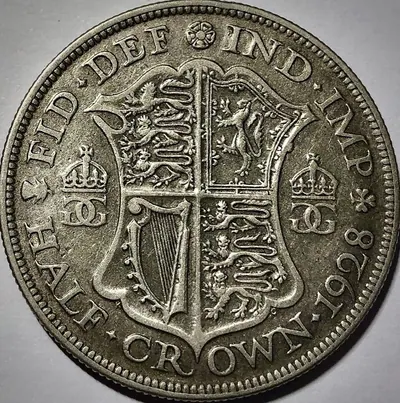
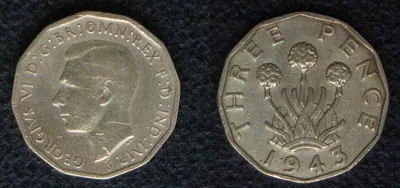
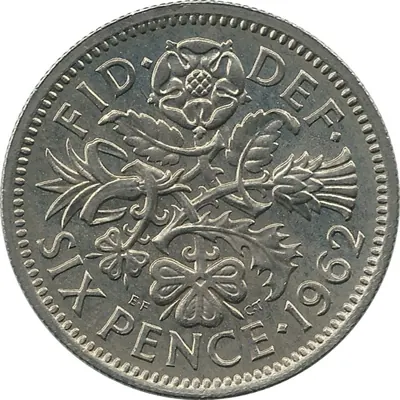
Before 15 February 1971, Britain counted in pounds, shillings and pence (£sd): 12 pence to the shilling, 20 shillings to the pound. Old coins from that system turn up in drawers and inherited jars all over the world. What they’re worth comes down to two questions:
- Is it silver? Check the date. 1919 or earlier means .925 sterling silver. 1920–1946 means 50% silver. 1947 or later means cupronickel, no silver (except Maundy money). (1920 coins exist in both alloys.)
- Is it a key date or in top condition? A short list of low-mintage dates sells for hundreds or thousands of pounds. Common dates in worn condition are worth melt or a little more.
The melt table above shows today’s silver value for each coin. The key-date table lists real Spink auction results.
How old British money worked
The £sd system confuses many people today, so here is the arithmetic:
- 1 pound (£1) = 20 shillings (s) = 240 pence (d). The “d” comes from the Latin denarius.
- Prices were written with a slash: 2/6 is two shillings and sixpence (a half crown), said “two and six”. 1/- is one shilling.
- At decimalisation the shilling became 5p, the florin 10p, the sixpence 2½p and the crown 25p.
The first table above lists every circulating coin, its value, its nickname and when it stopped being legal tender. Collectors still use the old names: a bob (shilling), a tanner (sixpence) and a joey (the small silver threepence).
Which old British coins are silver
This is the first thing to check, and it’s done entirely by date:
- 1816–1919: sterling silver (.925). Silver coins from the 1816 recoinage onward were struck in sterling, up to and including 1919.
- 1920–1946: 50% silver. In 1920 the silver content was cut to half. The alloy was tweaked in 1922 and again in 1927, adding nickel and zinc. Half-silver coins tend to tarnish darker than sterling ones. Both alloys exist for some 1920 coins.
- 1947 onward: no silver. From 1947 the “silver” coins were struck in cupronickel (75% copper, 25% nickel), so Britain could repay silver lent by the United States in wartime. Only Maundy money and later proof issues went back to silver.
Bronze pennies, halfpennies and farthings were never silver. The twelve-sided brass threepence (1937–1967) isn’t either. The small silver threepence was struck for circulation until 1945, although almost all of the 1945 coins were melted.
Worked example
A 1915 half crown is .925 silver, 0.4205 troy oz. At a silver price of $40 an ounce that’s about $16.80 of metal. A 1935 half crown holds 0.2273 oz, about $9.10. A 1955 half crown is cupronickel with no silver. The coins look almost the same; the date makes all the difference.
Key dates worth looking for
The key-date table above lists coins with verified Spink results. The pattern holds across denominations: low mintage plus good condition.
- 1934 crown. Only 932 of the George V “wreath” crowns were struck that year. Spink results run from £2,200 for a PCGS XF45 to £3,000–£3,200 for coins at or near About Uncirculated. Cleaned examples brought less, £1,200–£1,500, a reminder not to polish coins.
- 1905 half crown. With 166,008 struck, it is the key date of the modern half crown series. A bold VF coin made £2,000, but an almost Fine one only £250.
- 1905 shilling. 488,390 minted. £200 in VF, up to £1,900 in good EF.
- 1930 half crown (809,051 minted) and 1932 florin (717,041) are the George V key dates. Expect several hundred pounds in EF and around £1,000 in mint state.
- 1946 and 1949 brass threepences are the scarce George VI dates: £170 for a stained VF up to £1,100 for a PCGS MS64 1949.
- 1952 sixpence. About 1 million were struck, against 20–88 million in other George VI years. Spink sold an About Uncirculated one for £120.
- 1959 Scottish shilling. 1,012,988 minted, a low figure for an Elizabeth II shilling. We found no verified sale to quote.
Common dates behave differently. A 1915 half crown in MS63 sold for just £45, close to its silver value. Only a gem NGC MS65 example jumped to £550. If your coin is a common date and worn, value it as silver.
The great rarities
The most valuable British coins are pieces you are very unlikely to find in a jar, but they explain the headlines. An Edward VIII 1937 proof gold sovereign (two known) sold for £516,000 at A.H. Baldwin & Sons on 8 May 2014. Edward VIII abdicated before his coins were issued. A unique 1663 “Reddite” pattern crown made £396,000 at Spink the same year. In 2021 an Edward VIII gold £5 pattern sold for US$2.28 million at Heritage. Edward VIII also has a brass rarity: only 12 1937 brass threepences were struck to test slot machines, and just 6 are located.
How to read an old British coin
British coins carry no country name. The monarch’s Latin titles identify them instead. A George V coin reads, in full or abbreviated:
GEORGIVS V DEI GRA BRITT OMN REX FID DEF IND IMP: “George V, by the Grace of God, King of all the Britains, Defender of the Faith, Emperor of India.”
Useful clues:
- IND IMP (Emperor of India) appears on coins up to 1948; George VI’s coins drop it from 1949.
- BRITT OMN appears on Elizabeth II’s 1953 coins only; later coins read DEI GRATIA REGINA.
- Shillings from 1937 to 1966 came in two versions each year: an English and a Scottish reverse. Both were worth one shilling everywhere.
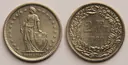
- The denomination is usually spelled out on the reverse, such as HALF CROWN or THREE PENCE in the photos above.
If you can’t make sense of the legend, our foreign coin identifier guide explains how to read Latin titles, and old British pennies covers the bronze penny dates in detail.
How to check your coins with CoinLens
Sorting a tin of old British coins is faster with a photo identifier. Coin Identifier – CoinLens (iPhone and Android) identifies each coin from photos of both sides. It shows the monarch, year, composition and an instant value estimate, and it can save coins to a collection with a total value. Use it to separate silver dates from cupronickel and flag key dates, then check condition before you sell. Free scans are limited; Premium unlocks unlimited scans.
Where to sell old British coins
- Silver coins in worn condition: sell by weight to a bullion dealer or coin shop, priced against the melt table.
- Key dates and high-grade coins: a specialist British coin auction (Spink, Baldwin’s and other UK houses) or a dealer who handles British coins. Condition is everything, so describe it honestly with clear photos.
- Don’t clean them. The cleaned 1934 crowns above sold for about half the price of untouched ones.
- Mixed lots of cupronickel and bronze: sell together; individually they’re rarely worth the postage.
Frequently asked questions
Are old British coins worth anything?
Many are worth at least their silver. Coins dated 1919 or earlier are .925 sterling silver and 1920–1946 coins are .500 silver, so a half crown, florin, shilling or sixpence from those years is worth melt value. Coins dated 1947 or later are cupronickel and usually worth little unless they’re a rare date or in top condition.
How much is a half crown worth?
A half crown dated 1919 or earlier holds 0.4205 troy oz of silver; 1920–1946 coins hold 0.2273 oz. The melt table on this page shows today’s value. Rare dates such as 1905 (166,008 minted) and 1930 (809,051) sell for hundreds to thousands of pounds in good condition.
What is a florin worth?
A florin was two shillings, 10p after decimalisation. Silver florins (1920–1946 at .500, earlier at .925) are worth melt value or more. The 1932 florin, with 717,041 minted, is the key George V date; Spink results run from £350 (good EF) to £1,000 (PCGS MS63).
Which sixpences are worth money?
Silver sixpences dated 1946 or earlier are worth melt, and the 1952 George VI sixpence is scarce at about 1 million minted (Spink sold an about-uncirculated one for £120). Common cupronickel sixpences from 1947–1967 are mostly worth a little more than face.
How do I read old British money like 2/6?
The figure before the slash is shillings and after it pence: 2/6 is two shillings and sixpence, a half crown. 1/- is one shilling. ‘d’ stands for pence (from the Latin denarius) and ‘s’ for shillings.
What's the difference between an English and a Scottish shilling?
From 1937 to 1966 two shillings were issued each year, one with an English and one with a Scottish reverse. Both have the same value; specific dates such as the 1959 Scottish shilling (1,012,988 minted) are scarcer.
Can I still spend old British coins?
Almost none. The pre-decimal coins were withdrawn between 1961 and 1993; the florin was the last, on 30 June 1993. Crowns remain legal tender at 25p, but they’re worth far more as silver or collectibles.
Sources
- Wikipedia: Sixpence (British coin)
- Wikipedia: Shilling (British coin)
- Wikipedia: Florin (British coin)
- Wikipedia: Half crown (British coin)
- Wikipedia: Crown (British coin)
- Wikipedia: Threepence (British coin)
- Wikipedia: Farthing (British coin)
- Wikipedia: Halfpenny (British pre-decimal coin)
- Wikipedia: Penny (British pre-decimal coin)
- Coin World (May 2014): Rare 1937 Edward VIII sovereign sets record for British coin
- CoinWeek (2021): World's most expensive British coin brings $2.28 million at Heritage
- Spink lot 9026337: 1934 crown, almost uncirculated, sold £3,000
- Spink lot 16004000721: 1934 crown, EF/better, sold £3,200
- Spink lot 7023729: 1934 crown, good EF, sold £2,600
- Spink lot 18004000252: 1934 crown, PCGS XF45, sold £2,200
- Spink lot 24123001292: 1934 crown, NGC AU Details (cleaned), sold £1,500
- Spink lot 24123001293: 1934 crown, NGC UNC Details (cleaned), sold £1,200
- Spink lot 25124000291: 1905 half crown, bold VF, sold £2,000
- Spink lot 13012983: 1905 half crown, nearly VF, sold £1,300
- Spink lot 17007000479: 1905 half crown, almost Fine, sold £250
- Spink lot 12027387: 1905 shilling, good EF, sold £1,900
- Spink lot 19006000504: 1905 shilling, NGC MS62, sold £1,000
- Spink lot 18025000883: 1905 shilling, good VF, sold £650
- Spink lot 23006000353: 1905 shilling, VF, sold £200
- Spink lot 1010217: 1930 half crown, brilliant uncirculated, sold £1,100
- Spink lot 19040000060: 1930 half crown, NGC MS62, sold £650
- Spink lot 22111004453: 1930 half crown, EF, sold £320
- Spink lot 25121001803: 1932 florin, PCGS MS63, sold £1,000
- Spink lot 19040000061: 1932 florin, NGC AU58, sold £380
- Spink lot 16006002479: 1932 florin, good EF, sold £350
- Spink lot 25121001816: 1949 threepence, PCGS MS64, sold £1,100
- Spink lot 16004000737: 1949 threepence, about uncirculated, sold £480
- Spink lot 16004000736: 1946 threepence, about uncirculated, sold £480
- Spink lot 25121001815: 1946 threepence, PCGS MS63, sold £300
- Spink lot 21156007553: 1946 threepence, bold VF, stained, sold £170
- Spink lot 16004000735: 1952 sixpence, about uncirculated, sold £120
- Spink lot 21156007542: 1915 half crown, MS63, sold £45
- Spink lot 21156007541: 1915 half crown, MS64, sold £250
- Spink lot 21157008215: 1915 half crown, NGC MS65, sold £550
Values are estimates, not offers. Condition decides the price; for a valuable coin, get a professional grade.