Foreign Coin Identifier: What Country Is My Coin From?
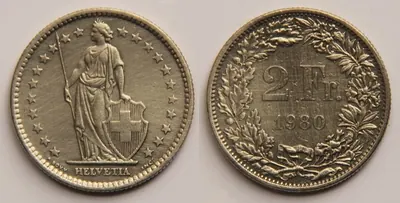
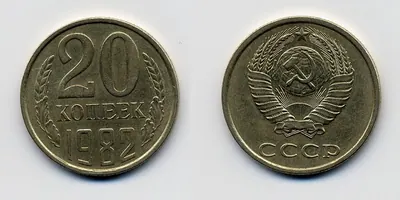
To find a coin's country, read its legend: HELVETIA is Switzerland, MAGYAR is Hungary, CCCP (Cyrillic СССР) is the USSR, 日本国 is Japan. Then convert the date if it isn't Gregorian. Most foreign coins are worth little, but a 1937 Edward VIII gold £5 pattern sold for $2,280,000 (Heritage, March 2021).
Have one in hand? Scan it with CoinLens to identify it and see an estimate in seconds.
| Inscription on the coin | Country | Notes |
|---|---|---|
| HELVETIA or CONFOEDERATIO HELVETICA | Switzerland | Latin name of the Swiss Confederation; every Swiss coin carries one of the two |
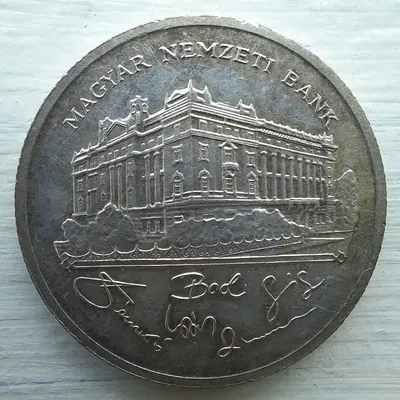
| MAGYAR, MAGYAR NEMZETI BANK | Hungary | Hungarian coins are inscribed in Magyar; the 200 forint in the photo reads MAGYAR NEMZETI BANK |
| RZECZPOSPOLITA POLSKA, POLSKA | Poland | ‘Republic of Poland’, on the eagle side |
| ÉIRE, SAORSTÁT ÉIREANN | Ireland | Saorstát Éireann on the first coins (1928 on); Éire after the 1937 constitution; harp on the front |
| NORGE, NOREG | Norway | Kongeriket Noreg on some 5 kroner |
| SUOMI FINLAND | Finland | Finnish and Swedish names |
| DEUTSCHES REICH | Germany (before 1945) | Reichsmark and earlier |
| BUNDESREPUBLIK DEUTSCHLAND | West Germany / Germany | Pfennig and Deutsche Mark coins |
| DEUTSCHE DEMOKRATISCHE REPUBLIK, DDR | East Germany | Light aluminium coins nicknamed ‘alu-chips’ |
| REPUBLIK ÖSTERREICH | Austria | |
| TÜRKİYE CUMHURİYETİ | Turkey | ‘Republic of Turkey’ |
| D G REG F D, D G REX F D, IND IMP | United Kingdom | British coins carry no country name, only the monarch’s titles in Latin |
| ELIZABETH II D G REGINA / CHARLES III D G REX + CANADA | Canada | Commonwealth coins name the country on the reverse |
| ESTADOS UNIDOS MEXICANOS | Mexico | ‘United Mexican States’ |
| HONG KONG + Chinese characters | Hong Kong | Bauhinia flower since 1993; Queen’s portrait before |
Which one is yours? Check it with CoinLens →
Country identifications from each country's coinage article on Wikipedia and Britannica (see sources). Spellings vary with era: older coins often use Latin or a monarch's name instead of the country.
DEMO
Check your Foreign Coin Identifier: What Country Is My Coin From?
Add a photo of each side
Add a photo of at least one side first.
Demo — photos stay on your device. Nothing is uploaded.
DEMO
Your photos are ready. The identification happens in the CoinLens app.
On the web this is a demo — it can't recognize coins. In the app, the same two photos give you the coin's name, details and a value estimate.
Scan these in the free appEXAMPLE — what CoinLens shows
Value estimate:
Sample from our guide's data, not a result for your photo.
That was a sample. Scan your coin →·
| You see | Script | Likely country or region | Tip |
|---|---|---|---|
| СССР (looks like CCCP) | Cyrillic | Soviet Union (1924–1991) | The hammer-and-sickle state arms on the other side |
| БАНК РОССИИ, double-headed eagle | Cyrillic | Russia (1992 on) | Mint marks СП or М |
| ΕΛΛΗΝΙΚΗ ΔΗΜΟΚΡΑΤΙΑ | Greek | Greece | Means ‘Hellenic Republic’; Greek euro values in Greek letters |
| 日本国 and a two-character era name | Japanese kanji | Japan | Dates are era years; see the date table |
| Four characters around a square hole | Chinese characters | China, or Japan, Korea, Vietnam, Ryukyu | Traditional ‘cash’ coins, struck until about 1912 |
| Hangul (round syllable blocks) | Korean | South Korea | Bank title in hangul |
| Hebrew, Arabic and English together | Hebrew | Israel | Dates in the Hebrew calendar |
| Arabic script, numerals like ١٩٧٧ | Arabic | Arab world (Egypt, Saudi Arabia, Morocco, etc.) | Read the date in Eastern Arabic numerals |
| Persian script, numerals like ۱۳۵۶ | Persian (Arabic-based) | Iran or Afghanistan | Iran uses the Solar Hijri calendar |
| Rounded looped script, numerals like ๒๕๒๐ | Thai | Thailand | Dates in the Buddhist Era: subtract 543 |
Which one is yours? Check it with CoinLens →
Scripts and dating systems from Wikipedia's articles on each currency and calendar.
| Date system | Where used on coins | Conversion | Example |
|---|---|---|---|
| Islamic (AH, Hijri) | Arab countries, Pakistan, older Ottoman and Persian coins | AD ≈ AH × 0.97 + 622 (lunar years are shorter) | AH 1400 ≈ 1979–80 |
| Solar Hijri (SH) | Iran (from 1925; 1976–79 coins used an imperial era, 2535–2537), Afghanistan | Add 621 or 622 | SH 1356 ≈ 1977 |
| Thai Buddhist Era (BE) | Thailand | Subtract 543 | BE 2520 = 1977 |
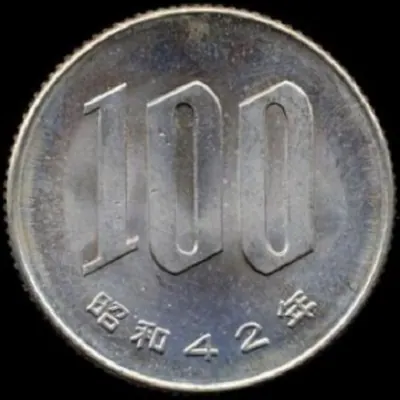
| Japanese era (nengō) | Japan | Meiji +1867, Taishō +1911, Shōwa +1925, Heisei +1988, Reiwa +2018 | Shōwa 42 = 1967 |
| Minguo (Republic of China) | Taiwan, Republic of China coins | Add 1911 | Year 70 = 1981 |
| Vikram Samvat (VS) | Nepal | Subtract 57 (56 early in the year) | VS 2034 ≈ 1977 |
| Ethiopian (EE) | Ethiopia | Add 7 or 8 | EE 1969 ≈ 1977 |
Which one is yours? Check it with CoinLens →
Offsets from Wikipedia's calendar articles. Calendar years start on different days, so a conversion can be off by one; that's normal.
| Type | Typical value | Evidence |
|---|---|---|
| Modern circulating coins (any country) | Face value at most; often unexchangeable | US banks and Federal Reserve Banks don’t accept foreign coins |
| Mixed bulk world coins, by the pound | A few dollars per pound | Numismatic News (2012): a buyer paid about $6.72/lb for 1,670 lb |
| Silver world coins (pre-1960s Europe, Mexico, Canada, etc.) | Silver melt value or more | Check the alloy for each country and year |
| Scarce dates in top condition | Tens to thousands of dollars | Same 2012 hunt: a 1977 Rhodesia ½ cent catalogued at $1,500 uncirculated |
| Great rarities (patterns, gold) | Six or seven figures | 1937 Edward VIII gold £5 pattern: $2,280,000, Heritage, March 2021 |
Ranges are general guidance built from the cited examples, not a price guide.
Most coins tell you their country. They just don’t always say it in English. Work through three clues in order:
- The legend (the lettering around the edge). Many countries use their own name for themselves: HELVETIA for Switzerland, MAGYAR for Hungary, NORGE for Norway, ÉIRE for Ireland, POLSKA for Poland.
- The script. Cyrillic, Greek, Arabic, Hebrew, Thai or Chinese characters narrow a coin down to a handful of countries even if you can’t read them.
- The date. A coin dated 1398, 2520 or 昭和42 isn’t from the future or the distant past. It uses another calendar, and converting it often confirms the country.
The tables above cover the inscriptions and dates people most often get stuck on. Once you know the country, denomination and year, you can work out what the coin is worth. For most modern foreign coins that’s not much; for old silver and scarce dates it can be a lot more.
Step 1: Find the country name in the legend
Look for the longest word on the coin. It’s often the country, the issuing bank or the ruler.
Countries that use a Latin or local name. Switzerland is the classic puzzle. Swiss coins never say “Switzerland”; they say HELVETIA or CONFOEDERATIO HELVETICA, Latin for the Swiss Confederation (that’s where the “CH” country code comes from). Hungary’s coins use MAGYAR (“Hungarian”); the 200 forint in the photo reads MAGYAR NEMZETI BANK, the National Bank of Hungary. Poland’s coins read RZECZPOSPOLITA POLSKA (“Republic of Poland”) around the eagle. Ireland’s read ÉIRE, or SAORSTÁT ÉIREANN (the Irish Free State) on the earlier coins from 1928, before the 1937 constitution; all carry a harp.
Countries whose coins don’t name them at all. British coins carry only the monarch’s name and Latin titles: D G REG F D means Dei Gratia Regina Fidei Defensor, “by the grace of God, Queen, Defender of the Faith”, and older coins add IND IMP (Emperor of India). If you see a crowned monarch, Latin abbreviations and no country, think United Kingdom. Commonwealth countries such as Canada, Australia and New Zealand use the same portrait and titles, but they print the country’s name too, usually on the reverse.
Banks instead of countries. Many modern coins name the central bank: MAGYAR NEMZETI BANK (Hungary), БАНК РОССИИ (Bank of Russia), or a Korean bank title in hangul.
Euro coins: check the national side
Euro coins have a common side with the value, a map of Europe and stars, which is the same everywhere, and a national side chosen by each issuing country. Most national sides spell the country out (for example ESPAÑA, PORTUGAL, LUXEMBOURG, SAN MARINO, MONACO). There are exceptions: German euros show the eagle with no name, and their letters A, D, F, G or J are mint marks, not country codes. Greek euros write the value in Greek letters. Our rare 2 euro coins guide covers which national sides are worth more.
Step 2: Identify the script
If you can’t read the letters at all, the alphabet still narrows it down fast. The second table above lists the main scripts.
- Cyrillic (Russian-style letters: Д, Ж, Л, Я). The most common puzzle is СССР, which looks like “CCCP” to English readers. It is the Russian abbreviation for the USSR, as on the 20 kopeks in the photo. Cyrillic is also used by Bulgaria, Serbia, Ukraine, Belarus and Kazakhstan, so check the emblem and the currency name.
- Greek (Σ, Δ, Λ, Ω): Greece or Cyprus. ΕΛΛΗΝΙΚΗ ΔΗΜΟΚΡΑΤΙΑ means “Hellenic Republic”; Hellas is the Greek name for Greece.
- Arabic script: much of the Middle East and North Africa, Pakistan and older Ottoman and Persian coins. The numerals give the date; see step 3.
- Hebrew: Israel. Modern Israeli coins write the country’s name in Hebrew, Arabic and English.
- Chinese characters: China, Taiwan, Hong Kong, and older coins of Japan, Korea and Vietnam. 日本国 (Nippon-koku, “State of Japan”) marks a Japanese coin.
- Thai, with its rounded loops: Thailand.
Square-hole coins
A round coin with a square hole is almost always an East Asian “cash” coin, the standard Chinese coinage for about 2,000 years until around 1912. Japan, Korea, Vietnam and the Ryukyu Kingdom copied the style. The four characters are read top, bottom, right, left: the reign title, then a word for currency such as 通寶 (tongbao). Huge numbers were made, and modern copies and charm coins are everywhere. Identify carefully and assume a cast coin with crisp, fresh-looking edges could be a reproduction.
Step 3: Convert the date
A strange date is a clue, not a problem. The third table gives the conversions.
Eastern Arabic numerals. Arabic-script coins use these digits: ٠ ١ ٢ ٣ ٤ ٥ ٦ ٧ ٨ ٩ (0–9). Despite the right-to-left script, numbers read left to right, so ١٩٧٧ is 1977. Persian coins write 4, 5 and 6 differently (۴ ۵ ۶). Recognising those forms tells you it’s an Iranian or Afghan coin.
Hijri years. If the year reads around 1300–1450, it’s an Islamic (AH) date. The lunar year is 354 or 355 days, so the conversion isn’t a simple addition: AD ≈ AH × 0.97 + 622. AH 1400 comes out around 1979–80. Iran’s coins since 1925 use the Solar Hijri calendar, where you just add 621 or 622: SH 1356 is about 1977.
Japanese eras. Japanese coins count years from the start of each emperor’s reign. The 100 yen in the photo reads 昭和42年: Shōwa year 42, which is 1925 + 42 = 1967. The current era, Reiwa (令和), began in 2019, so Reiwa 1 is 2019. The first year of an era is written 元年 (gannen) rather than “1”.
Thai, Taiwanese, Nepali and Ethiopian dates. Thai coins use the Buddhist Era: subtract 543 (BE 2520 = 1977). Taiwan’s coins count from 1912: add 1911. Nepal’s Vikram Samvat runs about 57 years ahead. Ethiopia’s calendar runs 7–8 years behind.
Is it even a coin? Tokens and medals
If the piece has no denomination and no country, it may not be a coin at all. Tokens (transit, arcade, trade and game tokens) were issued by private businesses or authorities, not governments, and were good for goods or services. Medals are commemorative pieces never meant for spending. Collectors call these exonumia. They are a big category of their own, and the subway token guide is a good example. This isn’t a hard rule, since some medals carry dates and place names, but no value plus no issuing country is a strong hint.
What is my foreign coin worth?
Honest answer: usually not much. Most foreign coins in American drawers are modern pocket change brought home from trips. Federal Reserve Banks don’t accept foreign coins, and big US banks such as Bank of America don’t exchange them, so their practical value is often below face.
Where value hides:
- Silver. Many countries struck circulating silver coins into the 1960s, and some later. A silver coin is worth at least its melt value. Check the composition for the country and year before selling a bag by weight.
- Scarce dates in top condition. Numismatic News columnist Daniel McGowan bought 1,670 lb of mixed world coins at about $6.72 a pound. Among them he found a 1952 British West Africa sixpence and a 1977 Rhodesia ½ cent, which the Standard Catalog of World Coins valued at $325 and $1,500 in uncirculated condition. That’s how rare the good ones are: a couple of notable coins out of 1,670 pounds.
- Great rarities. At the top end, a 1937 Edward VIII gold £5 pattern, from the king who abdicated before his coins were issued, sold for $2,280,000 at Heritage in March 2021, a record for a British coin. You won’t find one in a jar, but British, Canadian and other world rarities do turn up in old collections. See our guides to old British pennies and rare Canadian coins.
How to identify a foreign coin with CoinLens
If the legend is worn, in an unfamiliar script or simply confusing, photograph both sides with Coin Identifier – CoinLens on iPhone or Android. The AI identifies the coin within seconds from a database of almost 500,000 coins worldwide. It shows the country, minting years, composition and history, plus an instant value estimate, so you don’t need to read Cyrillic or convert a Hijri date yourself. Save each coin to a collection to see the total. Free scans are limited; Premium unlocks unlimited scans. For anything that looks rare, confirm with a specialist dealer or grading service.
What to do with foreign coins you don’t want
- Pull out silver and gold and sell them for metal value, or more for scarce dates.
- Sell mixed lots by weight to collectors, who pay a few dollars a pound to search them.
- Spend them on your next trip, or drop them in an airline or airport charity collection.
- Keep the interesting ones. World coins are one of the cheapest ways to start collecting.
Frequently asked questions
What country is my coin from?
Read the legend around the edge first. Many coins name the country in their own language (HELVETIA is Switzerland, MAGYAR is Hungary, NORGE is Norway, ÉIRE is Ireland). If there’s no country name, the monarch’s title (British coins), the script (Cyrillic, Greek, Arabic, Thai, Chinese) or the date system narrows it down. The tables on this page cover the common puzzles.
What country is HELVETIA on a coin?
Switzerland. Helvetia is the Latin personification of Switzerland, and Swiss coins carry either HELVETIA or CONFOEDERATIO HELVETICA (Swiss Confederation) instead of the word Switzerland.
What coin has CCCP on it?
A Soviet Union coin. CCCP is the Cyrillic СССР, the Russian initials for the Union of Soviet Socialist Republics (USSR). Soviet coins from 1924 to 1991 carry it with the hammer-and-sickle emblem.
How do I read the date on a coin with Arabic writing?
Learn the Eastern Arabic numerals (٠١٢٣٤٥٦٧٨٩, read left to right like Western numbers), then check the calendar. A year around 1300–1450 is an Islamic Hijri date: multiply by 0.97 and add 622. Iranian coins use the Solar Hijri year: add 621.
What coin has a square hole in the middle?
Usually a traditional Chinese ‘cash’ coin, or a Japanese, Korean or Vietnamese coin of the same style. The four characters read top, bottom, right, left: the reign name, then a word for currency such as 通寶 (tongbao). Many modern reproductions exist.
Can I exchange foreign coins at a US bank?
Usually not. Federal Reserve Banks don’t accept foreign coins, and big banks such as Bank of America say they don’t accept or exchange them. Spend them abroad, give them to a charity collection, or sell the silver and collectible ones.
How do I know if a foreign coin is valuable?
Check the metal first (silver and gold are worth at least melt), then the date and condition. Most modern foreign coins are worth face value or less, but scarce dates, old silver and uncirculated coins can be worth much more. Identify the coin first, then look up sold prices.
Sources
- Wikipedia: Coins of the Swiss franc (HELVETIA / CONFOEDERATIO HELVETICA)
- Britannica: coins of Germany and central Europe (Hungarian coins in Magyar from 1868)
- Wikipedia: Polish złoty (Rzeczpospolita Polska on 1923–39 coins)
- Wikimedia Commons: Hungary 200 forint coin 1992 (legend MAGYAR NEMZETI BANK)
- Wikipedia: Reichsmark (DEUTSCHES REICH)
- Wikipedia: Deutsche Mark (BUNDESREPUBLIK DEUTSCHLAND)
- Wikipedia: Austrian schilling (REPUBLIK ÖSTERREICH)
- Wikipedia: Mexican peso (ESTADOS UNIDOS MEXICANOS)
- Wikipedia: Coins of Ireland (Saorstát Éireann, Éire)
- Wikipedia: Norwegian krone
- Wikipedia: East German mark
- Wikipedia: Turkish lira
- Wikipedia: Coins of the pound sterling (D G REG F D)
- Wikipedia: Coins of the Canadian dollar
- Wikipedia: Coins of the Hong Kong dollar
- Wikipedia: Soviet ruble
- Wikipedia: Russian ruble (Банк России, mint marks)
- Wikipedia: Greek euro coins
- Wikipedia: Identifying marks on euro coins
- Wikipedia: Japanese yen (日本国, era dates)
- Wikipedia: Japanese era name (year offsets)
- Wikipedia: Cash (Chinese coin)
- Wikipedia: Israeli new shekel (Hebrew calendar dates)
- Wikipedia: Hijri year (conversion formula)
- Wikipedia: Eastern Arabic numerals
- Wikipedia: Solar Hijri calendar
- Wikipedia: Thai solar calendar (Buddhist Era −543)
- Wikipedia: Minguo calendar (+1911)
- Wikipedia: Vikram Samvat
- Wikipedia: Ethiopian calendar
- CoinWeek (2021): World's most expensive British coin brings $2.28 million at Heritage
- Numismatic News (2012): Treasures found in bulk world coins
- St. Louis Fed: Reserve Banks don't accept foreign coins
- Bank of America currency exchange FAQ (no foreign coins)
- Wikipedia: Exonumia (tokens and medals)
- Wikipedia: Euro coins (common and national sides)
Values are estimates, not offers. Condition decides the price; for a valuable coin, get a professional grade.