Rare Canadian Coins Worth Money (List With Mintages)
Canada's most valuable coins are rarities few people will hold: the 1911 silver dollar pattern sold for US$552,000 (Heritage, 2019) and the 1936 dot cent (three known) set a US$402,500 record. Findable rarities include the 1948 silver dollar (18,780 made) and 1969 large date dime (under 20 known).
Have one in hand? Scan it with CoinLens to identify it and see an estimate in seconds.
| Coin | How many | Notable sale / value note |
|---|---|---|
| 1911 silver dollar (pattern) | 2 in silver, 1 in lead | US$552,000 incl. 20% fee, SP64 PCGS (Heritage, Aug 15 2019) |
| 1936 dot 1 cent | 3 known | US$402,500 (January 2010) |
| 1936 dot 10 cents | 5 known (2 in the Ottawa museum) | US$184,000, SP68 (Heritage, January 2010) |
| 1921 5 cents (silver) | About 400–480 known | Finest known PCGS MS67 US$115,000 (January 2010) |
| 1948 silver dollar | 18,780 struck | Lowest-mintage George VI circulation dollar |
| 1947 Maple Leaf silver dollar | 21,135 struck | Struck in 1948 with the 1947 date |
| 1969 large date 10 cents | Fewer than 20 known | High grades reported at $15,000–$30,000 |
| 2000-P 10 cents | About 250 struck (test coins) | Rarely offered |
| 1925 5 cents | 200,050 struck | Key date, lowest George V/VI nickel mintage |
| 1955 no shoulder fold 1 cent | Die variety | PCGS AU58 US$488.75 (Heritage, January 2004) |
Which one is yours? Check it with CoinLens →
Mintages and population estimates come from the sources cited below. Sale prices are individual auction results (USD unless stated) or reported ranges, not a price guide. Condition changes value enormously.
DEMO
Check your Rare Canadian Coins Worth Money (List With Mintages)
Add a photo of each side
Add a photo of at least one side first.
Demo — photos stay on your device. Nothing is uploaded.
DEMO
Your photos are ready. The identification happens in the CoinLens app.
On the web this is a demo — it can't recognize coins. In the app, the same two photos give you the coin's name, details and a value estimate.
Scan these in the free appEXAMPLE — what CoinLens shows
Value estimate:
Sample from our guide's data, not a result for your photo.
That was a sample. Scan your coin →·
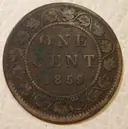
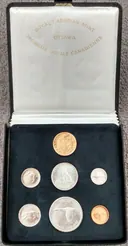
Canada’s famous rarities are mostly coins that never really circulated: patterns, coins struck with “placeholder” dies, and test pieces. They sell for six figures. The rare coins an ordinary person might actually own are scarce dates and varieties such as the 1948 silver dollar, the 1969 large date dime and the 1955 no shoulder fold cent.
Ranked from the most valuable down.
The rare Canadian coin list
1. 1911 silver dollar (pattern), US$552,000
The Royal Mint in London struck two silver trial dollars and one in lead for 1911, but Canada never produced the coin. One silver strike, nicknamed the “Emperor of Canadian Coins”, sold for US$690,000 in 2003. It sold again for US$552,000, including a 20% buyer’s fee (about C$734,000), at Heritage on August 15, 2019, graded Specimen 64 by PCGS. The buyers then offered it to the Bank of Canada Museum.
2. 1936 dot cent, record US$402,500
When George VI took the throne in December 1936, dies with his portrait weren’t ready. The Mint kept using 1936 dies in 1937 and added a small dot below the date. Of 678,823 recorded, only three are known. One sold for US$402,500 in January 2010.
3. 1936 dot 10 cents, US$184,000
The same “dot” story applies to the dime. Five are known, two of them in the Ottawa currency museum. An SP68 example brought US$184,000 at Heritage in January 2010.
Not sure which Canadian coin you have? Scan both sides with CoinLens to identify it and see an estimated value.
4. 1921 5 cents (“Prince of Canadian Coins”), finest US$115,000
Canada switched to a larger nickel five-cent coin in 1921, and most of the small silver 1921 five-cent pieces were melted. Estimates of survivors range from 400 to 480. The finest known, PCGS MS67, sold for US$115,000 in January 2010.
5. 1948 silver dollar, 18,780 struck
New dies without “IND:IMP:” (Emperor of India) only arrived midway through 1948, so very few 1948-dated dollars were made. It is the key date of George VI silver dollars.
6. 1947 Maple Leaf silver dollar, 21,135 struck
Struck in early 1948 using 1947 dies, with a tiny maple leaf after the date. It is as hard to find as the 1948.
7. 1969 large date 10 cents, fewer than 20 known
Struck with the older, larger Bluenose reverse instead of the redesigned smaller ship. High-grade examples have been reported at $15,000 to $30,000.
8. 2000-P 10 cents, about 250 struck
Test coins lent to the vending industry to check the new plating process. Most were supposed to go back to the Mint. Look for a small P under the Queen’s portrait on a 2000-dated dime.
9. 1925 5 cents, 200,050 struck
The lowest-mintage nickel of the George V and George VI eras, and a key date for collectors.
10. 1955 no shoulder fold cent
A die variety with no fold line in the Queen’s gown at the shoulder. A PCGS AU58 sold for US$488.75 at Heritage. See our Canadian penny value guide for more cent varieties.
Rare Canadian coins in circulation: what you can actually find
Most of the coins above will never turn up in change. The 1936 dot cent and dime and the 1911 dollar are known in only a handful of examples, so a “dot” coin from a jar is almost certainly something else. These are the coins that genuinely can still be found in rolls, jars and pocket change:
| Coin | How rare | What to look for |
|---|---|---|
| 1969 large date dime | 10 to 20 known | The 1968-style larger schooner and larger date; regular 1969 dimes have a smaller redesigned Bluenose |
| 2000-P dime | Fewer than 250 made | A small P under the Queen; made to test new plated coins in vending machines and parking meters |
| 1999-P quarter | About 20,000 estimated | A small P under the Queen on a 1999 caribou quarter |
| 2000-P quarter | Only 3 to 5 known | A small P on a 2000 caribou quarter |
| 1991 quarter | 459,000 made | Far below the tens of millions struck in 1990 and 1993; output was low as the Mint prepared the 1992 commemoratives |
| 2004 poppy quarter | Millions made | Red poppy; the world’s first coloured circulation coin. A collector favourite, but common |
| Coloured toonies and quarters | Usually millions each | Worth face value or a small premium; colour that has worn off lowers interest further |
| Pre-1968 dimes, quarters, 50 cents and dollars | Common | 80% silver (50% for some 1967–1968 dimes and quarters), worth their silver |
Coloured commemoratives are the coins people most often ask about. Most coloured toonies were struck with about 2,000,000 coloured pieces plus a regular issue, so they are not rare. The 2017 glow-in-the-dark Canada 150 toonie and other toonie and loonie varieties are covered in our rare loonies and toonies guide.
The real circulation finds are the P-marked 1999 and 2000 coins and the 1969 large date dime. If you find one, don’t clean it, and have it authenticated before you sell.
How to check for silver
Canadian circulation dimes, quarters and half dollars from 1920 to 1966 are 80% silver, as are silver dollars from 1935 to 1966. In 1967, dimes and quarters come in 80% and 50% versions, and the half dollar and dollar are 80%. Some 1968 dimes and quarters are 50% silver. Even common dates are worth more than face value for their silver content, so sort out older silver first if you have a jar of old Canadian change.
How to check your coin with CoinLens
Photograph both sides with CoinLens (Coin Identifier - CoinLens on the App Store). It identifies the coin within seconds from its database of almost 500,000 coins worldwide, shows an instant value estimate and saves it to your collection with a running total value. Free scans are limited; Premium unlocks unlimited scans. Dot coins, large date dimes and other famous rarities are often faked. Get them authenticated by PCGS, NGC or ICCS before buying or selling.
Where to sell
- Major auctions (Heritage, Stack’s Bowers, Geoffrey Bell) for certified rarities.
- Canadian coin dealers and coin shows for key dates and silver coins.
- eBay for common silver and modern varieties. Price from sold listings.
Frequently asked questions
What is the most valuable Canadian coin?
The 1911 silver dollar, a pattern made by the Royal Mint in London that never went into production. One of the two silver strikes, nicknamed the ‘Emperor of Canadian Coins’, sold for US$552,000 (about C$734,000) at Heritage on August 15, 2019, and the buyers then offered it to the Bank of Canada Museum. Among coins made for circulation, the 1936 dot cent (US$402,500 record) is the most famous.
Are 1967 Canadian coins worth money?
The 1967 centennial animal designs (such as the rock dove cent, hopping rabbit nickel and mackerel dime) were made in large numbers, so most are not rare. The 1967 dimes and higher denominations contain silver, 80% or 50% depending on the version, so they are worth more than face value for their silver content.
What Canadian coins are silver?
Circulation dimes, quarters and half dollars from 1920 to 1966 are 80% silver, and so are silver dollars from 1935 (the first year) to 1966. In 1967 the dimes and quarters come in 80% and 50% versions, while the half dollar and dollar are 80%. Some 1968 dimes and quarters are 50% silver. Later circulation coins contain no silver.
Is a 1948 Canadian silver dollar rare?
Yes. Only 18,780 were struck because new dies dropping ‘IND:IMP:’ (Emperor of India) arrived halfway through 1948. Earlier 1948 dollars carry the 1947 date with a small maple leaf (21,135 struck). Both are among the scarcest Canadian circulation dollars.
How do I spot a 1969 large date dime?
It uses the older 1968-style reverse with a larger Bluenose schooner and a larger date. Normal 1969 dimes have a redesigned, smaller ship. Fewer than 20 large date examples are known, so have any candidate authenticated.
What rare Canadian coins can you still find in circulation?
The realistic finds are the 1969 large date dime (10 to 20 known), the 2000-P dime (fewer than 250 made), the 1999-P quarter (about 20,000 estimated) and the 2000-P quarter (3 to 5 known), plus the low-mintage 1991 quarter (459,000). Coloured commemorative quarters and toonies were made in the millions and are usually worth face value. Pre-1968 silver coins still turn up and are worth their silver.
Sources
- Wikipedia: Canadian silver dollar (1911 pattern history, 1947 Maple Leaf and 1948 mintages)
- Wikipedia: Penny (Canadian coin), 1936 dot cent
- Wikipedia: Dime (Canadian coin), 1936 dot, 1969 large date, 2000-P
- Wikipedia: Nickel (Canadian coin), 1921 and 1925 five cents
- PCGS: The rare Canadian 1936 dot cent (record $402,500)
- Coin World: Canada's 1936 dot cent a puzzling rarity
- Coin World (25 Aug 2019): Canadian 1911 silver dollar brings $552,000 at auction (Heritage, Aug 15 2019)
- NGC Auction Central: 1955 Canada no shoulder fold 1c MS (Heritage 1/12/2004, PCGS AU58, US$488.75)
- Wikipedia: Dime (Canadian coin) (1969 large date, 2000-P vending test dimes)
- Wikipedia: Quarter (Canadian coin) (1991 mintage, 1999-P and 2000-P quarters)
- Wikipedia: Quarter (Canadian commemorative coin) (2004 poppy, first coloured circulation coin)
- Wikipedia: Toonie (coloured commemorative mintages)
Values are estimates, not offers. Condition decides the price; for a valuable coin, get a professional grade.