PCGS vs NGC: Which Coin Grading Service Should You Use?
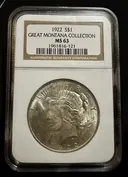
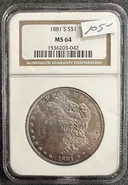
PCGS (founded 1986) and NGC (founded 1987) are the two leading coin graders; both use the 1–70 scale, guarantee grades and are accepted by major auction houses. Both sell at record prices: an NGC MS67 Sacagawea/quarter mule brought $192,000 (Stack's Bowers, March 2018). Pick by fees, speed and coin type.
Have one in hand? Scan it with CoinLens to identify it and see an estimate in seconds.
| PCGS | NGC | |
|---|---|---|
| Founded | 1986, California | 1987, New Jersey (now Sarasota, Florida) |
| Grading scale | Sheldon 1–70 | Sheldon 1–70 |
| Modern tier | See current PCGS fees | $20 Modern (up to $3,000, read Nov 2026) |
| Economy tier | See current PCGS fees | $25 (non-gold US and world coins up to $300, read Nov 2026) |
| Mid tier | See current PCGS fees | $45 Standard (up to $3,000) |
| Membership | Collectors Club required to submit directly | Collectors Society required to submit directly |
| Extra fees | Guarantee premium on value | $10 handling fee per submission |
| Online price/reference tool | PCGS CoinFacts, Price Guide | NGC Price Guide, Census |
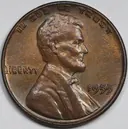
| Record example | 1955 doubled die cent, PCGS MS65+RD: $287,156 (GreatCollections, Jan 2023) | 2000-P Sacagawea/quarter mule, NGC MS67: $192,000 (Stack’s Bowers, Mar 2018) |
Which one is yours? Check it with CoinLens →
Fees change; check each service's page before submitting. Shipping and insurance are extra.
DEMO
Check your PCGS vs NGC: Which Coin Grading Service Should You Use?
Add a photo of each side
Add a photo of at least one side first.
Demo — photos stay on your device. Nothing is uploaded.
DEMO
Your photos are ready. The identification happens in the CoinLens app.
On the web this is a demo — it can't recognize coins. In the app, the same two photos give you the coin's name, details and a value estimate.
Scan these in the free appEXAMPLE — what CoinLens shows
Value estimate:
Sample from our guide's data, not a result for your photo.
That was a sample. Scan your coin →·
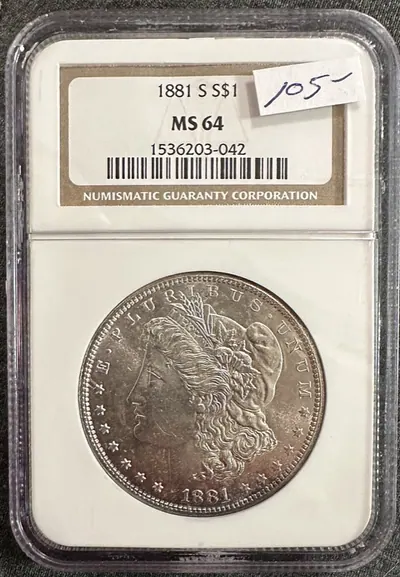
Both are safe choices. PCGS and NGC are the two largest third-party grading services, and coins in either holder are accepted by major auction houses, dealers and price guides. The real differences are:
- Price per coin — tiers and fees differ; compare NGC’s and PCGS’s current fee pages for your coins.
- Turnaround — varies month to month; both sell faster paid options.
- Market preference — for some US series, dealers may pay a little more for one holder. Check recent sales of your exact coin.
Grading scale and guarantees
Both grade on the Sheldon 1–70 scale (MS for Mint State, PR/PF for proof), add designations such as RD/RB/BN for copper color, and label varieties when you request attribution. Both guarantee their grade and authenticity, and both let you verify a certification number online.
Fees and turnaround
The table above shows the main tiers. Things that change the total:
- Membership: both require one to submit directly; dealers can submit for you.
- Handling and guarantee fees: NGC charges a $10 handling fee per submission; PCGS adds a guarantee premium tied to value.
- Variety attribution and Fast Track/express options cost extra.
- Return shipping and insurance are always added.
Which one for which coins
- Classic US coins for resale: compare recent auction prices in both holders for your series and grade — that’s the only reliable answer.
- World coins and ancients: NGC runs dedicated world and ancients services.
- Moderns and bullion: compare the cheapest modern tier at each, plus turnaround.
- Already graded? Crossing over from one to the other costs a fee and isn’t guaranteed to keep the grade.
The step-by-step process is in our guide on how to get coins graded.
How to check your coin with CoinLens
Before you pay to grade, identify the coin and get a rough idea of its value. Coin Identifier – CoinLens (iOS) identifies coins from photos of both sides, using a database of almost 500,000 coins, and shows an instant value estimate. It doesn’t grade coins. Free scans are limited; Premium unlocks unlimited scans. Download CoinLens on the App Store.
Where to sell graded coins
PCGS and NGC coins sell through Heritage, Stack’s Bowers, GreatCollections, dealers and eBay. Put the certification number in the listing so buyers can verify the grade.
Frequently asked questions
Is PCGS or NGC better?
Neither is better for every coin. Both are top-tier graders with guarantees. Some US collectors and dealers pay slightly more for PCGS in certain series, while NGC is widely used for world coins and moderns and is often cheaper for small submissions. Compare recent sold prices for your coin type in each holder.
Do PCGS coins sell for more than NGC?
Sometimes, for certain US series, but not always, and the difference varies coin by coin. Check sold auction results for your exact coin and grade in both holders before deciding.
Can I cross a coin from NGC to PCGS?
Yes. Both services offer crossover grading: you send the coin in its current holder and set a minimum grade; if it doesn’t meet it, the coin stays in its original holder and you pay a fee.
What about ANACS and ICG?
ANACS and ICG are also established graders and are cheaper, but auction houses and dealers generally pay the strongest prices for PCGS and NGC holders.
What is CAC?
CAC is a separate company that reviews coins already graded by PCGS or NGC and adds a sticker if it thinks the coin is solid for its grade; CAC-approved coins often bring premiums. Since 2023 it also grades coins itself as CACG.
Sources
- Professional Coin Grading Service (Wikipedia)
- Numismatic Guaranty Company (Wikipedia)
- NGC Services & Fees (read Nov 25, 2026)
- PCGS Collector Services & Fees (see current fees)
- NGC-certified Sacagawea/quarter mule sets a record, $192,000 (NGC)
- Lincoln cent collection tops $7.7 million at GreatCollections: 1955 DDO $287,156.25 (CoinNews)
- Certified Acceptance Corporation (CAC)
Values are estimates, not offers. Condition decides the price; for a valuable coin, get a professional grade.