How Much Is a Trade Dollar Worth? (1873–1885 US Trade Dollar Values & Chop Marks)
A US trade dollar holds 0.7874 troy oz of silver, more than a Morgan, and even worn ones sell well above melt. Common San Francisco dates sold for about $500 in XF45 and $1,800–$2,200 in MS62–MS63 at Heritage in 2026; a 1877-CC in NGC MS65 brought $52,800 in January 2022.
Have one in hand? Scan it with CoinLens to identify it and see an estimate in seconds.
| Coin | Example sales | Notes |
|---|---|---|
| 1877-S | PCGS XF45 $500 (Heritage, Feb and Jul 2026); PCGS AU58 $1,159 (Apr 2026); PCGS MS61 $1,525 (Aug 2026) | Most common date |
| 1875-S | PCGS AU58 $885 (Feb 2026); PCGS MS62 $2,196 (Jul 2026) | Common |
| 1878-S | PCGS AU58 $885 (Feb 2026); PCGS MS63 $2,135 (Mar 2026) | Last business-strike year |
| 1873 (Philadelphia) | PCGS MS65 $9,300–$16,800 (Heritage, 2022–2023) | First year |
| 1873-CC | PCGS AU58 $6,900 (Jan 2022); PCGS MS63 $21,000 (Sep 2017) | 124,500 struck |
| 1877-CC | PCGS MS64 $21,960 (Mar 2026); NGC MS65 $52,800 (Jan 2022) | Carson City key in mint state |
| 1878-CC | PCGS AU58 $14,400 (Jan 2022); PCGS MS60 $16,320 (Jul 2023) | Rarest business-strike date |
Which one is yours? Check it with CoinLens →
All sales are Heritage results (one Stack's Bowers) listed on NGC Auction Central. Chop-marked coins sell for less than these unmarked examples. Not a price guide. Melt at silver $43.35/oz, November 26, 2026.
DEMO
Check your 1873–1878 (business strikes); proofs to 1883, plus 1884–1885 proofs Trade Dollar
Add a photo of each side
Add a photo of at least one side first.
Demo — photos stay on your device. Nothing is uploaded.
DEMO
Your photos are ready. The identification happens in the CoinLens app.
On the web this is a demo — it can't recognize coins. In the app, the same two photos give you the coin's name, details and a value estimate.
Scan these in the free appEXAMPLE — what CoinLens shows
Value estimate:
Sample from our guide's data, not a result for your photo.
That was a sample. Scan your coin →·
Coin facts
- Coin
- Trade Dollar
- Years
- 1873–1878 (business strikes); proofs to 1883, plus 1884–1885 proofs
- Mints
- Philadelphia (no mint mark), Carson City (CC), San Francisco (S)
- Composition
- 90% silver, 10% copper
- Weight
- 27.22 g
- Diameter
- 38.1 mm
- Silver (ASW)
- 0.7874 troy oz
- Melt value
- $34.13
- Designer
- William Barber
Mintage
- 1873 (business strikes)
- 396,635
- 1873 proofs
- 865
- 1873-CC
- 124,500
- 1873-S
- 703,000
Trade dollar value: quick answer
The US trade dollar was made for commerce in China, not at home. Authorized by the Coinage Act of 1873 and designed by Chief Engraver William Barber, it weighed 420 grains (27.22 g) of 90% silver, slightly more than the standard silver dollar, to compete with the Mexican peso. Each coin holds 0.7874 troy ounces of silver.
Because so many were exported, melted or chop-marked, unmarked coins carry solid premiums. Recent Heritage results, from NGC Auction Central:
- Common dates (1875-S, 1877-S, 1878-S): about $500 in XF45, $900–$1,200 in AU58 and $1,500–$2,200 in MS61–MS63.
- 1873 (Philadelphia): PCGS MS65 coins brought $9,300–$16,800.
- Carson City: 1873-CC MS63 $21,000; 1878-CC AU58 $14,400 and MS60 $16,320; 1877-CC NGC MS65 $52,800 (January 2022).
A short history
- 1873: first strikes on July 11. Philadelphia struck 396,635, Carson City 124,500 and San Francisco 703,000 that year.
- 1876: demonetized, after millions entered domestic circulation at a discount. Still, an estimated seven million circulated in the US.
- 1878: business strikes ended. Proofs continued until 1883.
- 1884–1885: ten 1884 and five 1885 proofs were struck outside official records, now great rarities.
- 1887: the Treasury redeemed trade dollars for six months; chop-marked and holed coins were often refused.
- 1965: the Coinage Act made all US coins, including trade dollars, legal tender again.
How to identify a trade dollar
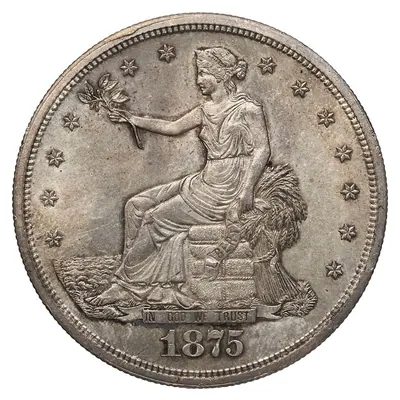
- Obverse: Liberty seated on bales of merchandise, holding an olive branch and a scroll inscribed LIBERTY, with the sea behind her.
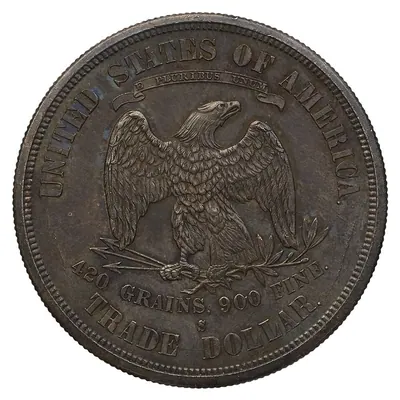
- Reverse: an eagle with the words TRADE DOLLAR and 420 GRAINS, 900 FINE.
- Mint mark: on the reverse, below the eagle. None = Philadelphia; CC = Carson City; S = San Francisco.
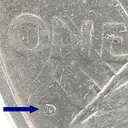
- Chop marks: small punched Chinese characters or symbols on either side. They are part of the coin’s history but usually lower value.
- Fakes: trade dollars are frequently counterfeited. Check weight (27.22 g), diameter (38.1 mm) and that the coin is not magnetic; have valuable dates certified.
Melt value
Each trade dollar holds 0.7874 troy ounces of silver. See the calculator below.
Silver melt value calculator
Trade Dollar: 0.7874 troy oz of silver each
Melt value ($34.13 each)
Silver spot $43.35/oz as of November 26, 2026 (gold-api.com)
Melt value today for a pile, a roll or $ face value → Silver melt calculator
Melt value is the floor. Condition and mint details decide the rest — check yours in the app.
How to check your coin with CoinLens
Photograph both sides in CoinLens. The app identifies the date and mint from its database of almost 500,000 coins and gives an instant value estimate you can save to your collection. CoinLens gives estimates; for Carson City dates, uncirculated coins or anything you suspect is fake, use PCGS or NGC authentication.
Where to sell
Certified trade dollars sell best at Heritage, Stack’s Bowers, GreatCollections or through a reputable dealer. Chop-marked coins have a dedicated collector base; describe the chops clearly when you sell.
Frequently asked questions
How much is a trade dollar worth?
At least its silver value (0.7874 troy oz), but collector demand keeps even worn common dates well above melt: PCGS XF45 1877-S coins sold for about $500 at Heritage in 2026. Mint state coins and Carson City dates sell for thousands.
Why was the trade dollar made?
It was created by the Coinage Act of 1873 to compete with the Mexican peso in trade with China. It was slightly heavier than the standard silver dollar, at 420 grains of 90% silver, and most early coins were shipped to China.
What are chop marks on a trade dollar?
Small stamped symbols applied by Chinese merchants to confirm a coin’s silver content. Chopped trade dollars are collected, but most sell for less than unmarked coins of the same grade. Many chopped coins could not be redeemed when the US redeemed trade dollars in 1887.
Is a trade dollar legal tender?
It was demonetized in 1876 but made legal tender again by the Coinage Act of 1965, which covered all US coins regardless of when they were issued.
What is the rarest trade dollar?
The 1884 and 1885 proofs: only ten 1884 and five 1885 pieces are known, struck outside official records. Among business strikes, the 1878-CC is the key date.
Sources
- Trade dollar (United States coin): history, mintages, chop marks, 1884–1885 proofs
- NGC Auction Central: 1877-S T$1 MS
- NGC Auction Central: 1875-S T$1 MS
- NGC Auction Central: 1878-S T$1 MS
- NGC Auction Central: 1873 T$1 MS
- NGC Auction Central: 1873-CC T$1 MS
- NGC Auction Central: 1877-CC T$1 MS
- NGC Auction Central: 1878-CC T$1 MS
Values are estimates, not offers. Condition decides the price; for a valuable coin, get a professional grade.