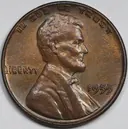
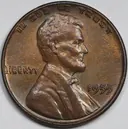
Die Crack vs Cud Error: Are They Worth Money?
A die crack is a raised line from a cracked die; a cud is a raised blank blob on the rim from a broken die. Small cracks add little; big breaks can: an 1832 Large Letters half with a major die break sold for $6,462.50 (MS64, Heritage, Nov 2014).
Have one in hand? Scan it with CoinLens to identify it and see an estimate in seconds.
| Die defect | What you see | What happened to the die | Value impact |
|---|---|---|---|
| Die crack | Thin, jagged raised line | Die cracked but stayed whole | Usually small; bigger for dramatic or listed cracks |
| Retained die break (retained cud) | Raised crack outlining a section, which may be slightly raised or misaligned | Piece broke but stayed in place | More than a crack |
| Cud (major die break) | Raised, featureless blob at the rim, design missing there | Piece of the die fell away | Most valuable of the three, especially large cuds |
Which one is yours? Check it with CoinLens →
Definitions from the Mint-made errors reference cited. The 1832 half dollar record below is a single sale of a listed die marriage, not a typical value.
DEMO
Check your Die Crack vs Cud Error: Are They Worth Money?
Add a photo of each side
Add a photo of at least one side first.
Demo — photos stay on your device. Nothing is uploaded.
DEMO
Your photos are ready. The identification happens in the CoinLens app.
On the web this is a demo — it can't recognize coins. In the app, the same two photos give you the coin's name, details and a value estimate.
Scan these in the free appEXAMPLE — what CoinLens shows
Value estimate:
Sample from our guide's data, not a result for your photo.
That was a sample. Scan your coin →·
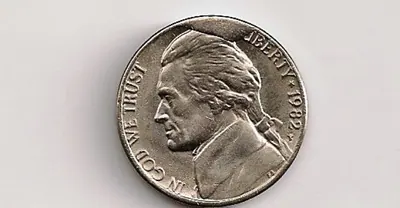
Dies wear out. As they’re used, they can crack, then break. Each stage leaves a different mark on the coins they strike:
- Die crack: a thin, raised, wandering line.
- Retained die break: a crack that outlines a piece of the die, which stayed in place; the section may be slightly raised or shifted.
- Cud: the piece fell out, so metal fills the gap and forms a raised, design-free blob at the rim.
How to identify each
Die crack
Look for a raised line (not a scratch, which is sunken). Cracks often run through letters, from the rim toward the center, or between design elements. They’re common — many Morgan dollars show them.
Retained die break
The crack forms a closed shape, often from rim to rim. The area inside may be slightly higher or shifted, and the design inside it may look slightly doubled or weak.
Cud
A raised, smooth lump on the rim, with no design in that area. Cuds can be on either side; the opposite side is often weakly struck at the same spot because the metal flowed into the cud.
When die cracks and cuds are worth money
- Big and dramatic — large cuds covering letters or devices, or cracks that run across the portrait.
- Listed die marriages — some die states are cataloged and collected. CoinWeek reports an 1832 Large Letters half dollar (O-101a) with a large reverse die break sold for $6,462.50 in MS64 at Heritage in November 2014, and an AU58+ CAC example for $3,294.
- Scarce coins — cuds on silver, gold or key dates.
Small cracks and tiny rim cuds on modern cents are common and add little.
See our error coins list with pictures for higher-value mint errors.
How to check your coin with CoinLens
Coin Identifier – CoinLens (iOS) identifies the coin and year from photos of both sides and shows an estimated value for that issue — useful for knowing whether you’re looking at a common modern coin or a scarce date where a cud matters more. It doesn’t detect die cracks or cuds; use a magnifier. Free scans are limited; Premium unlocks unlimited scans. Download CoinLens on the App Store.
Where to sell
Large cuds and listed die states sell through error and variety specialists and auction houses; minor cracks and small cuds sell on eBay. Photograph the defect close up with the date visible.
Frequently asked questions
Is a die crack worth money?
Usually only a little. Die cracks are common, especially on older coins such as Morgan dollars. Long, dramatic cracks across the design, or cracks that define a listed die variety, can bring premiums with specialists.
What is a cud on a coin?
A cud is a raised, shapeless lump of metal on the rim of a coin. It forms when a piece of the die’s edge breaks off: coin metal flows into the gap, so there’s no design in that spot.
Are cud errors rare?
Small rim cuds are found fairly often on modern coins. Large cuds that cover a big part of the design, cuds on gold or silver coins, and cuds on scarce dates are much harder to find.
How can I tell a cud from damage?
A real cud is raised above the surface, has the coin’s normal metal texture and luster, and is the same on both the cud area and nearby rim. Damage pushes metal down or sideways, leaves tool marks, and doesn’t erase design elements cleanly.
What's a die chip?
A tiny piece breaks out of the die’s surface (not the edge), leaving a small raised dot or lump on coins, often inside letters or numbers. Small chips usually add little value.
Sources
- Mint-made errors: die cracks, breaks and chips (Wikipedia)
- One reverse die, one giant crack: 1832 Large Letters half dollar O-101a, MS64 $6,462.50 Heritage Nov 2014; AU58+ CAC $3,294 Heritage (CoinWeek)
Values are estimates, not offers. Condition decides the price; for a valuable coin, get a professional grade.