How Much Is a Barber Half Dollar Worth? (1892–1915 Values & Key Dates)
Every Barber half dollar (1892–1915) is 90% silver with 0.3617 troy oz, so worn common dates sell near melt. Key dates sell for much more: an 1892-O Micro O brought $12,337.50 in VF30 at Heritage in 2016, and a PCGS MS67 sold for $132,000 at Stack's Bowers in December 2020.
Have one in hand? Scan it with CoinLens to identify it and see an estimate in seconds.
| Coin | Worn | Notable sales | Notes |
|---|---|---|---|
| Common dates | $15.68 melt | — | Heavily worn coins trade as silver |
| 1892-O Micro O | Premium | PCGS VF30 $12,337.50 (Heritage, Sep 2016); PCGS AU55 $16,450 and MS65 $85,187.50 (Heritage, Jan 2016); PCGS MS67 $132,000 (Stack’s Bowers, Dec 2020) | Tiny O mint mark; key to the series |
| 1892-O | Premium | NGC AU58 $930–$960 (Heritage, 2022–2023); NGC MS66 $7,200 (Heritage, Jan 2023) | First-year New Orleans issue |
| 1896-O | Premium | PCGS AU58 $5,040–$7,200 (Heritage, Feb 2018); PCGS MS65 $28,800 (Heritage, Jan 2023) | Very rare in gem condition |
| 1897-O | Premium | PCGS XF40 $1,440 (Heritage, Dec 2019); PCGS MS66 $11,400–$13,200 (2020–2022) | Semi-key |
| 1914 | Premium | PCGS VG8 $154–$159; PCGS F15 $366 (Heritage, 2026) | Low mintage |
Which one is yours? Check it with CoinLens →
Individual sales from NGC Auction Central (Heritage and Stack's Bowers results), not a price guide. Melt at silver $43.35/oz, November 26, 2026.
DEMO
Check your 1892–1915 Barber Half Dollar
Add a photo of each side
Add a photo of at least one side first.
Demo — photos stay on your device. Nothing is uploaded.
DEMO
Your photos are ready. The identification happens in the CoinLens app.
On the web this is a demo — it can't recognize coins. In the app, the same two photos give you the coin's name, details and a value estimate.
Scan these in the free appEXAMPLE — what CoinLens shows
Value estimate:
Sample from our guide's data, not a result for your photo.
That was a sample. Scan your coin →·
Coin facts
- Coin
- Barber Half Dollar
- Years
- 1892–1915
- Mints
- Philadelphia (no mint mark), New Orleans (O), San Francisco (S), Denver (D, from 1906)
- Composition
- 90% silver, 10% copper
- Weight
- 12.5 g
- Diameter
- 30.6 mm
- Silver (ASW)
- 0.3617 troy oz
- Melt value
- $15.68
- Designer
- Charles E. Barber
| Coin | Worn certified results | High-grade results |
|---|---|---|
| 1892 (first year) | NGC VF30 $180 (Heritage, May 2023) | PCGS MS65 $2,160 and MS66 $2,640 (Heritage, Jan 2023) |
| 1892-S | PCGS AG3 $176.90 to G4 $292.80 (Heritage, May 2026) | — |
| 1893-S | PCGS G4 $149 and VG10 $390.40 (Heritage, May 2026) | PCGS MS63 $3,853.20 (Heritage, Jul 2023) |
| 1897-S | PCGS VG10 $256.20–$268.40 and F12 $329.40 (Heritage, Apr–May 2026) | — |
| 1901-S | PCGS G4 $63 (Heritage, Aug 2023); NGC VG8 $264 (Heritage, Nov 2023) | NGC MS65 $8,400 (Stack’s Bowers, Dec 2020) |
| 1904-S | PCGS VG8 $129–$139 (Heritage, May 2026) | PCGS MS67 $87,000 (Heritage, Jan 2023) |
| 1907-S | NGC F15 $149 (Heritage, Nov 2023) | PCGS MS67 $33,600 (Stack’s Bowers, Dec 2020) |
| 1913 | PCGS VG8 $94–$99 (Heritage, Apr–May 2026) | PCGS MS65 $4,320 (Heritage, Jul 2023) |
| 1915 | PCGS VG8 $104–$109 (Heritage, 2023–2026) | — |
| Common date, e.g. 1898 | NGC F15 $109 (Heritage, Nov 2023); PCGS VF25 $144 (Heritage, May 2026) | NGC MS66 $3,360 (Heritage, Feb 2021) |
Which one is yours? Check it with CoinLens →
Individual results from NGC Auction Central (Heritage and Stack's Bowers, prices include buyer's premium). Not a price guide. Uncertified worn coins usually sell for less than these certified results. Melt at silver $43.35/oz, November 26, 2026.
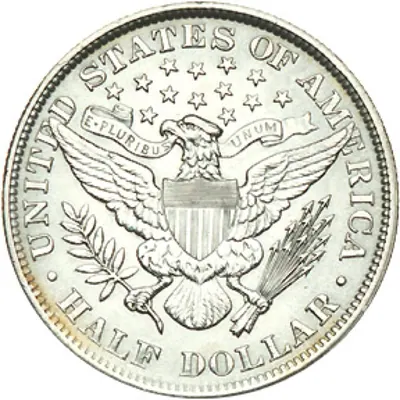
Barber half dollar value: quick answer
The Barber half dollar, designed by Chief Engraver Charles E. Barber, was struck from 1892 to 1915 in 90% silver. Many circulated heavily, so common dates in low grades trade close to silver melt value (calculator below).
Key dates carry real premiums:
- 1892-O Micro O: the key to the series. Sales range from $12,337.50 (PCGS VF30, Heritage, 2016) and $85,187.50 (PCGS MS65, Heritage, 2016) to $132,000 (PCGS MS67, Stack’s Bowers, December 2020).
- 1892-O: the first-year New Orleans issue; an NGC MS66 brought $7,200 at Heritage in January 2023.
- 1896-O, 1897-O, 1914: scarce, especially in mint state; a PCGS MS65 1896-O brought $28,800 at Heritage in January 2023.
How to identify your Barber half
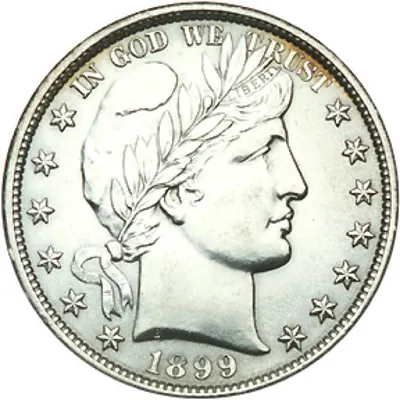
- Obverse: Liberty facing right wearing a cap, laurel wreath and a headband inscribed LIBERTY. The date is at the bottom.
- Mint mark: on the reverse, below the eagle’s tail. None = Philadelphia; O = New Orleans; S = San Francisco; D = Denver (from 1906).
- Grade clue: the word LIBERTY on the headband. Full, sharp letters suggest Fine or better; missing letters mean heavy wear.
Varieties
- 1892-O Micro O: a noticeably tiny O mint mark, much smaller than normal. Compare with any other O-mint Barber half; authentication is strongly recommended.
Why Barber designed it: a failed competition
By the late 1880s many people wanted to replace the Seated Liberty design used on silver coins since the 1830s. In 1891 Mint Director Edward O. Leech held a design competition, but only the winner would be paid, so the invited artists refused to take part, and none of the public entries was judged good enough. Augustus Saint-Gaudens, who sat on the judging committee, objected to everything submitted (Wikipedia).
On June 11, 1891, Leech told Chief Engraver Charles E. Barber to design the half dollar, quarter and dime himself. Barber’s Liberty head was modeled on French coinage, with a heraldic eagle from the Great Seal on the reverse. The first Barber coins were struck at Philadelphia at 9 a.m. on January 2, 1892. Reviews were harsh: Harper’s Weekly wrote that “the mountain had labored and brought forth a mouse” (Wikipedia).
The design was replaced once its minimum term ran out. Barber dimes and quarters were struck in 1916, but no Barber halves were made in 1916; the Walking Liberty half dollar took over.
Key dates and condition rarities
There are no great rarities among regular Barber halves except the 1892-O Micro O, whose mint mark was punched with a puncheon meant for the quarter. Wikipedia lists the other key dates as the 1892-O, 1892-S, 1893-S, 1897-O, 1897-S, 1913, 1914 and 1915. The last three have very low mintages but were saved in substantial numbers, so they are easier to find than the mintages suggest (Wikipedia).
Because half dollars circulated heavily, prices rise steeply in high grades. The 1901-S, 1904-S and 1907-S are “condition rarities”: inexpensive worn, costly in mint state. The table above shows the spread. A 1904-S sold for $129–$139 in PCGS VG8, but $87,000 in PCGS MS67.
Grading tips specific to Barber halves
- The LIBERTY headband is the classic wear test. Note that a new hub in 1909 made the word LIBERTY stronger, so later coins can look a grade better on the headband than earlier ones with the same wear (Wikipedia).
- Check the reverse too. On earlier Barber halves the reverse tended to wear faster than the obverse, and specialists often grade each side separately.
- Many worn coins were melted when silver spiked in 1979 and early 1980, which thinned the supply of low-grade common dates (Wikipedia).
Melt value
Each Barber half holds 0.36169 troy ounces of silver. See the calculator below.
Silver melt value calculator
Barber Half Dollar: 0.3617 troy oz of silver each
Melt value ($15.68 each)
Silver spot $43.35/oz as of November 26, 2026 (gold-api.com)
Melt value today for a pile, a roll or $ face value → Silver melt calculator
Melt value is the floor. Condition and mint details decide the rest — check yours in the app.
How to check your coin with CoinLens
Photograph both sides in CoinLens. The app identifies date and mint from its database of almost 500,000 coins and gives an instant value estimate you can save to your collection. CoinLens gives estimates; for key dates or a possible Micro O, use PCGS or NGC authentication.
Where to sell
Worn common Barbers sell to coin shops by silver value. Key dates and better grades sell best at Heritage, Stack’s Bowers, GreatCollections or with a reputable dealer.
Frequently asked questions
How much is a Barber half dollar worth?
At least its silver melt value (0.36169 troy oz) for heavily worn common dates. Better-preserved coins and key dates bring substantial premiums; the 1892-O Micro O has sold for $12,337.50 in VF30 and $132,000 in PCGS MS67.
What is the rarest Barber half dollar?
The 1892-O Micro O, struck with an unusually small O mint mark, is the key to the series. The 1892-O, 1896-O, 1897-O and 1914 are also key or semi-key dates.
Where is the mint mark on a Barber half dollar?
On the reverse, below the eagle’s tail feathers. Philadelphia coins have no mint mark.
Are Barber half dollars silver?
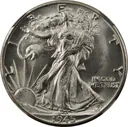
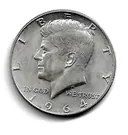
Yes. All Barber halves are 90% silver and 10% copper, the same standard as later Walking Liberty, Franklin and 1964 Kennedy halves.
Which Barber half dollars are condition rarities?
The 1901-S, 1904-S and 1907-S are common enough worn but scarce in high grades. A worn 1904-S in PCGS VG8 sold for $129–$139 at Heritage in May 2026, while a PCGS MS67 brought $87,000 in January 2023 (NGC Auction Central).
Why are there no 1916 Barber half dollars?
The Barber design’s legal minimum term expired in 1916, and the Mint replaced it. Barber dimes and quarters were struck in 1916 to meet demand, but no Barber half dollars were; the Walking Liberty half dollar began production that year (Wikipedia).
Sources
- NGC Auction Central: 1892-O Micro O 50C MS
- NGC Auction Central: 1892-O 50C MS
- NGC Auction Central: 1896-O 50C MS
- NGC Auction Central: 1897-O 50C MS
- NGC Auction Central: 1914 50C MS
- NGC Auction Central: 1892 50C MS (Heritage and Stack's Bowers results)
- NGC Auction Central: 1892-S 50C MS (Heritage and Stack's Bowers results)
- NGC Auction Central: 1893-S 50C MS (Heritage and Stack's Bowers results)
- NGC Auction Central: 1897-S 50C MS (Heritage and Stack's Bowers results)
- NGC Auction Central: 1898 50C MS (Heritage and Stack's Bowers results)
- NGC Auction Central: 1901-S 50C MS (Heritage and Stack's Bowers results)
- NGC Auction Central: 1904-S 50C MS (Heritage and Stack's Bowers results)
- NGC Auction Central: 1907-S 50C MS (Heritage and Stack's Bowers results)
- NGC Auction Central: 1913 50C MS (Heritage and Stack's Bowers results)
- NGC Auction Central: 1915 50C MS (Heritage and Stack's Bowers results)
- Wikipedia: Barber coinage (design history, 1891 competition, key dates, condition rarities, 1909 hub change)
Values are estimates, not offers. Condition decides the price; for a valuable coin, get a professional grade.