How Much Is a 1983 Penny Worth? (Doubled Die Reverse & Copper Error)
A normal 1983 penny is worth one cent; raw uncirculated ones sell for $1–$8. Two errors pay: the doubled die reverse (certified MS64–MS66 coins about $290–$640) and the 3.11 g copper-planchet cent, which sold for a record $29,250 at GreatCollections on July 28, 2024.
Have one in hand? Scan it with CoinLens to identify it and see an estimate in seconds.
| Coin | Raw uncirculated | MS66 Red | MS67 Red | MS68 Red |
|---|---|---|---|---|
| 1983 (no mint mark) | $1–$8 | $19–$25 (PCGS) | $34–$60 | $250–$452 (NGC and PCGS, 2024–2026) |
| 1983-D | $1–$5 | $9–$25 | $16–$60 (PCGS) | $144–$480 (PCGS, Heritage 2016–2019) |
| 1983-S proof | $3–$6 | PR69: $7–$24 | — | PR70: $470–$900 |
Which one is yours? Check it with CoinLens →
Middle half of eBay sold listings compiled by PriceCharting (observed Nov 26, 2026) and Heritage results on NGC Auction Central. Circulated 1983 and 1983-D cents are worth face value. Estimates, not a price guide.
DEMO
Check your 1983 Lincoln Memorial Cent
Add a photo of each side
Add a photo of at least one side first.
Demo — photos stay on your device. Nothing is uploaded.
DEMO
Your photos are ready. The identification happens in the CoinLens app.
On the web this is a demo — it can't recognize coins. In the app, the same two photos give you the coin's name, details and a value estimate.
Scan these in the free appEXAMPLE — what CoinLens shows
Value estimate:
Sample from our guide's data, not a result for your photo.
That was a sample. Scan your coin →·
Coin facts
- Coin
- Lincoln Memorial Cent
- Years
- 1983
- Mints
- Philadelphia (no mint mark; West Point output included), Denver (D), San Francisco (S, proof only)
- Composition
- Copper-plated zinc (97.5% zinc, 2.5% copper)
- Weight
- 2.5 g
- Diameter
- 19.05 mm
- Designer
- Victor D. Brenner (obverse), Frank Gasparro (reverse)
Mintage
- 1983
- 7,752,355,000
- 1983-D
- 6,467,199,428
- 1983-S proof
- 3,279,126
| Grade | Typical sold price | Sales seen | Notable results |
|---|---|---|---|
| Raw (uncertified) | $25–$267 | 50 | Nice Red raw coins often $100+ |
| AU50–MS62 (certified) | $125–$263 | 12 | ANACS AU58 $125.50 (Nov 2023) |
| MS63 | $229–$315 | 19 | PCGS MS63 Red $201.30 (Heritage, Apr 2026) |
| MS64 | $292–$372 | 32 | PCGS MS64 Red $292.80 (Heritage, Apr 2026) |
| MS65 | $350–$500 | 35 | PCGS MS65 Red $336 (Stack’s Bowers, May 2021) |
| MS66 | $452–$639 | 32 | PCGS MS66 Red $854 (Heritage, Jun 2026) |
| MS67 | $810–$1,425 | 3 eBay + 6 auction | PCGS MS67 Red $2,135 (Heritage, Apr 20, 2026) |
| MS68 Red (record range) | — | — | Record PCGS MS68 Red $7,050 (Heritage, Jul 6, 2017); PCGS MS68 Red $5,280 (Heritage, Nov 6, 2023); NGC MS68 Red $2,350–$6,900 (2003–2022) |
Which one is yours? Check it with CoinLens →
eBay ranges are the middle half of certified sales compiled by PriceCharting (2022–2026). Auction results from NGC Auction Central and CoinWeek's 1983 collector's guide.
| Coin | Price | Venue and date |
|---|---|---|
| PCGS MS65 Red (finest known) | $29,250 | GreatCollections, Jul 28, 2024 |
| PCGS MS62 RB (discovery coin) | $23,500 | Heritage, Dec 6, 2013 |
| PCGS AU55 | $16,450 | Heritage, Aug 2014 |
| PCGS AU58 BN | $11,750 | Stack’s Bowers, Nov 2015 |
| NGC MS61 | $3,120 | Heritage, 2020 |
| Circulated (two coins) | $3,900 and $4,050 | GreatCollections, 2014–2024 |
| PCGS Genuine (second coin found) | $1,880 | Heritage, Oct 19, 2012 |
| 1983-D on a copper planchet (unique find) | $17,625 | Stack’s Bowers, Aug 3, 2017 |
Which one is yours? Check it with CoinLens →
Prices include buyer's premium. Sources: CoinWeek's 1983 collector's guide and its July 2024 record report; the 1983-D sale from Numismatic News (Aug 2017).
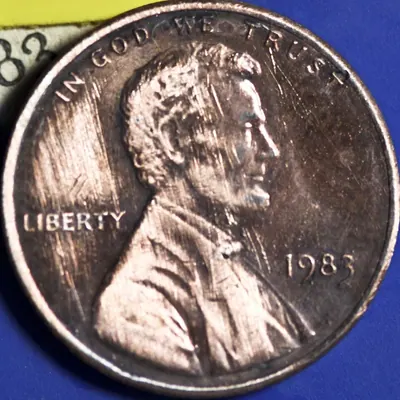
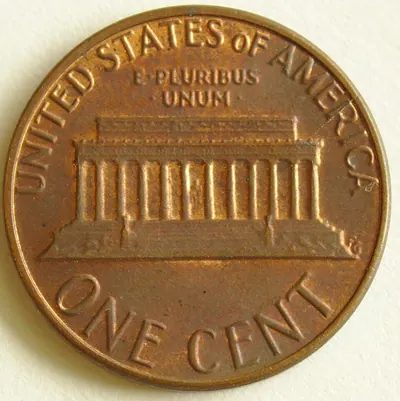
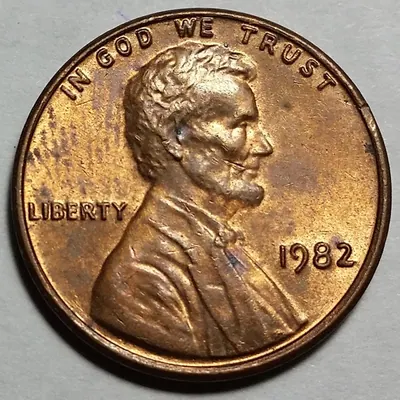
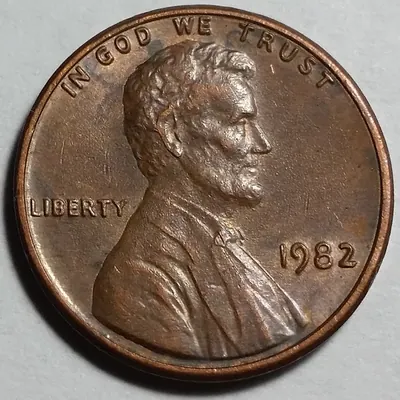
One cent, for the vast majority. More than 14 billion 1983 cents went into circulation from Philadelphia and Denver. A bright uncirculated one sells raw for about $1–$8, and a normal coin only reaches a few hundred dollars in MS68 Red.
Two 1983 errors are worth checking every coin for:
- Doubled die reverse (FS-801): the strongest doubling on any Memorial cent. Certified MS64–MS66 coins sell for about $290–$640; a PCGS MS67 Red brought $2,135 at Heritage in April 2026.
- Struck on a copper (bronze) planchet: only a handful known. A PCGS MS65 Red sold for a record $29,250 (with buyer’s fee) at GreatCollections on July 28, 2024.
The doubled die reverse is a Philadelphia coin, so it has no mint mark.
Why 1983 matters: the first full year of zinc cents
In 1982 the Mint changed the cent from bronze (95% copper, 3.11 g) to copper-plated zinc (97.5% zinc, 2.5% copper, 2.5 g). Wikipedia notes that Philadelphia struck the first zinc cents on January 7, 1982, but Denver did not switch until October 21 of that year. That is why 1982 has seven different coins, covered in our 1982 penny value guide.
By 1983 the change was complete. CoinWeek calls it the first full year of the “zincoln.” Every regular 1983 cent, from all three mints, is zinc with a thin copper skin. 1983 was also the first year of proof sets with a zinc cent, and the first year of the Mint’s Prestige Proof Set.
| Mint | Mint mark | Mintage | Composition |
|---|---|---|---|
| Philadelphia (West Point output included) | none | 7,752,355,000 | Copper-plated zinc |
| Denver | D | 6,467,199,428 | Copper-plated zinc |
| San Francisco (proof) | S | 3,279,126 | Copper-plated zinc |
CoinWeek ranks Philadelphia’s total third-highest of the 1980s, behind 1984 and 1982.
1983 doubled die reverse: what to look for
Flip the cent to the Memorial side first. On the doubled die reverse, ONE CENT, E PLURIBUS UNUM and UNITED STATES OF AMERICA show a clear second outline, and Wexler’s listing adds the dots and the roof of the Memorial. CoinWeek calls its naked-eye doubling possibly the strongest of any Lincoln cent. The front of the coin looks normal.
Catalog numbers you will see on slabs and in listings:
- FS-01-1983-801 (Cherrypickers’ Guide, often shortened to FS-801)
- WDDR-001 (Wexler), CDDR-001 (Crawford) and 1-R-IV (CONECA)
Wexler adds a useful detail: the obverse die used with this doubled reverse is also known paired with two normal reverses. That suggests the Mint spotted and pulled the doubled die before large numbers were struck.
Don’t confuse it with:
- Machine doubling: flat, shelf-like edges on the letters from die movement during the strike. Many 1983 cents show it, and it adds nothing.
- Worn or damaged letters: blurred, not doubled.
- Other 1983 doubled reverses: Wexler lists three more (WDDR-002 to -004). WDDR-003 shows a strong spread on the legends, but none matches FS-801’s fame or price.
1983 doubled die penny value by grade
The second table above shows sold prices by grade. Three points help when pricing one:
- Raw coins sell in a wide range. Uncertified FS-801 coins sold for $25 to $267 (middle half of 50 sales). Circulated or dull coins sit at the low end; bright Red coins that might grade MS65 or better sell for $100 or more.
- Prices climb steadily with grade, from a median of about $275 in MS63 to about $550 in MS66, then jump at MS67.
- MS68 is the top. The record is a PCGS MS68 Red that brought $7,050 at Heritage on July 6, 2017, and another PCGS MS68 Red sold for $5,280 there on November 6, 2023. CoinWeek lists NGC MS68 Red results between $2,350 and $6,900 at Heritage and DLRC. Its April 2025 census shows one PCGS MS68+ Red and two NGC MS68+ Red, the finest graded.
The 1983 copper penny: myth vs. the real error
The most common 1983 question is whether a copper-colored 1983 cent is valuable. In almost every case it is not, because every 1983 cent looks like copper. The plating is copper; the core is zinc.
The real error exists, but it is rare. In 2006, variety specialist Billy Crawford noticed a 1983 cent that weighed 3.11 grams, the weight of the old bronze cent, instead of 2.5 grams (CoinWeek). A few leftover bronze planchets had been struck with the 1983 date. A second coin turned up in 2010, and collectors have found a few more since, mostly in rolls. The third table above lists every sale we could document.
The weight test, step by step
- Use a scale that reads to 0.01 g. A pocket jewelry scale is enough.
- Weigh the coin clean and dry. A normal 1983 cent reads about 2.5 g. A bronze one reads about 3.11 g, roughly a quarter heavier.
- Ignore the color. Toned zinc cents can look like old copper, and bright bronze can look like new zinc.
- Check the edge for gray. On a heavily worn or damaged zinc cent, gray zinc can show through. A bronze cent is the same color all the way through.
- Get it authenticated. If your 1983 cent weighs 3.1 g, send it to PCGS or NGC before you sell or even clean it.
Our copper vs zinc penny guide explains the same test for other years.
Other 1983 errors and varieties
- Doubled die obverses: CoinWeek lists four accepted 1983 obverse doubled dies (FS-101, FS-102, FS-103 and VP-005). Wexler lists 13, with clockwise or counterclockwise spreads on LIBERTY, IN GOD WE TRUST and the date, and one (WDDO-012) with doubling on the earlobe. Sales are thin: PriceCharting shows an ANACS AU50 FS-101 at $22.50 and a PCGS MS62 RB FS-101 at $40.
- 1983-D doubled dies: Wexler lists three 1983-D obverses: WDDO-001 (date and ERTY), WDDO-002 (a strongly doubled lower ear) and WDDO-003 (the top of an extra 8 inside the 3).
- FS-401 die break: CoinWeek notes a reverse variety with a prominent die break and cud.
- Plating blisters: raised bubbles where the copper plating lifted from the zinc. They are common on zinc cents and are not a collectible error.
1983-S proof penny value
San Francisco’s 1983-S proof cent was sold two ways: in the standard five-coin set and in the first Prestige Proof Set, which CoinWeek says paired the five coins with a 1983 Olympic Discus silver dollar. A loose 1983-S proof is worth a few dollars raw and about $7–$24 in PR69. Perfect PR70 Deep/Ultra Cameo coins are the exception: they sold for about $470–$900 on eBay in 2022–2026, and Heritage results in 2016–2017 ran $505–$822.
How to check your coin with CoinLens
A phone and a scale cover both 1983 errors. Coin Identifier – CoinLens (iPhone and Android) identifies a 1983 cent from photos of each side and shows its composition, minting years and a value estimate; zoom in on the reverse photo to look for the doubled lettering. No photo can reveal a coin’s weight, so the bronze error still needs the 0.01 g scale. Either find is worth a PCGS or NGC submission before you sell.
Where to sell a 1983 penny
- Ordinary 1983 and 1983-D cents: back into circulation.
- An uncertified FS-801: eBay or a variety specialist. Buyers want a sharp close-up of ONE CENT and E PLURIBUS UNUM.
- A slabbed FS-801 or a bronze 1983: the auction houses behind the records above, GreatCollections, Heritage and Stack’s Bowers.
Top-grade 1983 cents: what MS68 Red has really sold for
A normal 1983 cent becomes worth real money only at the very top of the grading scale, and that market has shrunk. CoinWeek’s collector’s guide tracks individual PCGS MS68 Red coins through several sales:
| Coin (PCGS MS68 Red) | Earlier sale | Later sale |
|---|---|---|
| Cert. #90114618 | $1,092.50 (Heritage, May 2005) | $329 (Heritage, Jan 2017) |
| Cert. #90114614 | $1,380 (Heritage, Sep 2008) | $399.50 (Stack’s Bowers, Apr 2016); $575 (DLRC, May 2016) |
| Cert. #21689502 (Ron Bozarth collection) | $632.50 (Heritage, Jan 2006) | $493.50 (Heritage, Jan 2016); $410 (DLRC, Oct 2020) |
| “Close to Perfect” collection coin | $862.50 (Stack’s Bowers, Jun 2010) | — |
The same coins lost between a third and more than two-thirds of their value as registry competition cooled. Today’s market is lower still: NGC MS68 Red 1983 cents sold for $250–$388 on eBay between 2024 and 2026, and one PCGS MS68 Red for $452 in June 2025. CoinWeek’s April 2025 census shows three PCGS MS68+ Red and eight NGC MS69 Red as the finest normal 1983 cents.
The Denver coin follows the same path. Heritage sold PCGS MS68 Red 1983-D cents for $144 to $480 between 2016 and 2019, according to NGC Auction Central. In MS67 Red, both mints usually sell for under $70.
What this means for you: a 1983 from a roll is worth grading only if it is a doubled die reverse, weighs 3.11 g, or looks flawless and fully red under magnification. Even then, a normal coin needs to reach MS68 to cover the fee with room to spare.
The next date has its own guide: 1984 penny value.
Frequently asked questions
How much is a 1983 penny worth?
A normal 1983 penny is worth one cent; uncirculated raw coins sell for about $1 to $8. A 1983 doubled die reverse sells for about $150 to $650 depending on grade, and a 1983 cent struck on a copper planchet has sold for up to $29,250.
How do I know if my 1983 penny is copper?
Weigh it. Normal 1983 cents are copper-plated zinc and weigh about 2.5 g. A 1983 cent weighing 3.11 g may be the rare bronze transitional error; have it authenticated by PCGS or NGC.
Are 1983 pennies made of copper?
Only on the outside. Every regular 1983 cent is 97.5% zinc with a thin copper plating, which is why it looks like copper. A handful of 1983 cents were struck by mistake on leftover solid bronze planchets.
What does a 1983 doubled die penny look like?
The doubling is on the reverse (Lincoln Memorial side). ONE CENT, E PLURIBUS UNUM and UNITED STATES OF AMERICA show a strong second image that you can often see without magnification. The obverse is normal.
Is a 1983-D penny worth more?
No. Denver struck almost 6.5 billion 1983 cents, so a normal 1983-D is worth face value. The doubled die reverse is a Philadelphia coin with no mint mark.
Is a 1983 penny with no mint mark rare?
No. Philadelphia struck 7,752,355,000 cents dated 1983 without a mint mark. No mint mark is normal for that year and adds no value by itself.
Why is my 1983 penny bubbled or silver colored?
Zinc cents can blister when the copper plating separates, or show gray zinc where the plating wore through. That is post-mint damage, not a valuable error.
What 1983 doubled die obverse varieties exist?
CoinWeek lists four 1983 doubled die obverses (FS-101, FS-102, FS-103 and VP-005), with doubling on LIBERTY, IN GOD WE TRUST and the date. They are much less dramatic than the reverse and sell for far less.
Sources
- CoinWeek: 1983 Lincoln Memorial Cent — A Collector's Guide (raw values, FS-801 and bronze sales)
- CoinWeek: Finest 1983 Bronze Cent Sells for Record Price at GreatCollections (July 2024)
- CoinWeek: These 13 Lincoln Cent Doubled Dies Turned Ordinary Coins Into Legends
- CoinWeek: US Coins: 50 Years of Modern Proof Sets (1983 proof and prestige sets)
- Numismatic News: Cents Bring $35,624.98 Profit to Finders (1983-D copper cent $17,625, Aug 2017)
- Wikipedia: Lincoln cent mintage figures (US Mint data)
- Wikipedia: Lincoln cent (1982 composition change; 1983 bronze errors)
- Wexler's Die Varieties: 1983 doubled dies (WDDR-001 = FS-01-1983-801)
- Wexler's Die Varieties: 1983-D doubled dies
- PriceCharting: 1983 doubled die (FS-801) sold listings
- PriceCharting: 1983, 1983-D and 1983-S proof sold listings
- NGC Auction Central: 1983 Doubled Die Reverse 1C MS auction results
- NGC Auction Central: 1983-S 1C PF auction results (PCGS PR70 $505.25–$822.50, Heritage 2016–2017)
- NGC Auction Central: 1983-D 1C MS auction results
Values are estimates, not offers. Condition decides the price; for a valuable coin, get a professional grade.