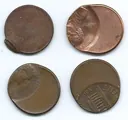
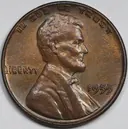
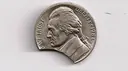
Broadstrike Coin Value: What Is a Broadstruck Error Worth?
A broadstrike happens when the collar die fails, so the coin spreads out wider and thinner with a plain (unreeded) edge. Value depends on denomination, how centered it is and grade; per error dealer Mike Byers, the five to seven known partial-collar $20 gold pieces have sold for $5,000–$15,000 (CoinWeek).
Have one in hand? Scan it with CoinLens to identify it and see an estimate in seconds.
| Error | What happened | How it looks |
|---|---|---|
| Centered broadstrike | Struck with no collar, blank centered on the dies | Full design, wider and thinner than normal, plain edge |
| Uncentered broadstrike | No collar, blank slightly off center | Full design shifted to one side, plain edge, not round |
| Partial collar | Collar only partly raised | Raised lip or step on part of the edge; reeding on part of the edge |
| Off-center strike | Blank partly outside the dies | Part of the design missing, blank crescent |
Which one is yours? Check it with CoinLens →
Definitions from the Mint-made errors reference cited. US broadstruck coins always have a plain edge.
DEMO
Check your Broadstrike Coin Value: What Is a Broadstruck Error Worth?
Add a photo of each side
Add a photo of at least one side first.
Demo — photos stay on your device. Nothing is uploaded.
DEMO
Your photos are ready. The identification happens in the CoinLens app.
On the web this is a demo — it can't recognize coins. In the app, the same two photos give you the coin's name, details and a value estimate.
Scan these in the free appEXAMPLE — what CoinLens shows
Value estimate:
Sample from our guide's data, not a result for your photo.
That was a sample. Scan your coin →·
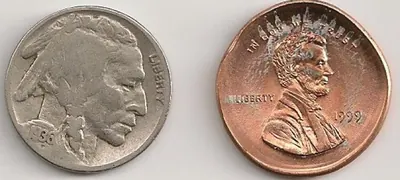
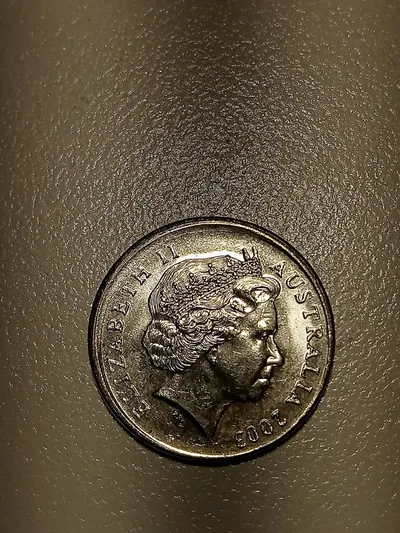
A broadstrike is a coin struck without the collar, the ring-shaped die that holds the blank in place and forms the edge. With nothing to contain it, the metal spreads outward under pressure. The result:
- Wider and thinner than a normal coin.
- Plain edge — no reeding, even on dimes, quarters and halves.
- Full design, often with letters near the rim stretched toward the edge.
How to spot a broadstrike
- Measure the diameter. It should be noticeably larger than normal.
- Check the edge. US broadstrikes always have a plain edge.
- Weigh it. Weight should match a normal coin of that type, since no metal was lost.
- Check the design. It should be sharp and complete. Mushy, distorted detail suggests the coin was flattened after it left the mint.
Broadstrike vs partial collar vs off-center
- Partial collar: the collar was only partly raised, so part of the edge has reeding and the rest shows a raised step or lip. CoinWeek’s Mike Byers reports five to seven known partial-collar $20 Liberty gold pieces, sold in the $5,000–$15,000 range.
- Uncentered broadstrike: no collar and the blank was slightly off center, so the full design sits to one side.
- Off-center: part of the design is missing entirely. See our off-center coin value guide.
What makes a broadstrike worth more
- Larger denominations and gold or silver coins, which rarely escaped the mint with errors.
- Well-centered strikes with the full design and date.
- Uncirculated grade and PCGS or NGC certification with the error attributed.
- Combination errors (broadstruck and double struck, for example).
How to check your coin with CoinLens
Coin Identifier – CoinLens (iOS) identifies the coin’s type and year from photos of both sides and shows an estimated value for the normal coin, along with its composition — so you know its normal size and weight to compare against. It doesn’t detect or certify errors. Free scans are limited; Premium unlocks unlimited scans. Download CoinLens on the App Store.
Where to sell broadstruck coins
Error-coin dealers, auction houses with error sales, and eBay. In listings, show the plain edge and give diameter and weight next to a normal coin. Certify gold, silver or high-grade examples.
Frequently asked questions
How do I know if my coin is broadstruck?
It will be larger in diameter and thinner than a normal coin of the same type, with a plain edge (no reeding, even on dimes and quarters) and the full design, often with the outer letters spread toward the edge. It should weigh about the same as a normal coin.
What's the difference between broadstruck and off-center?
A broadstruck coin has the complete design but no collar, so it’s wide and plain-edged. An off-center coin was struck with the blank partly outside the dies, so part of the design is missing.
How much is a broadstruck penny worth?
Broadstruck cents are a common type of major error, so values are modest compared with larger coins. Well-centered, uncirculated and certified examples bring the most. Check sold listings for your year and grade.
Can a coin be faked to look broadstruck?
Coins hammered or squeezed flat after leaving the mint look wider but have distorted, mushy designs, damaged edges and often the wrong thickness pattern. A genuine broadstrike has sharp design detail and a smooth plain edge.
Is a broadstruck coin with reeding possible?
On US coins, no: reeding comes from the collar. If part of the edge is reeded and part is plain with a raised lip, it’s a partial collar error instead.
Sources
- Mint-made errors: broadstrike (Wikipedia)
- Mike Byers Mint Error News: unique broadstruck 1906-D $20 Liberty; partial collar $20s sold $5,000–$15,000 (CoinWeek)
- Collar (coins) and coin minting process (Wikipedia)
Values are estimates, not offers. Condition decides the price; for a valuable coin, get a professional grade.