Off-Center Coin Value: How Much Is an Off-Center Error Worth?
Off-center coins are worth more with a bigger shift (40–60% with a full date is ideal), a larger coin and a better grade. A modern 2000 New Hampshire quarter 25% off center, NGC MS67, sold for $194.62 (GreatCollections, Feb 2022); a 1921-S Morgan dollar 20% off center with full date brought $16,450 (Heritage, 2017).
Have one in hand? Scan it with CoinLens to identify it and see an estimate in seconds.
| Off center | What you see | Collector demand | Example sale |
|---|---|---|---|
| 1–5% | A thin blank crescent at one edge | Lowest; barely visible on common coins | 1883-O Morgan dollar, 5%, PCGS EF40: $2,520 (Heritage) |
| 10–15% | Clear crescent, design and rim cut | Collectible | 1853-O Arrows & Rays quarter, 10%, NGC VG8: $3,120 (Heritage, Feb 2022) |
| 20–35% | A quarter to a third of the design missing | Strong; best if date shows | 2000 New Hampshire quarter, 25%, NGC MS67: $194.62 (GreatCollections, Feb 2022) |
| 40–60% | About half the design gone, date still visible | The ‘sweet spot’ (PCGS) | 2000-P Sacagawea dollar, 50%, NGC MS66: $3,120 (Heritage, Apr 2021) |
| 70%+ | Mostly blank; date usually missing | Lower; hard to attribute | Value falls once the date and much of the design are gone (PCGS) |
Which one is yours? Check it with CoinLens →
Bands follow PCGS (Jon Sullivan, via CoinWeek) and CoinWeek's off-center guide. Example sales from NGC, Coin World and CoinWeek reports cited below.
DEMO
Check your Off-Center Coin Value: How Much Is an Off-Center Error Worth?
Add a photo of each side
Add a photo of at least one side first.
Demo — photos stay on your device. Nothing is uploaded.
DEMO
Your photos are ready. The identification happens in the CoinLens app.
On the web this is a demo — it can't recognize coins. In the app, the same two photos give you the coin's name, details and a value estimate.
Scan these in the free appEXAMPLE — what CoinLens shows
Value estimate:
Sample from our guide's data, not a result for your photo.
That was a sample. Scan your coin →·
| Coin | Off center | Date visible? | Grade | Sold | Venue, date |
|---|---|---|---|---|---|
| Braided Hair large cent | 35% | No (undated) | — | $2,875 | Bowers & Merena, June 2010 |
| 1866 Shield nickel (with Rays) | 30% | Yes | NGC MS66 | $8,408 | Heritage, July 2023 |
| 1961 Jefferson nickel (proof) | 30% | Yes | NGC PF66 | $4,025 | Heritage |
| Jefferson nickel (proof) | 35% | Not stated | NGC PF67 Ultra Cameo | $1,560 | Heritage, Aug 2020 |
| 1853-O Arrows & Rays quarter | 10% | Yes | NGC VG8 | $3,120 | Heritage, Feb 2022 |
| 1917-S Standing Liberty quarter, Type I | 15% | Not stated | PCGS Unc Details (gouged) | $7,200 | Stack’s Bowers, Aug 2024 |
| Standing Liberty quarter | 35% | Not stated | NGC MS65 Full Head | $33,600 | Heritage, July 2022 |
| 1959 Washington quarter (second strike off center) | 60% | Yes | PCGS MS63 | $4,560 | Heritage, July 2021 |
| 2000 New Hampshire quarter | 25% | — | NGC MS67 | $194.62 | GreatCollections, Feb 2022 |
| 1803 Draped Bust half dollar | 10% | Partly (bottom of date cut) | NGC VF35 | $5,405 | Heritage, Sept 2016 |
| 1811 Capped Bust half dollar | 25% | Yes | NGC F12 | $11,162.50 | Heritage, Sept 2016 |
| 1943 Walking Liberty half dollar | 40% | — | — | $25,000 | Private sale (CoinWeek) |
| 1890-O Morgan dollar | 7% | Yes | PCGS VF30 | $2,880 | Heritage |
| 1899-O Morgan dollar | 5% | Partly | PCGS EF45 | $5,160 | Heritage |
| O-mint Morgan dollar | 30% | Not stated | NGC AU53 | $10,200 | Heritage, Nov 2022 |
| 1921-S Morgan dollar | 20% | Yes, full date and S | PCGS MS63 | $16,450 | Heritage, FUN 2017 |
| 1921-S Morgan dollar | 25% | No (dateless) | PCGS MS62 | $14,375 | Heritage (earlier sale) |
| 2000-P Sacagawea dollar | 50% | Yes | NGC MS66 | $3,120 | Heritage, Apr 2021 |
| 1897 Liberty $5 gold | 5% | Yes | ANACS AU55 | $3,566 | Bowers & Merena, June 2010 |
Which one is yours? Check it with CoinLens →
Individual results reported by NGC (Mint error article), Coin World, Numismatic News and CoinWeek; not a price guide. Older and silver/gold coins dominate published sales; most modern off-center cents and dimes sell for far less, often through eBay.
| Denomination | How common off-centers are | Why |
|---|---|---|
| Lincoln cents, Roosevelt dimes | Very common | Small, high-volume coins (PCGS) |
| Jefferson nickels, Washington and state quarters | Common to scarce | More valuable at 40%+ with date, high grade |
| Kennedy halves, Eisenhower dollars | Scarcer | Larger coins (PCGS) |
| Morgan and Peace dollars, gold | Rare | CoinWeek: Morgans over 25% off center with a visible date are scarce |
Which one is yours? Check it with CoinLens →
Relative scarcity from PCGS (Jon Sullivan) and CoinWeek.
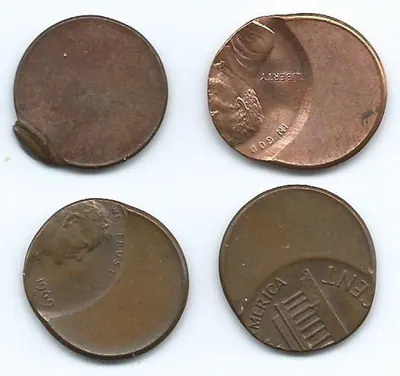
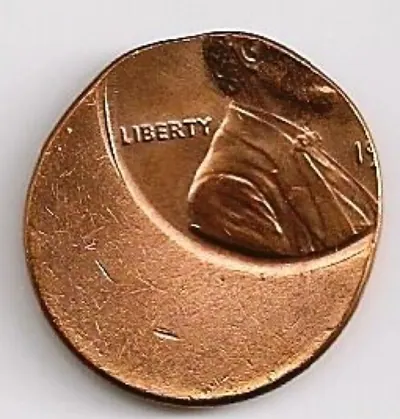
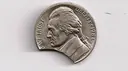
An off-center coin was struck when the blank (planchet) wasn’t centered between the dies, so part of the design is missing and a smooth, crescent-shaped blank area shows. Value depends on four things:
- Percentage off center. Bigger is better, up to the point where the date disappears. PCGS calls 40–60% the “perfect” range.
- Visible date. A full date (and mint mark) makes the coin far more desirable.
- Denomination and age. Off-center cents and dimes are common; halves, dollars and older coins are scarce.
- Grade and certification. Uncirculated coins in NGC, PCGS or ANACS holders bring the most.
The tables above give the percentage bands, nearly 20 individual sales across denominations, and scarcity by coin type.
How an off-center strike happens
Normally a blank sits inside a steel ring called the collar, centered under the dies. If it is fed in late or slips, it lies partly outside the collar and partly outside the dies when the press strikes. The dies stay aligned; it’s the blank that is misplaced. NGC notes that because the metal is no longer held by the collar, the struck part spreads, and the coin “can become substantially elongated.” That’s why genuine off-centers are often slightly oval, like the cent in the photo.
The unstruck part is what Coin World calls a crescent of “virgin planchet”: smooth, with no design, no rim and no tool marks. That crescent is the signature of the error.
The percentage chart, explained
The first table above sets out the bands. In practice:
- Under 5%: the crescent is thin and easily mistaken for a wide rim or a worn edge. On modern coins there’s little premium. On scarce coins the error still adds value: Coin World reported O-mint Morgan dollars only 5–7% off center selling for $2,520–$5,160 at Heritage.
- 10–35%: a clear, obvious error with most of the design intact. A Capped Bust half dollar 25% off center sold for $11,162.50 even in F12.
- 40–60%: the sweet spot. Half the coin is blank, but the date and mint mark are often still visible. A 2000-P Sacagawea dollar 50% off center in NGC MS66 brought $3,120.
- 70% and more: dramatic, but usually dateless, and with too little design the coin is harder to attribute. PCGS notes that around 95% off center there’s too little left.
How to measure your coin
Look at how much of the coin’s area is blank planchet along the direction of the shift. About a fifth blank is about 20% off center; half blank is about 50%. Graders record the direction as a clock position, such as “struck 30% off center at 2:30”, meaning the blank crescent lies toward 2:30 on a clock face.
Why the date matters so much
The clearest evidence is a pair of 1921-S Morgan dollars reported by Coin World. One, 20% off center with the full date and S mint mark, PCGS MS63, sold for $16,450. Another, 25% off center with no date, PCGS MS62, brought $14,375. The dateless coin had the bigger shift, but buyers paid more for the coin they could fully identify.
CoinWeek calls a severe off-center with the date and mint mark still showing the “rare sweet spot”. When the date is off the coin, attribution depends on design details alone, and demand usually falls. This is the trade-off with every off-center: more blank area looks more dramatic, but past about 60% the date is usually gone.
Off-center values by denomination
Cents and nickels
Off-center Lincoln cents are the most common major error there is. Billions of cents are struck each year, and PCGS lists cents among the “very common” off-centers. Most modern examples sell for modest sums, even certified. Older cents are a different story: a Braided Hair large cent 35% off center brought $2,875 at Bowers & Merena, even without a date.
Nickels with a visible date can do well. An 1866 Shield nickel 30% off center in NGC MS66 sold for $8,408 at Heritage in July 2023. Off-center proofs are unusual: a 1961 proof Jefferson nickel 30% off center in NGC PF66 made $4,025.
Dimes and quarters
Roosevelt dimes, like cents, are common off-centers. The quarters with the biggest prices are older silver coins. A Standing Liberty quarter 35% off center in NGC MS65 Full Head sold for $33,600, the highest single result in our table. An 1853-O Arrows and Rays quarter only 10% off center brought $3,120 in just VG8. Modern state quarters are affordable: the 2000 New Hampshire quarter 25% off center in MS67 sold for $194.62, and CoinWeek reported comparable coins up to about $225.
Half dollars and dollars
PCGS notes that larger denominations are scarcer as off-centers, so premiums climb. A 1943 Walking Liberty half 40% off center sold privately for $25,000. Morgan dollars are the classic big-ticket off-center. CoinWeek notes examples over 25% off center with a visible date are scarce, which is why the 1921-S pair above sold in five figures. Modern dollars are cheaper: the 50% off-center Sacagawea at $3,120 is a strong result for a modern coin.
Off-center vs broadstrike, clipped planchet and damage
These errors and look-alikes get confused all the time:
| What you have | Design | Shape | Key sign |
|---|---|---|---|
| Off-center strike | Part of the design missing | Often slightly oval | Smooth blank crescent of planchet |
| Broadstrike | Full design, spread out | Wider and flatter | Struck outside the collar but centered (NGC) |
| Partial collar | Full design | Raised “railroad rim” on the edge | Blank only partly in the collar |
| Clipped planchet | Full design, but metal missing | Curved or straight bite out of the edge | Missing metal, not a blank crescent |
| Damage or alteration | Design flattened, smeared or cut | Irregular | Tool marks, hammered or ground edges |
See our guides to broadstruck coins and clipped planchets.
Spotting fakes and damaged coins
Off-centers can be faked by squeezing or hammering a coin, or by grinding part of the design away. Look for:
- A clean, unstruck crescent. Genuine blank areas are smooth “virgin planchet”, with no design remnants, file marks or hammer dents.
- A natural edge on the struck part. The design should end where the die ended, not be ground down or smeared.
- The slightly oval shape that comes from metal spreading outside the collar.
- Certification for anything valuable. NGC, PCGS and ANACS authenticate errors and state the percentage on the label.
How to check your coin with CoinLens
Coin Identifier – CoinLens (iPhone and Android) identifies the coin’s type, year and composition from photos of both sides and shows an instant value estimate for the normal coin, which is your baseline. It doesn’t measure or certify errors, so estimate the percentage yourself as described above, and get valuable off-centers graded. Free scans are limited; Premium unlocks unlimited scans.
Where to sell off-center coins
Error-coin dealers, Heritage’s error coin auctions, GreatCollections and eBay all handle off-centers. Certify anything 30% or more off center on a quarter or larger, and any off-center silver or gold coin. On eBay, include the percentage, the clock direction and a photo showing the full date, and price against sold listings, not asking prices. Grading costs and steps are in how to get coins graded.
Frequently asked questions
How much is an off-center penny worth?
Modern Lincoln cents are the most common off-center coins, so most sell for modest sums. Value rises with a larger shift (around 50%), a full visible date, red uncirculated color and certification. Older off-center cents bring far more: a Braided Hair large cent 35% off center sold for $2,875.
What percentage off center is most valuable?
PCGS calls 40% to 60% off center the ‘perfect’ range, with the full date still visible. Coins about 5% off center show the error only slightly, and coins 90%+ off center keep too little design, so both bring less.
Does the date matter on an off-center coin?
Yes. Collectors strongly prefer a readable date because it identifies the coin. Two 1921-S Morgan dollars show the effect: a 20% off-center coin with the full date sold for $16,450, while a 25% coin with no date brought $14,375 despite the bigger shift.
How do I measure how far off center a coin is?
Estimate how much of the coin is blank planchet along the line of the shift. If about a fifth is blank, it’s about 20% off center; if half, about 50%. Graders also note the direction as a clock position, such as ‘struck 30% off center at 2:30’.
What's the difference between off-center and broadstruck?
A broadstruck coin was struck outside the collar but centered, so it’s wider with the full design. An off-center coin is missing part of the design. A clipped planchet is missing metal from the blank itself.
Can an off-center coin be faked?
Yes, and some ‘off-centers’ are damaged coins. A genuine one has an unstruck, smooth blank crescent of planchet and is often slightly oval because the metal spread outside the collar. Have expensive examples certified by NGC, PCGS or ANACS.
Sources
- Dramatic New Hampshire state quarter error at GreatCollections: NGC MS67, 25% off center, $194.62 (CoinWeek, Feb 2022)
- Ten extreme US error coins: 1943 Walking Liberty half 40% off center, $25,000 private sale (CoinWeek)
- Off-center strike coins explained: percentages, rarity and value (CoinWeek)
- CoinWeek / PCGS (Jon Sullivan): Errors and varieties, the popular off-center strike
- NGC: Mint error sales incl. off-center Shield nickel, Jefferson proofs, Sacagawea, SLQ, Morgan, 1853-O quarter
- NGC: broadstrike vs off-center
- PriceCharting: 1959 Washington quarter sales (60% off-center second strike, PCGS MS63, $4,560, Heritage July 2021)
- Coin World: Major error on Type I 1917-S quarter ($7,200, Stack's Bowers)
- Coin World: FUN auctions error coins, 1921-S Morgan dollars 20% and 25% off center
- Coin World: New Orleans Mint Morgan dollar off-center errors (1883-O, 1890-O, 1899-O)
- Coin World: 1803 Draped Bust half dollar off-center strike, Heritage
- Coin World: Capped Bust half dollar 25% off center tops $11,000 at Long Beach
- Numismatic News: B&M sells errors (Braided Hair cent 35% off center, 1897 $5 gold 5%)
- Error coin (Wikipedia)
Values are estimates, not offers. Condition decides the price; for a valuable coin, get a professional grade.