Die Cap Error Coins: What They Are and What They're Worth
A die cap forms when a struck coin sticks to a die and keeps getting pressed into new blanks, stretching into a bottle-cap shape. They're dramatic and valued highly: an 1862 Indian Head cent obverse die cap from the Simpson Collection sold for $40,800 in 2020 (per CoinWeek).
Have one in hand? Scan it with CoinLens to identify it and see an estimate in seconds.
| Stage | What you see |
|---|---|
| Early (shallow) cap | Coin with a raised rim on one side; the cap side shows a sharp design, the other side a brockage (mirror image) or weak design |
| Deep cap | Walls rise around the design like a bottle cap; the outer side is stretched and smooth |
| Capped die strike (struck through a cap) | Coins struck through the stuck cap show weak, mushy, expanded designs |
Which one is yours? Check it with CoinLens →
Descriptions from the CoinWeek and Mint-made errors references cited.
DEMO
Check your Die Cap Error Coins: What They Are and What They're Worth
Add a photo of each side
Add a photo of at least one side first.
Demo — photos stay on your device. Nothing is uploaded.
DEMO
Your photos are ready. The identification happens in the CoinLens app.
On the web this is a demo — it can't recognize coins. In the app, the same two photos give you the coin's name, details and a value estimate.
Scan these in the free appEXAMPLE — what CoinLens shows
Value estimate:
Sample from our guide's data, not a result for your photo.
That was a sample. Scan your coin →·
| Coin | Grade | Sold | Where, when |
|---|---|---|---|
| 1862 Indian Head cent, obverse die cap (Simpson Collection) | — | $40,800 | 2020 (per CoinWeek) |
| 2000-D Maryland quarter struck on a feeder finger | — | $15,600 | Heritage, 2019 (per CoinWeek) |
Which one is yours? Check it with CoinLens →
Top results for famous pieces, as reported by CoinWeek. Modern cent die caps sell for much less.
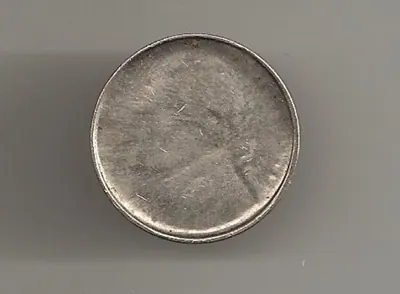
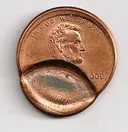
A die cap is one of the most dramatic mint errors. After a coin is struck, it sometimes sticks to the upper die. The press keeps running, so the stuck coin is driven into blank after blank, stretching into a cap around the die. Value depends on the coin type, how deep the cap is and its condition.
How a die cap forms
- A struck coin sticks to the hammer die instead of ejecting.
- The next blank is struck by the stuck coin, not the die, producing a brockage (mirror-image design).
- Each strike pushes the stuck coin’s metal outward and up the sides of the die.
- After many strikes it becomes a cap: a sharp design inside, a stretched, smooth outside.
The coins struck through it in the meantime show weak, spread-out designs, called capped die strikes.
How to spot a real die cap
- A raised wall around one side, like a bottle cap.
- A sharp, normal design inside the cap.
- A stretched, often blank or brockaged outer side.
- Even metal flow, no hammer marks.
What die caps have sold for
- 1862 Indian Head cent obverse die cap (Simpson Collection): $40,800 in 2020, per CoinWeek, which describes it as one of the most spectacular.
- Related press-mechanism errors also bring strong prices: a 2000-D Maryland quarter struck on a feeder finger sold for $15,600 at Heritage in 2019.
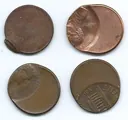
Modern cent die caps are found more often and sell for much less. See our error coins list with pictures for the most valuable error types.
How to check your coin with CoinLens
Coin Identifier – CoinLens (iOS) identifies the coin’s type and date from photos of both sides and shows an estimated value for the normal coin. It doesn’t certify errors — a die cap should be authenticated. Free scans are limited; Premium unlocks unlimited scans. Download CoinLens on the App Store.
Where to sell
Die caps sell best certified, through error-coin specialists and auctions with error sections. Photograph both sides and the side wall.
Frequently asked questions
What is a die cap error?
A coin that stuck to the upper (hammer) die after striking. Instead of ejecting, it stayed on the die and was pressed into each new blank, gradually stretching into a cap shape around the die face.
How much is a die cap worth?
It depends on the coin and how deep and complete the cap is. Modern cent caps are the most common; dramatic caps on older or larger coins bring thousands, like the 1862 Indian cent cap at $40,800 in 2020.
What's the difference between an obverse and reverse die cap?
It depends on which die the coin stuck to. An obverse die cap shows the obverse design on the inside of the cap; a reverse die cap shows the reverse. The opposite side is often a brockage or smoothed out.
Can a die cap be faked?
Yes — by hammering a coin around a form. Real caps have sharp design detail inside, smooth, evenly stretched walls and metal flow consistent with striking. Authenticate valuable caps with PCGS or NGC.
Is a die cap the same as a brockage?
They’re related. A stuck coin creates brockages on the next blanks it’s pressed into; as it keeps striking, it becomes a cap. Both can come from the same event.
Sources
- Ten extreme US error coins: 1862 Indian cent die cap $40,800 (2020); feeder finger $15,600 (Heritage 2019) (CoinWeek)
- Spectacular 1886 Morgan dollar die cap error at GreatCollections (CoinWeek)
- An incredible collection of Seated Liberty dime die caps from Carson City (CoinWeek)
- Mint-made errors (Wikipedia)
Values are estimates, not offers. Condition decides the price; for a valuable coin, get a professional grade.