Wrong Planchet Error Coins: Value of Coins Struck on the Wrong Blank
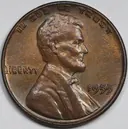
A wrong planchet error is a coin struck on a blank meant for another coin, like a cent on a dime blank or a nickel on a cent blank, often worth hundreds or more: a 1986-D cent struck on a dime planchet, PCGS MS63, sold for $1,920 (Heritage, March 2021).
Have one in hand? Scan it with CoinLens to identify it and see an estimate in seconds.
| Error | Grade | Sold | Where, when |
|---|---|---|---|
| 1986-D Lincoln cent struck on a clad dime planchet | PCGS MS63 | $1,920 | Heritage, March 2021 |
| 1986 Lincoln cent struck on a 1986-P dime | NGC AU58 | $720 | Heritage, November 2020 |
| 1996 Lincoln cent overstruck on a Roosevelt dime | PCGS MS66 | $558.13 and $763.75 | Stack’s Bowers, Baltimore 2014 |
| Jefferson nickels on cent planchets, common dates (1978, 1980) | Various | About $350–$500; high grades $1,000–$1,700 | Per CoinWeek |
| 1979-P Anthony dollar overstruck on a 1978 nickel | NGC MS67 | $15,275 | Heritage 2014; Stack’s Bowers 2016 |
| 1944 Lincoln cent struck on a steel planchet | — | $24,000 | May 2023 (per CoinWeek) |
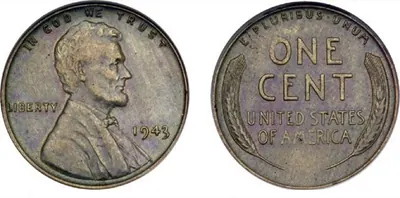
| 1943 Lincoln cent struck on a bronze planchet | — | $240,000 | January 2023 (per CoinWeek) |
Which one is yours? Check it with CoinLens →
Sales as reported in the CoinWeek articles cited; not a price guide.
DEMO
Check your Wrong Planchet Error Coins: Value of Coins Struck on the Wrong Blank
Add a photo of each side
Add a photo of at least one side first.
Demo — photos stay on your device. Nothing is uploaded.
DEMO
Your photos are ready. The identification happens in the CoinLens app.
On the web this is a demo — it can't recognize coins. In the app, the same two photos give you the coin's name, details and a value estimate.
Scan these in the free appEXAMPLE — what CoinLens shows
Value estimate:
Sample from our guide's data, not a result for your photo.
That was a sample. Scan your coin →·
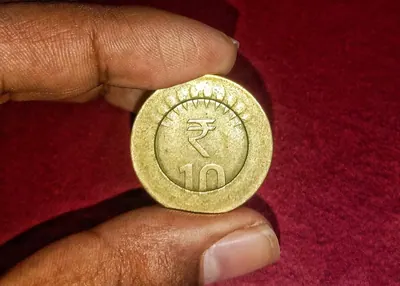
A wrong planchet (or off-metal) error happens when a blank meant for one coin gets into the press for another. Stray blanks can ride along in bins and tote bags between presses. These errors are popular because they’re easy to see — a silver-colored penny, a copper nickel — and they’re often worth hundreds to thousands of dollars.
Common wrong planchet errors
- Cent on a dime blank: a Lincoln design on a small, silver-colored clad blank; the design is cut off at the edges because the blank is smaller than a cent.
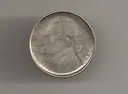
- Nickel on a cent blank: a Jefferson design on a copper-colored blank, smaller than a normal nickel.
- Larger coins on smaller blanks: quarters on dime or nickel blanks, dollars on half dollar blanks.
- Transitional wrong-metal years: 1943 cents on bronze blanks and 1944 cents on steel blanks.
- Overstrikes: a finished coin struck again by another denomination’s dies, so traces of the first coin remain (for example a 1979-P Anthony dollar struck over a 1978 nickel).
How to spot a real one
- Weigh it. It should match the blank it was struck on, not the design.
- Check the color and size against a normal coin of the design.
- Check the edge. A cent on a dime blank may show the dime’s clad layers or reeding.
- Look for damage. Plating, shaving or hammering leaves tool marks, wrong weights and distorted detail.
What they sell for
The table above lists real results. Cent-on-dime errors are the most common double-denomination pairing and often sell for $1,000–$2,000 in nice condition, per CoinWeek. Wrong-metal 1943 and 1944 cents and overstrikes on larger coins reach five and six figures.
Our error coins list with pictures covers other major errors.
How to check your coin with CoinLens
Coin Identifier – CoinLens (iOS) identifies the coin’s design, year and normal composition from photos of both sides and shows an estimated value for the normal coin — so you can see at once if the metal or size is wrong for that design. It doesn’t certify errors; weigh the coin and get major finds graded. Free scans are limited; Premium unlocks unlimited scans. Download CoinLens on the App Store.
Where to sell
Certify wrong planchet errors with PCGS or NGC (they attribute the planchet type on the label), then sell through Heritage, Stack’s Bowers, GreatCollections or error specialists.
Frequently asked questions
What is a wrong planchet error?
A coin struck on a blank intended for a different denomination or made of a different metal. Examples: a cent struck on a dime blank (silver-colored, dime-sized), a nickel struck on a cent blank (copper-colored, small), or a 1943 cent struck on a leftover bronze blank.
How much is a penny struck on a dime worth?
Usually hundreds to low thousands. CoinWeek reports cent-on-dime errors often sell for $1,000–$2,000 depending on condition; a 1986-D in PCGS MS63 brought $1,920 at Heritage in March 2021, and a 1986 in NGC AU58 brought $720.
How can I tell a real wrong planchet error?
It should weigh what the intended blank weighs (a dime blank is about 2.27 g; a cent blank 2.5 g zinc or 3.11 g copper), have the wrong color or size for its design, and show a complete or partly missing design with no tool marks. Plated or shaved coins weigh wrong and show damage.
What is the difference between off-metal and wrong planchet?
Collectors often use the terms together. ‘Off-metal’ usually means struck on a blank of the wrong metal (like a 1943 bronze cent); ‘wrong planchet’ covers any blank meant for another coin, including foreign coins and other denominations.
Why are 1943 bronze and 1944 steel cents valuable?
In 1943 cents were struck in steel; a few were struck on leftover bronze blanks. In 1944 the Mint went back to copper alloy, and a few were struck on leftover steel blanks. Both are famous transitional wrong-metal errors.
Sources
- Why Lincoln cents struck on Roosevelt dimes remain so popular: Heritage and Stack's Bowers results (CoinWeek)
- 1980 Jefferson nickel struck on cent planchet: typical values (CoinWeek)
- Ten extreme US error coins: 1979-P SBA on 1978 nickel $15,275; 1943 bronze $240,000; 1944 steel $24,000 (CoinWeek)
- A brief explanation of off-metal error coins (CoinWeek)
- US Mint coin specifications (dime 2.268 g, cent 2.5 g)
Values are estimates, not offers. Condition decides the price; for a valuable coin, get a professional grade.