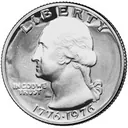
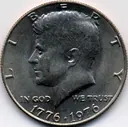
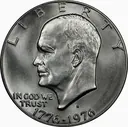
How Much Is a 1976 Bicentennial Silver Set Worth? (3-Piece Set Values)
A 1976 Bicentennial 3-piece silver set (quarter, half and dollar, all 40% silver) holds 0.538 oz of silver. Typical sets sold for about $18–$28 on eBay in 2025. Single gems bring modest premiums, like a PCGS MS67 silver half at $376 (Heritage, September 2016).
Have one in hand? Scan it with CoinLens to identify it and see an estimate in seconds.
| Item | Silver | Silver value | Sold prices |
|---|---|---|---|
| 3-piece set (uncirculated or proof) | 0.538 oz | $23.32 melt | $18.50–$28 (eBay, 2025) |
| 1976-S silver quarter | 0.0739 oz | $3.20 melt | — |
| 1976-S silver half dollar | 0.1479 oz | $6.41 melt | PCGS MS66 $235 (Heritage, Oct 2015); PCGS MS67 $376 (Heritage, Sep 2016); PCGS MS64 error $3,360 (Heritage, Sep 2019) |
| 1976-S silver Eisenhower dollar | 0.3162 oz | $13.71 melt | — |
Which one is yours? Check it with CoinLens →
Individual sold results cited below and in our 1776–1976 quarter, half dollar and Eisenhower dollar guides. Silver value updates with the live silver price. "—" means no verified sale found as of Nov 2026. Melt at silver $43.35/oz, November 26, 2026.
DEMO
Check your 1976 (sold 1975–1976) 1976 Bicentennial 3-piece silver set
Add a photo of each side
Add a photo of at least one side first.
Demo — photos stay on your device. Nothing is uploaded.
DEMO
Your photos are ready. The identification happens in the CoinLens app.
On the web this is a demo — it can't recognize coins. In the app, the same two photos give you the coin's name, details and a value estimate.
Scan these in the free appEXAMPLE — what CoinLens shows
Value estimate:
Sample from our guide's data, not a result for your photo.
That was a sample. Scan your coin →·
Coin facts
- Coin
- 1976 Bicentennial 3-piece silver set
- Years
- 1976 (sold 1975–1976)
- Mints
- San Francisco (S)
- Composition
- 40% silver (outer layers 80% silver, core 21% silver)
- Silver (ASW)
- 0.5380 troy oz
- Melt value
- $23.32
Mintage
- 3-piece uncirculated silver sets (issued)
- 4,908,319
- 3-piece proof silver sets (issued)
- 3,998,621
| Date | Event | Uncirculated set | Proof set |
|---|---|---|---|
| Oct 18, 1973 | Public Law 93-127 orders 45 million silver-clad coins for collectors | — | — |
| Nov 15, 1974 | Orders open, limit 5 sets per person | $9 | $15 |
| Jan 19, 1975 | Proof price cut, limit dropped, refunds mailed | $9 | $12 |
| Apr 23, 1975 | First collector coins struck at San Francisco | — | — |
| Aug 20, 1975 | Bulk discount; a Taiwan bank orders 250,000 sets | $7 each for 50+ | — |
| Sept 17, 1979 | Sets pulled from sale as silver prices spike | — | — |
| Aug 1980 | Back on sale | $15 | $20 |
| Sept 1981 | Prices cut; proofs limited to 100 per person | $12 | $15 |
| Dec 31, 1986 | Last uncirculated sets taken off sale | — | — |
Which one is yours? Check it with CoinLens →
Law text from govinfo; dates and prices from Wikipedia's United States Bicentennial coinage article. Of 11 million uncirculated and 4 million proof sets struck, 4,908,319 and 3,998,621 were issued; the rest were melted. Melt at silver $43.35/oz, November 26, 2026.
| Coin | Grade | Sold | Venue, date |
|---|---|---|---|
| 1976-S silver Eisenhower dollar (proof) | PCGS PR70 DCAM | $671–$703 | Heritage, Oct 2026 |
| 1976-S silver half (proof) | PCGS PR70 DCAM | $195–$207 | Heritage, Nov 2026 |
| 1976-S silver quarter (proof) | PCGS PR70 DCAM | $119–$244 | Heritage, Oct–Nov 2026 |
| 1976-S silver half (uncirculated) | PCGS MS70 DCAM | $256 | eBay, June–July 2026 |
| 1976-S silver half (uncirculated) | PCGS MS69 DCAM | $32 | eBay, July 2026 |
| 1976-S silver Eisenhower dollar (uncirculated) | PCGS MS68 | $99–$119 | Nov 2026 |
Which one is yours? Check it with CoinLens →
Sold rows recorded by PriceCharting (pages cited). Only coins in perfect or near-perfect grade bring these premiums; one grade lower, the price drops sharply. Melt at silver $43.35/oz, November 26, 2026.
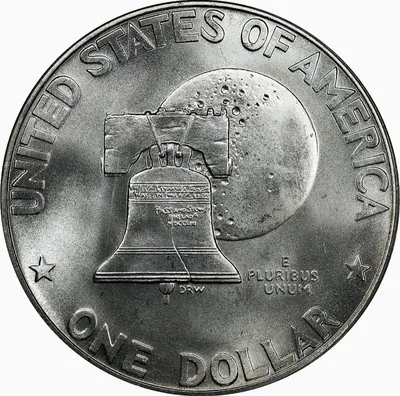
About its silver value. The 3-piece set has a 1776–1976 quarter, half dollar and Eisenhower dollar, each struck in 40% silver at San Francisco. Together they hold about 0.538 oz of silver (live value above).
- Typical sets: $18.50–$28 on eBay in 2025, for both uncirculated and proof versions.
- Gem single coins: premiums are modest; PCGS 1976-S silver halves sold for $235 (MS66, 2015) and $376 (MS67, 2016) at Heritage, and an MS64 error half for $3,360 (2019).
What’s in the set
| Coin | Silver content |
|---|---|
| 1776–1976-S quarter (drummer boy reverse) | 0.0739 oz |
| 1776–1976-S half dollar (Independence Hall reverse) | 0.1479 oz |
| 1776–1976-S Eisenhower dollar (Liberty Bell and Moon reverse) | 0.3162 oz |
The Mint sold the 3-piece silver sets in two versions: uncirculated (satiny finish) and proof (mirror finish). The uncirculated silver sets had a mintage of 4,908,319 (Wikipedia).
Silver or clad? How to check
- S mint mark: all silver Bicentennial coins are from San Francisco.
- Edge: silver coins have no copper stripe.
- Circulation coins with no mint mark or a D are clad and worth face value.
- Clad S proofs came in the regular 1975 and 1976 proof sets and do show a copper stripe.
How the silver sets came about
The silver sets were written into law before the coins existed. Public Law 93-127, signed on October 18, 1973, created the Bicentennial reverses for the quarter, half and dollar, ordered that coins made between July 4, 1975 and January 1, 1977 carry the dual date 1776–1976, and required the Mint to strike 45 million silver-clad coins for collectors (with up to 15 million more if demand called for it). Those silver coins could only be sold as proof or uncirculated pieces, never released into circulation. The same law let any Mint facility strike coins, which opened the door for West Point.
The Mint struck the collector coins at San Francisco from April 1975, before the clad circulation coins: 11 million uncirculated and 4 million proof sets’ worth. Demand fell far short. Only 4,908,319 uncirculated and 3,998,621 proof sets were ever issued; the remainder was melted, much of it in 1982.
A long sales history
The table above shows how long the Mint kept selling these sets: from November 1974 to the end of 1986. The original prices were $9 uncirculated and $15 proof, with a limit of five sets per person. When orders disappointed, the Mint cut the proof price to $12 in January 1975, dropped the limit and mailed refunds to early buyers. Later that year, a bank in Taiwan bought 250,000 sets at a bulk price.
Silver prices then took over. In September 1979, with silver soaring, the Mint pulled the sets from sale; they came back in August 1980 at $15 and $20, and were cut again in 1981. The last uncirculated sets left the Mint’s catalog on December 31, 1986. Millions of sets bought over those twelve years are why they’re so easy to find today.
The designs and designers
The three reverses came from a public contest that drew 884 entries. Each winner received $5,000, and Chief Engraver Frank Gasparro adapted all three designs:
- Quarter: Jack L. Ahr’s colonial drummer with a victory torch circled by 13 stars.
- Half dollar: Seth G. Huntington’s Independence Hall.
- Dollar: Dennis R. Williams’s Liberty Bell superimposed on the Moon. Williams was 22, the youngest person ever to design a US coin; he first drew it as a class assignment.
Type 1 and Type 2 dollars
Collectors talk about Type 1 and Type 2 Bicentennial Eisenhower dollars, which differ in the reverse lettering: Type 2 has narrower, sharper letters. Every 40% silver dollar is Type 1. Type 2 exists only on copper-nickel coins, so a silver set never contains one.
What perfect grades are worth
The second table above shows the gap between a typical set and a perfect coin. PCGS PR70 Deep Cameo silver dollars sold for about $670–$700 at Heritage in October 2026, halves for about $200 and quarters for $120–$245. But one step down the price collapses: a PCGS MS69 DCAM silver half brought $32. The math only works for coins that look flawless under a loupe; for a typical set, the silver is the value.
Prototype silver proofs without a mint mark were struck on August 12, 1974 and given to President Ford and others; the rest were melted, so you won’t find one in a set.
How to check your coins with CoinLens
Photograph each coin with Coin Identifier – CoinLens (iPhone and Android) to identify it and see its composition and an instant value estimate, then save the set to your collection, which totals its value. Grading only makes sense for coins that look perfect under a loupe.
Where to sell 1976 silver sets
- Ordinary sets: eBay, a local coin shop or a bullion dealer, priced near silver value. Keep the original Mint packaging.
- Certified MS69 or PR70 coins: Heritage, Stack’s Bowers or GreatCollections.
For the clad circulation coins and their varieties, see our 1776–1976 quarter, half dollar and Eisenhower dollar guides.
Silver melt value calculator
1976 Bicentennial 3-piece silver set: 0.5380 troy oz of silver each
Melt value ($23.32 each)
Silver spot $43.35/oz as of November 26, 2026 (gold-api.com)
Melt value today for a pile, a roll or $ face value → Silver melt calculator
Melt value is the floor. Condition and mint details decide the rest — check yours in the app.
Frequently asked questions
How much is a 1976 3-piece silver set worth?
About its silver value plus a small premium. Each set holds 0.538 oz of silver, and typical sets sold for $18.50–$28 on eBay in 2025.
Are 1976 Bicentennial coins silver?
Only the S-mint collector coins sold in the 3-piece sets are 40% silver. Bicentennial quarters, halves and dollars from circulation (no mint mark or D) are copper-nickel clad.
How do I tell a silver Bicentennial coin from a clad one?
Check the mint mark and edge. Silver coins have an S mint mark and no copper stripe on the edge; they look silver all the way through. Clad S-mint proofs from regular proof sets do show a copper stripe.
Is the uncirculated or the proof set worth more?
They trade at similar prices for ordinary sets, roughly $18–$28 in 2025 eBay sales. Proofs have mirror fields; uncirculated coins have a satiny finish. Only top-graded single coins bring large premiums.
How many 1976 silver sets were made?
The law called for 45 million silver-clad coins, struck as 11 million uncirculated and 4 million proof sets. Only 4,908,319 uncirculated and 3,998,621 proof sets were actually issued; the rest were melted.
Who designed the Bicentennial reverses?
Jack L. Ahr (colonial drummer, quarter), Seth G. Huntington (Independence Hall, half) and Dennis R. Williams (Liberty Bell and Moon, dollar). Williams was 22, the youngest person to design a US coin. Each won $5,000 in a contest with 884 entries.
Should I send my 1976 silver coins for grading?
Only if a coin looks flawless. Grading costs more than most coins are worth; premiums are small for most coins; a PCGS MS67 silver half brought $376 in 2016.
Sources
- Wikipedia: United States Mint Set (1976 Bicentennial silver mint set, mintage 4,908,319)
- Wikipedia: Kennedy half dollar (Bicentennial coinage, 40% silver collector versions)
- APMEX: 1976-S 40% silver Washington quarter (0.0739 troy oz silver)
- NGC Auction Central: 1976-S 50C silver MS (Heritage: MS66 $235, MS67 $376, MS64 error $3,360)
- eBay sold listing: 1976-S 3-piece silver set, uncirculated (2025)
- eBay sold listing: 1976 3-piece silver proof set (2025)
- Public Law 93-127 (Bicentennial coinage), govinfo
- Wikipedia: United States Bicentennial coinage (sets issued, prices, designers, Type 1/Type 2)
- PriceCharting: 1976-S silver proof Eisenhower dollar sales
- PriceCharting: 1976-S silver proof half dollar sales
- PriceCharting: 1976-S silver proof quarter sales
- PriceCharting: 1976-S silver half dollar (uncirculated) sales
- PriceCharting: 1976-S silver Eisenhower dollar (uncirculated) sales
Values are estimates, not offers. Condition decides the price; for a valuable coin, get a professional grade.