How Much Are Old Chinese Coins Worth? (Square-Hole Cash Coins to Silver Dollars)
Most old Chinese coins with a square hole are common brass cash coins worth a few dollars or less, and fakes are everywhere. Genuine silver dollars are worth their silver and more; at the top, a 1911 Long-Whiskered Dragon dollar sold for $690,000 at Heritage in June 2023.
Have one in hand? Scan it with CoinLens to identify it and see an estimate in seconds.
| Type | How to recognise it | Metal | Value driver |
|---|---|---|---|
| Cash coin (qian) | Round with a square hole; four characters on the front | Bronze before 1505, brass after | Usually low; rare reigns, mints and large denominations sell higher |
| Charm / amulet coin | Square or round hole, pictures, more than four characters | Brass or bronze | Not money; most are modern; old genuine pieces collected separately |
| Machine-struck copper (Qing provinces) | No hole, dragon in the centre, province name in Chinese and English | Copper or brass | Low to moderate; scarce provinces and varieties |
| Dragon dollar (Qing, 1889–1911) | No hole, coiled dragon, ‘7 MACE AND 2 CANDAREENS’ in English | 90% silver, about 27.2 g | Silver plus premium; rare provinces and varieties worth thousands |
| Yuan Shikai ‘Fat Man’ dollar (1914–) | Bald man in uniform; wreath and 壹圓 on the back | About 89% silver, 26.9 g | $33.31 melt |
| Sun Yat-sen ‘junk’ dollar (1934) | Sun Yat-sen bust; sailing junk on the back | 88% silver, 27 g | Silver plus premium; mint-state coins much higher |
| People’s Republic coins (1955 on) | Aluminium fen, later steel and brass jiao and yuan | Base metal | Face value, apart from a few sought-after early fen and commemoratives |
Which one is yours? Check it with CoinLens →
Specifications from Wikipedia articles on cash coins, dragon dollars, the Yuan Shikai dollar and the junk dollar. The =melt cell shows the silver value of a genuine Yuan Shikai dollar at today's price. Melt at silver $43.35/oz, November 26, 2026.
DEMO
Check your 1914–1928 (later sporadic strikes) China 1 yuan 'Yuan Shikai' dollar (Fat Man)
Add a photo of each side
Add a photo of at least one side first.
Demo — photos stay on your device. Nothing is uploaded.
DEMO
Your photos are ready. The identification happens in the CoinLens app.
On the web this is a demo — it can't recognize coins. In the app, the same two photos give you the coin's name, details and a value estimate.
Scan these in the free appEXAMPLE — what CoinLens shows
Value estimate:
Sample from our guide's data, not a result for your photo.
That was a sample. Scan your coin →·
Coin facts
- Coin
- China 1 yuan 'Yuan Shikai' dollar (Fat Man)
- Years
- 1914–1928 (later sporadic strikes)
- Composition
- About 89% silver
- Weight
- 26.857 g
- Diameter
- 39 mm
- Silver (ASW)
- 0.7685 troy oz
- Melt value
- $33.31
Mintage
- All dates (estimate)
- About 1.1 billion
- 1934 junk dollar (Year 23)
- About 98.74 million
| Characters (read top, bottom, right, left) | Reign | Years |
|---|---|---|
| 順治通寶 | Shunzhi | 1644–1661 |
| 康熙通寶 | Kangxi | 1661–1722 |
| 雍正通寶 | Yongzheng | 1722–1735 |
| 乾隆通寶 | Qianlong | 1735–1796 |
| 嘉慶通寶 | Jiaqing | 1796–1820 |
| 道光通寶 | Daoguang | 1820–1850 |
| 咸豐通寶 / 咸豐重寶 | Xianfeng | 1850–1861 |
| 同治通寶 | Tongzhi | 1861–1875 |
| 光緒通寶 | Guangxu | 1875–1908 |
| 宣統通寶 | Xuantong | 1908–1912 |
Which one is yours? Check it with CoinLens →
Reign dates from Wikipedia's list of Qing emperors. The first two characters are the reign title; 通寶 (tongbao) means 'circulating treasure'. Melt at silver $43.35/oz, November 26, 2026.
| Coin | Grade | Result (house, sale) |
|---|---|---|
| 79 Qing cash coins incl. two strings and a charm | Mixed | HK$600 the lot (Spink CSS36, lot 1322): about HK$7.60 a coin |
| 3 Qianlong Tongbao and Republic coins | Graded | HK$2,200 the lot (Spink CSS41, lot 1844) |
| Qianlong Tongbao palace coin, 42 mm | Very fine | A$360 (Noble Numismatics) |
| Kiangnan dollars (2), undated (1897) | Fine to VF | £40 the pair (Spink 4026, lot 450) |
| Kiangnan dollar 1904 | PCGS MS62 | HK$40,000 (Spink CSS100A, lot 330) |
| Yuan Shikai ‘Fat Man’ dollar, Year 3 (1914) | PCGS XF45 | US$375 (Spink 392, lot 30) |
| Yuan Shikai dollar, Year 3 (1914), circle-in-ribbon variety | Nearly EF | A$1,000 (Noble Numismatics) |
| Sun Yat-sen junk dollar, Year 23 (1934) | PCGS MS62 | HK$4,000 (Spink CSS57A, lot 445) |
| Sun Yat-sen junk dollar, Year 23 (1934) | PCGS MS63 | HK$8,000 (Spink CSS57A, lot 450) |
| Yuan Shikai ‘plumed hat’ Founding of the Republic dollar (1914) | PCGS MS63 | US$6,500 (Spink 312, lot 1271) |
| 1911 Long-Whiskered Dragon dollar | NGC SP63 | US$690,000 (Heritage, June 2023) |
| 1928 Kweichow ‘Auto’ dollar | NGC MS62 | US$336,000 (Heritage, June 2023) |
Which one is yours? Check it with CoinLens →
Individual results as shown on each lot page or auction report, including buyer's premium where the house adds it. Spink and Noble lot pages don't show sale dates. Graded coins are certified genuine; ungraded look-alikes are often fakes and worth far less. Melt at silver $43.35/oz, November 26, 2026.
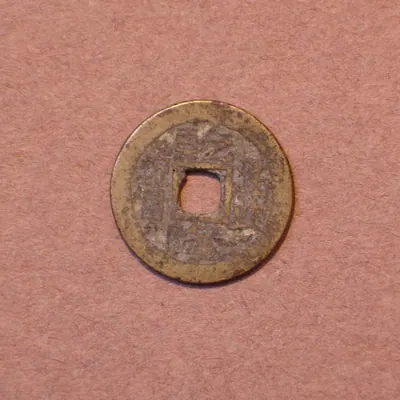
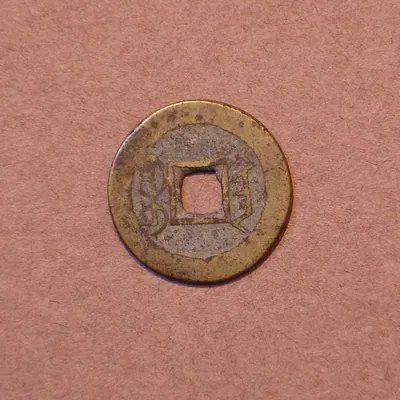
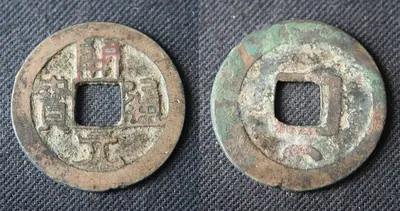
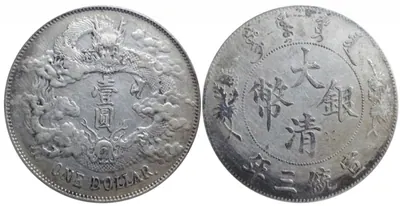
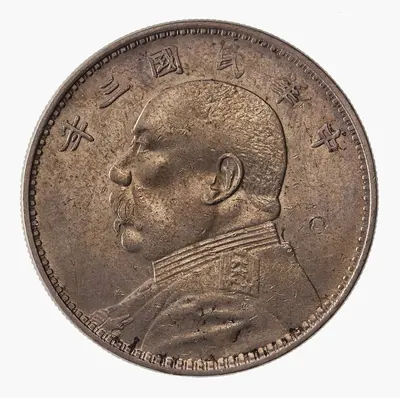
“Old Chinese coin” covers more than 2,000 years of money, but most coins people find fall into three groups:
- Square-hole cash coins. Round brass or bronze coins with four characters around a square hole. The common Qing dynasty ones (1644–1912) were made by the billion and usually sell for a few dollars or less.
- Silver dollars, 1889–1949. Qing dragon dollars, the 1914 Yuan Shikai “Fat Man” dollar and the 1934 Sun Yat-sen “junk” dollar. Genuine coins hold about 0.76–0.79 oz of silver, so they’re worth melt value at the very least. Rare varieties sell for six figures: a 1911 Long-Whiskered Dragon dollar brought $690,000 at Heritage in June 2023.
- Charms and souvenirs. Amulets were never money, and souvenir “ancient coin” sets are modern.
The honest warning: fakes of Chinese coins are extremely common. NGC ranks the 1934 junk dollar and the 1914 Yuan Shikai dollar as the two most counterfeited Chinese coins. Treat any uncertified Chinese silver dollar as unproven until it has been weighed and checked.
Chinese coin with a square hole: what is it?
A round coin with a square hole is a cash coin (qian). It’s the standard Chinese coin from the 4th century BC until the early 20th century. The hole let people thread coins onto strings, nominally 1,000 to a string, because a single coin was worth very little.
Cash coins were cast in moulds, not struck. They were mostly bronze before 1505 and brass after. The last Chinese cash coins were cast in 1912, after the fall of the Qing dynasty.
How to read the four characters
Read top, bottom, right, left:
- Top and bottom usually give the reign title of the emperor, for example 乾隆 (Qianlong) or 康熙 (Kangxi).
- Right and left usually say 通寶 (tongbao), “circulating treasure”. You may also see 重寶 (zhongbao, “heavy treasure”, often a higher denomination) or 元寶 (yuanbao).
So 乾隆通寶 reads “Qianlong Tongbao”: a Qianlong-era coin of 1735–1796. The reign table above lists the common Qing titles.
The back: Manchu mint marks
Turn a Qing coin over and you’ll usually see Manchu script either side of the hole. It names the mint. The two big Beijing mints were:
- Boo Ciowan: Board of Revenue, 1644–1911
- Boo Yuwan: Ministry of Works, 1644–1908
“Boo” stands for 寶, treasure. Provincial mints used their own names, and coins from short-lived or remote mints are worth more than the Beijing output.
The oldest common type: Kaiyuan Tongbao
The Kaiyuan Tongbao (開元通寶) was first cast in 621 AD under the Tang dynasty. It’s about 24 mm across, and at its peak the Tang state cast about 327 million a year. That’s why a genuine one can be more than 1,000 years old and still inexpensive.
Not every square-hole coin is Chinese
Japan, Korea, the Ryukyu Kingdom and Vietnam all cast cash coins in the Chinese style, and Vietnam kept casting them into the 1940s. A reign title you can’t find in the Chinese list is a clue that the coin is from one of these countries.
Not sure which coin you have? Scan both sides with CoinLens to identify it and see an estimated value.
What is a cash coin worth?
Most common Qing cash coins trade for small change. A Spink lot of 79 Qing coins, including two strings of 36 and 37 cash and a charm, sold for HK$600, about HK$7.60 a coin. Graded examples and small groups sell higher: three graded Qianlong and Republic coins brought HK$2,200.
What makes a cash coin worth more:
- Rare reigns and rebels. Short reigns and rebel issues were made in far smaller numbers than Kangxi or Qianlong coins.
- Unusual mints. Remote provincial mints, identified by the Manchu mark on the back.
- Palace coins and large pieces. Oversized palace pieces were made in far smaller numbers than everyday cash. A 42 mm Qianlong palace coin sold for A$360 at Noble Numismatics.
- Condition and certification. Chinese grading services certify cash coins, and graded coins sell for more.
If you have a string or bag of mixed cash, it’s usually worth checking a few coins individually. The bulk value is low.
Machine-struck coppers and dragon dollars (1889–1911)
Late in the Qing dynasty, under the Guangxu emperor, China switched to machine-struck coins without a hole. Provincial mints struck copper coins and silver dragon dollars showing a coiled dragon. Their English legends read, for example, “KIANG NAN PROVINCE” and “7 MACE AND 2 CANDAREENS”.
The standard dollar weighs 7 mace 2 candareens, about 27.2 g, of 90% silver: about 0.79 oz of silver. Common provincial dollars in worn condition sell near silver value. A pair of 1897 Kiangnan dollars in fine to very fine went for just £40 at Spink. Rare provinces, varieties and mint-state coins are another market:
- Kiangnan 1904, PCGS MS62: HK$40,000 (Spink)
- 1911 Long-Whiskered Dragon, NGC SP63: US$690,000 (Heritage, June 2023)
- 1906 tael, PCGS SP66: US$810,000 (Heritage, June 2025)
Republic silver dollars: Yuan Shikai and Sun Yat-sen
Yuan Shikai “Fat Man” dollar (1914 onward)
The most common Chinese silver dollar shows Yuan Shikai, China’s first president, in uniform. It’s dated “Year 3” (1914) or later years of the Republic. Specs: 26.857 g, about 89% silver, 39 mm, about 0.77 oz of silver. About 1.1 billion were made, so a genuine common date is worth its silver plus a premium: a PCGS XF45 sold for US$375 at Spink.
The nickname “Fat Man” is a mistranslation of 袁大頭, “Big Head Yuan”. The scarcer 1914 “plumed hat” commemorative for the founding of the Republic sells for more: a PCGS MS63 brought US$6,500 at Spink.
Sun Yat-sen “junk” dollar (1934)
Dated “Year 23” (1934), with Sun Yat-sen on the front and a sailing junk on the back. Specs: 27 g, 88% silver. About 98.7 million were struck in 1934, and about 30 million more were struck at US mints in 1949. Mint-state coins sell well: PCGS MS62 HK$4,000 and PCGS MS63 HK$8,000 at Spink.
How to spot a fake Chinese coin
Fakes are made in huge numbers, from crude cast copies sold as souvenirs to convincing struck silver. NGC says every date and variety of the Yuan Shikai dollar has been counterfeited. Checks you can do at home:
- Weigh it on a scale accurate to 0.1 g. Yuan Shikai dollar: about 26.9 g. Junk dollar: about 27 g. Dragon dollar: about 27.2 g. A coin that’s a gram or more off is suspect.
- Magnet test. Silver is not magnetic. If the magnet grabs it, the coin is fake.
- Look at the edge. Cast fakes often show a seam where two mould halves met, and a soft, grainy surface.
- Ring test. Balanced on a fingertip and tapped, genuine silver gives a clear ring; base-metal fakes sound dull.
- Check the lettering. On the 1914 Yuan Shikai dollar the legend has six characters; later dates have seven. Wrong or mushy characters are a giveaway.
- Don’t trust a slab alone. CoinWeek reported a fake 1914 dollar in a fake NGC holder with a copied certificate number that passed eBay’s authentication. Look up the certificate number on the grading service’s site and compare the photo.
For square-hole cash, fakes are cheap tourist casts. Watch for too-perfect patina, identical “ancient” coins in a set, and characters that don’t match any known reign.
Charm coins (amulets)
Many “Chinese coins” in family jewellery boxes are charms. They look like cash coins but were never legal tender; people made them for luck, protection and festivals. Charms usually carry pictures, such as dragons, zodiac animals or figures, or more than four characters, and some have shaped holes.
Most charms sold today are modern. Genuine old charms are collected in their own right, but their value depends on age and type and needs a specialist opinion.
How to check your coin with CoinLens
Photograph both sides with CoinLens (Coin Identifier - CoinLens, for iPhone and Android). It identifies the coin within seconds from its database of almost 500,000 coins worldwide. It shows the coin’s origin, composition, minting years and an instant value estimate, and you can save it to a collection. Free scans are limited; Premium unlocks unlimited scans.
A photo can’t tell a well-made fake from a genuine silver dollar. Before you buy or sell a Chinese dollar, weigh it and get valuable pieces certified by PCGS or NGC.
Where to sell old Chinese coins
- Hong Kong and international auctions (Spink, Heritage, Stack’s Bowers) for certified silver dollars, rare varieties and high-grade coins. The strongest buyers of Chinese coins bid there.
- Coin dealers for common genuine silver dollars, priced against silver plus a premium.
- Specialist dealers or eBay for cash-coin collections. Price from sold listings, and expect bulk lots of common Qing cash to sell for little.
Silver melt value calculator
China 1 yuan 'Yuan Shikai' dollar (Fat Man): 0.7685 troy oz of silver each
Melt value ($33.31 each)
Silver spot $43.35/oz as of November 26, 2026 (gold-api.com)
Melt value today for a pile, a roll or $ face value → Silver melt calculator
Melt value is the floor. Condition and mint details decide the rest — check yours in the app.
Frequently asked questions
What is a Chinese coin with a square hole worth?
Most are brass cash coins from the Qing dynasty (1644–1912), made by the billion, and sell for a few dollars or less each. A Spink lot of 79 mixed cash coins sold for HK$600, about HK$7.60 a coin. Value rises for rare reigns, unusual mints, large denominations and excellent condition, but many square-hole coins sold to tourists are modern copies.
How do I read a Chinese cash coin?
Read the four characters top, bottom, right, left. The top and bottom characters are usually the reign title, such as 乾隆 (Qianlong), and the right and left say 通寶 (tongbao, ‘circulating treasure’) or 重寶 (zhongbao, ‘heavy treasure’). On Qing coins the back usually carries the mint name in Manchu script, with Chinese characters on some.
What does Boo Ciowan mean on the back of a coin?
Boo Ciowan is Manchu for the Board of Revenue mint in Beijing, which operated from 1644 to 1911. Boo Yuwan is the Ministry of Works mint in Beijing (1644–1908). ‘Boo’ stands for 寶, treasure. Provincial mints used their own names, such as Boo Chuwan for Sichuan.
How much is a 1914 Chinese silver dollar worth?
A genuine Yuan Shikai ‘Fat Man’ dollar holds about 0.77 troy ounces of silver, so it is worth at least its melt value (see the calculator above). Collector prices start above that: a PCGS XF45 sold for US$375 at Spink. NGC lists it as one of the two most counterfeited Chinese coins, so buy or sell only certified coins.
How can I tell if my Chinese coin is fake?
Weigh it first: a genuine Yuan Shikai dollar is about 26.9 g and a dragon dollar about 27.2 g. Fakes are often light, magnetic, or show a seam on the edge from casting, and they don’t ring like silver. Check the lettering: the 1914 Yuan Shikai legend has six characters, later years seven. Fake grading holders exist too, so verify any certificate number on the grading service’s website.
Are Chinese charm coins worth anything?
Charm (amulet) coins were never money. They were made for luck and protection and usually carry pictures or more than four characters. Most sold today are modern. Genuine old charms are a separate collecting field, and a large Qianlong palace coin sold for A$360 at Noble Numismatics.
Are Japanese or Vietnamese coins with a square hole Chinese?
No. Japan, Korea, the Ryukyu Kingdom and Vietnam all cast their own cash coins in the Chinese style, with four characters around a square hole. A different reign title or script is the clue. Scanning both sides with a coin identifier app is the quickest way to tell them apart.
Sources
- Wikipedia: Cash (Chinese coin) (square hole for stringing, bronze/brass, last cash 1912, Japanese/Korean/Vietnamese cash)
- Primaltrek: How to read Chinese coins (reading order, tongbao/zhongbao, Manchu 'boo')
- Primaltrek: Chinese coins history (Daoguang quality, Guangxu machine-struck coins)
- Wikipedia: List of emperors of the Qing dynasty (reign dates)
- Wikipedia: Qing dynasty coinage (Boo Ciowan and Boo Yuwan mints)
- Wikipedia: Kaiyuan Tongbao (621 AD, size, Tang output)
- Wikipedia: Chinese numismatic charm (not legal tender)
- Wikipedia: Yuan Shikai dollar (weight, fineness, mintage, counterfeiting)
- Wikipedia: Junk dollar (1934 specs and mintage)
- Wikipedia: Dragon dollar (7 mace 2 candareens, first issued 1889)
- NGC: Top counterfeit Chinese coins (1934 junk dollar and Yuan Shikai dollar most counterfeited; 6 vs 7 character legend)
- NGC: Counterfeit detection basics (cast seams, weight, ring)
- CoinWeek: Fake 1914 Chinese silver dollar in a fake NGC holder passed eBay authentication
- NGC (June 2023): Chinese rarities at Heritage (Long-Whiskered Dragon $690,000; Kweichow Auto dollar $336,000)
- CoinWeek: Heritage HKINF June 2025 (1906 tael PCGS SP66 $810,000)
- Spink CSS36, lot 1322: 79 Qing cash coins, HK$600
- Spink CSS41, lot 1844: 3 Qianlong Tongbao and Republic coins, HK$2,200
- Noble Numismatics: Qianlong Tongbao 42 mm palace coin, very fine, A$360
- Spink 4026, lot 450: Kiangnan dollars (2), fine to very fine, £40
- Spink CSS100A, lot 330: Kiangnan 1904 dollar, PCGS MS62, HK$40,000
- Spink 392, lot 30: Yuan Shikai 'Fat Man' dollar 1914, PCGS XF45, $375
- Noble Numismatics: Yuan Shikai dollar Year 3, nearly EF, A$1,000
- Spink CSS57A, lot 445: 1934 junk dollar, PCGS MS62, HK$4,000
- Spink CSS57A, lot 450: 1934 junk dollar, PCGS MS63, HK$8,000
- Spink 312, lot 1271: Founding of the Republic 'plumed hat' dollar, PCGS MS63, $6,500
Values are estimates, not offers. Condition decides the price; for a valuable coin, get a professional grade.